Arrivals from UK who enter the State through Northern Ireland still required to quarantine

Arrivals from UK who enter the State through Northern Ireland still required to quarantine

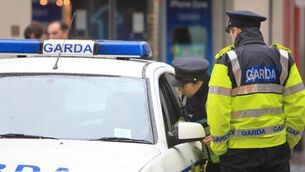
The Department of Health has also said there remains a legal requirement to self-quarantine if your journey originated in Britain, even if you enter the State via Northern Ireland. Picture: Leah Farrell / RollingNews.ie

Both fully vaccinated and non-vaccinated arrivals into Ireland from Great Britain will have to quarantine at home, under plans approved by Cabinet.

The extension of the home quarantine rule was approved yesterday amid concerns of the rise and spread of the Delta variant, which was first recorded in India, and has now spread at alarming levels in Great Britain, where it now accounts for 96% of all cases, delaying the loosening of Covid-19 restrictions in England.

The Delta variant is thought to be at least 60% more transmissible than the original Covid-19 virus.

Fully vaccinated people entering the State from Britain will continue to be subject to self-quarantine for 14 days, which can be ended with a negative PCR test taken five days after arrival.

For people who are not fully vaccinated arriving from Britain, they will enter self-quarantine for a period of 14 days, which may be reduced to 10 days, with two further negative PCR tests, one taken after five days, and another taken 10 days after arrival.

These new quarantine rules come into force with immediate effect.

The Department of Health has also said there remains a legal requirement to self-quarantine if your journey originated in Britain, even if you enter the State via Northern Ireland.

As of June 10, there have been 139 confirmed cases of the Delta variant in the State.

A Government spokesman said there has been “no discussion” of introducing mandatory hotel quarantine for people arriving from Britain, despite calls for such a move from some in opposition.

In a statement issued late on Tuesday evening, health minister Stephen Donnelly said the requirements are in response to variants of concern which "continue to pose significant risks to public health".

European Digital Cert

Meanwhile, work is ongoing for Ireland to adopt the European Digital Cert on July 19 which will allow for the return of international travel within the EU.

The Taoiseach also told ministers that the Covid situation in Ireland "remains stable".

A Government spokesman confirmed there "had been some improvement over the last seven days, in case numbers, and numbers in hospital, and ICU."

"However, nine counties had a 14-day incidence rate greater than 100 per 100,000 of the population, most notably Limerick, which has significantly higher rate of 451 per 100,000 of the population," he added.

3.2m vaccines now administered

The cabinet was also told that more than 3.2m vaccines have now been administered in Ireland, about 56% of adults have received the first dose, while 25% of the eligible population have received a second vaccination dose.

As of June 13, 2270 new cases were reported, which was a drop of 21.3% week on week.

The plan is to distribute between 310,000 to 330,000 vaccines this week and the Covid-19 vaccine portal is likely to open this week or next Monday for people aged in their 30s. 

It comes as pharmacies have started their rollout of the vaccine, with those aged over 50 who have yet to get a vaccine now able to go to their local pharmacy. 

As of June 8, 1m people who registered through the portal have been given a vaccine dose. There are a further 1,200 vaccinations planned for Wheatfield and Portlaoise prisons this week.

More in this section

Lunchtime News

Newsletter

Keep up with stories of the day with our lunchtime news wrap and important breaking news alerts.

Cookie Policy Privacy Policy Brand Safety FAQ Help Contact Us Terms and Conditions

© Examiner Echo Group Limited