Doireann Ní Ghríofa and Denise Chaila feature in Leaving Cert English papers
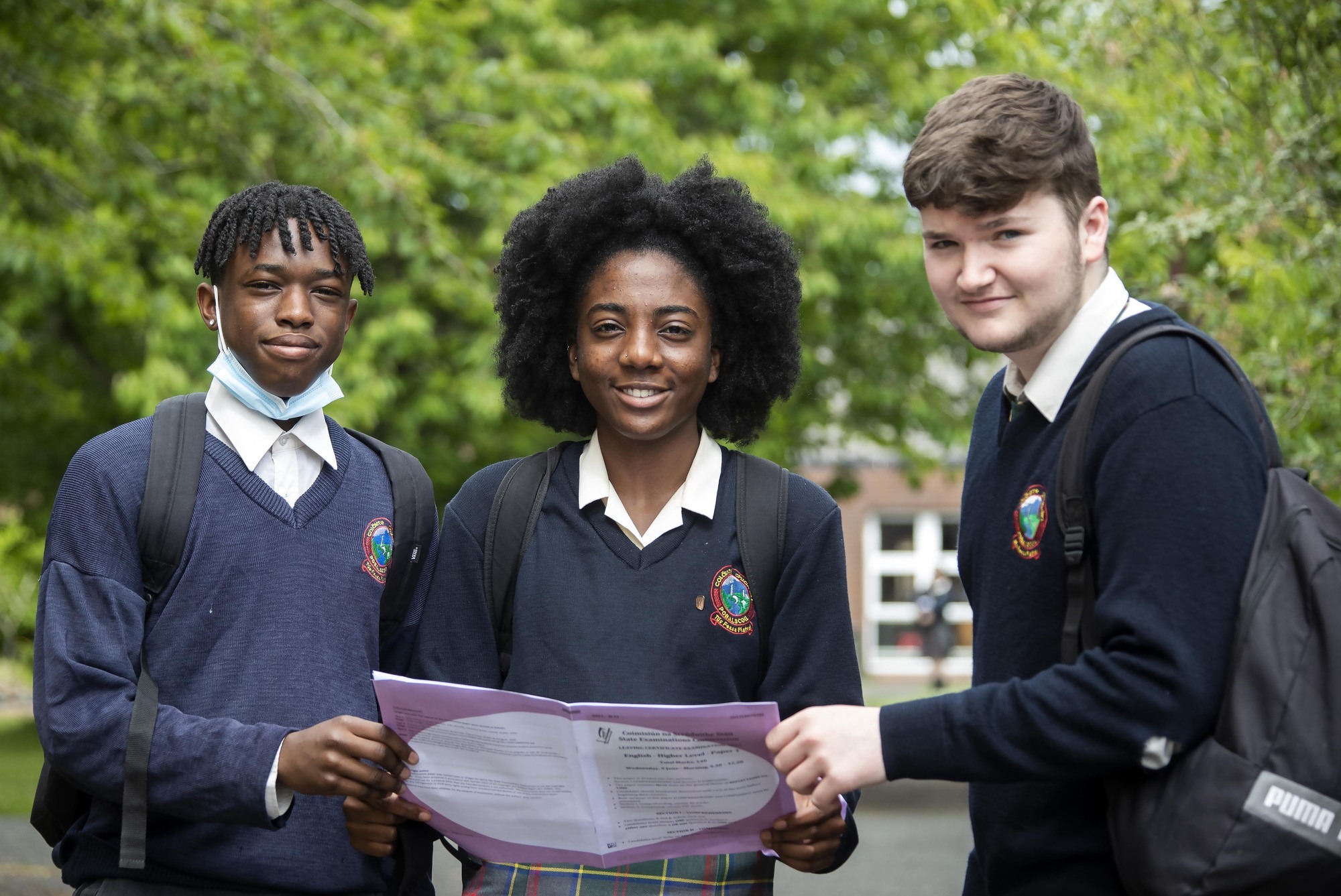
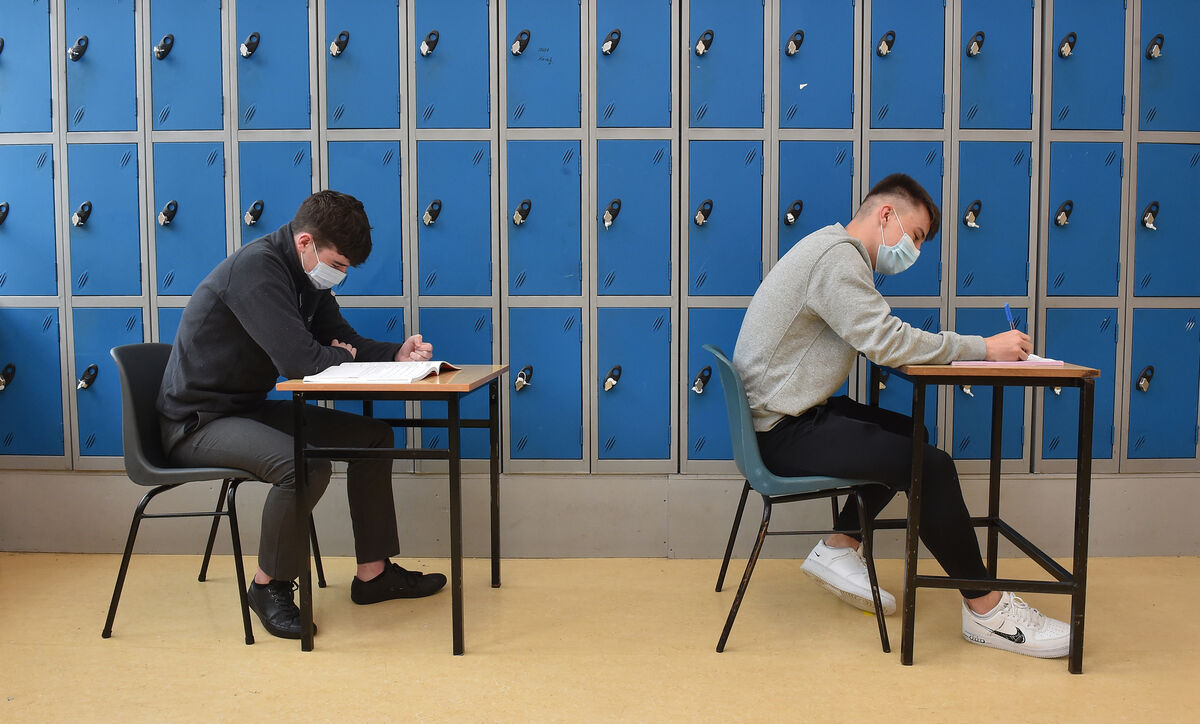
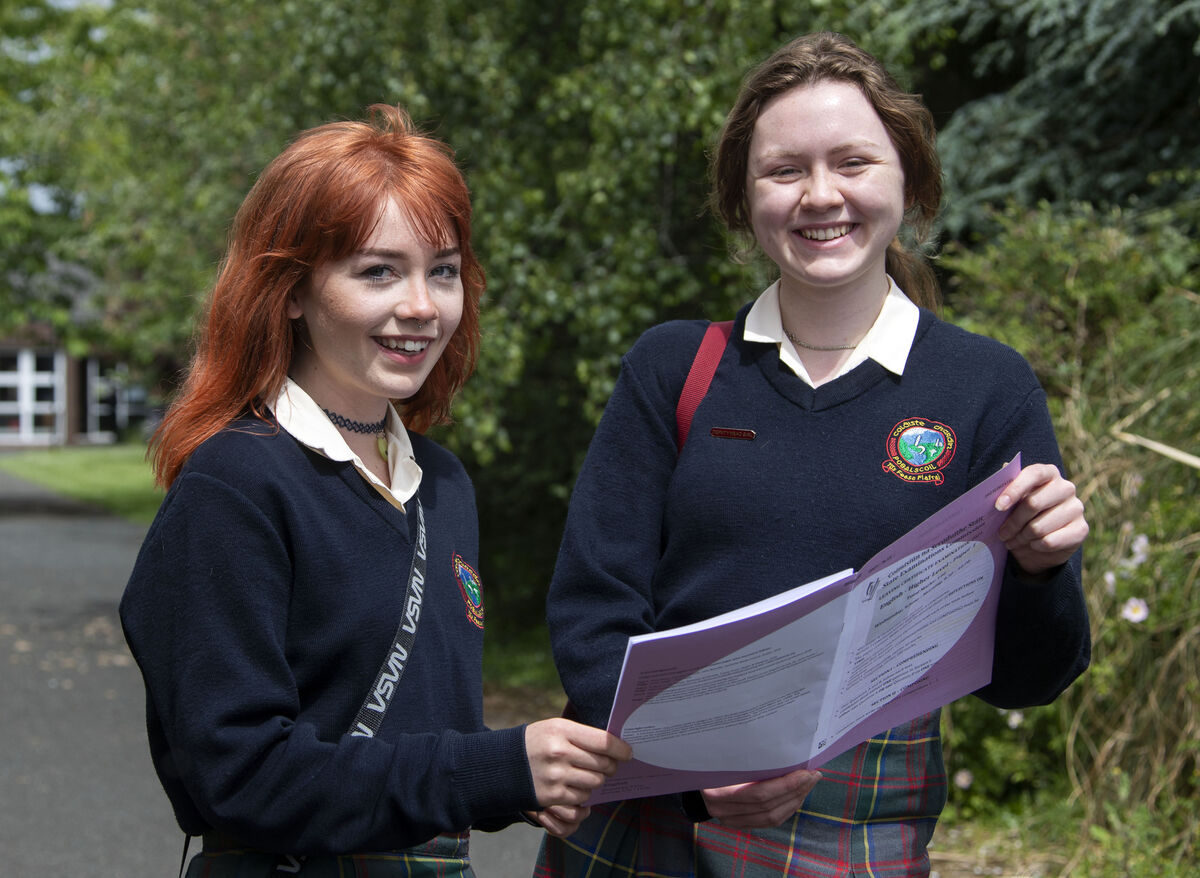
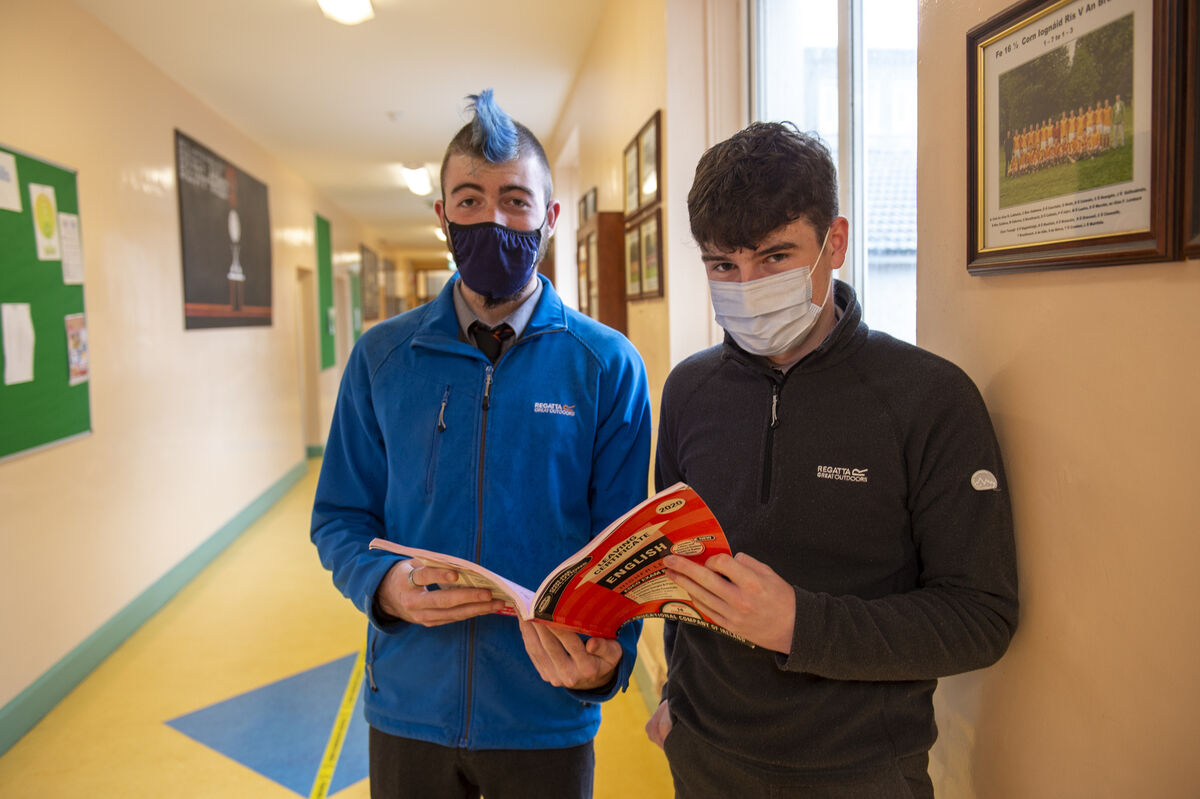
Rob Animashaun, Florence Sonowo and Alex Blake after sitting the Leaving Cert English higher level paper 1 at Colaiste Charáin in Leixlip, Co Kildare. Picture: Colin Keegan/ Collins Dublin
Irish women who brought home major cultural awards this past year in their creative fields featured prominently on the first Leaving Certificate exam papers on Wednesday morning.
An extract from the award-winning novel was among the texts presented to students who sat the first higher-level English exam.
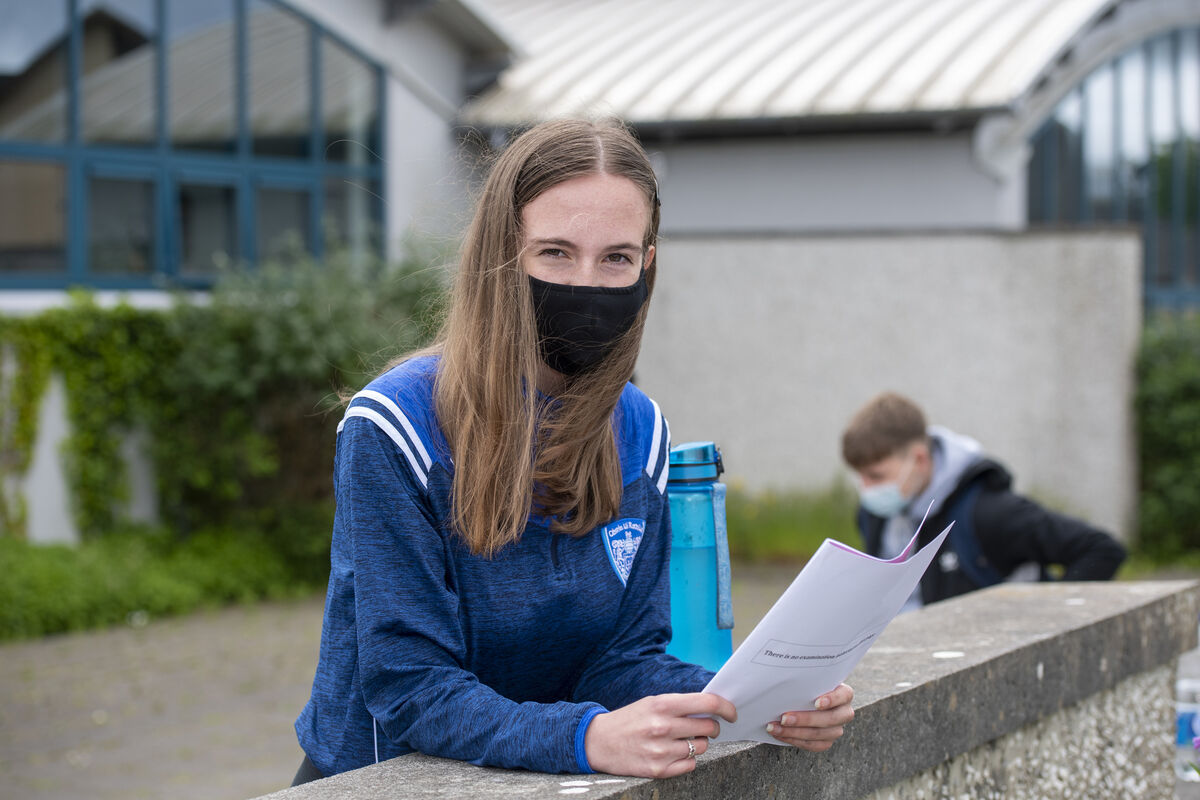
This adapted extract of Cork-based poet Doireann Ní Ghríofa’s prose, reflecting on how the past and the present come together in her garden, appeared as one of the comprehensive texts.
Her musings on bees also influenced two essay questions: one in which students were asked to write a fable set in ancient Ireland, and another where they were asked to write a discursive essay considering the meaning and importance of community.
An interview with Limerick-based rapper Denise Chaila also appeared as a text for students who opted for the ordinary-level paper, with the exam itself themed around music.
On the ordinary-level paper, Chaila's statement “this is who I am" influenced a personal essay topic in which students were asked to reflect on what contributes to their sense of identity.
An extract by Irish writer John Banville and a graduation speech by the late actor Chadwick Boseman also featured as comprehensive tests on the higher-level paper.
The ordinary-level paper also saw students asked to write a short story in a world in which music had been banned.
“I felt it was very upbeat,” said teacher Ursula O’Connor, the Teachers’ Union of Ireland (TUI) subject representative for English.
“At ordinary level, I thought the theme of ‘music’ was very accessible to students, and there were some lovely writing tasks on it."
Kate Barry, an English teacher at Loreto Secondary School in Fermoy, Co Cork, and the Association of Secondary Teachers Ireland (ASTI) English spokesperson, said her favourite question gave students the option to write a reflection on the tradition of erecting statues to memorialise people.
She said: “This question would have really rewarded the candidates who read the newspapers, and kept up to date with current events of the last year.”
However, Ms Barry wasn’t as fond of the question on the higher-level paper that asked students to write a verbal pitch.
The ordinary-level paper was “sufficiently challenging”, she said. “Some years it can be extremely simplistic but this year’s really was quite topical.”
Home economics took place on Wednesday afternoon, with students offered a greater choice of short questions in section A than in previous years.
Sections B and C included questions around iron, eggs, food safety, milk, diabetes, and consumer research.
One aspect that threw students was the use of an infographic in section B, according to Margaret Kinsella, ASTI's home economics subject representative.
“Overall, the paper was fine, students would have felt they had a lot more time to complete it but they would have found the infographic hard to read, it’s normally a table,” she said.


CONNECT WITH US TODAY



Be the first to know the latest news and updates