Evidence mounts in favour of mixing Covid vaccines
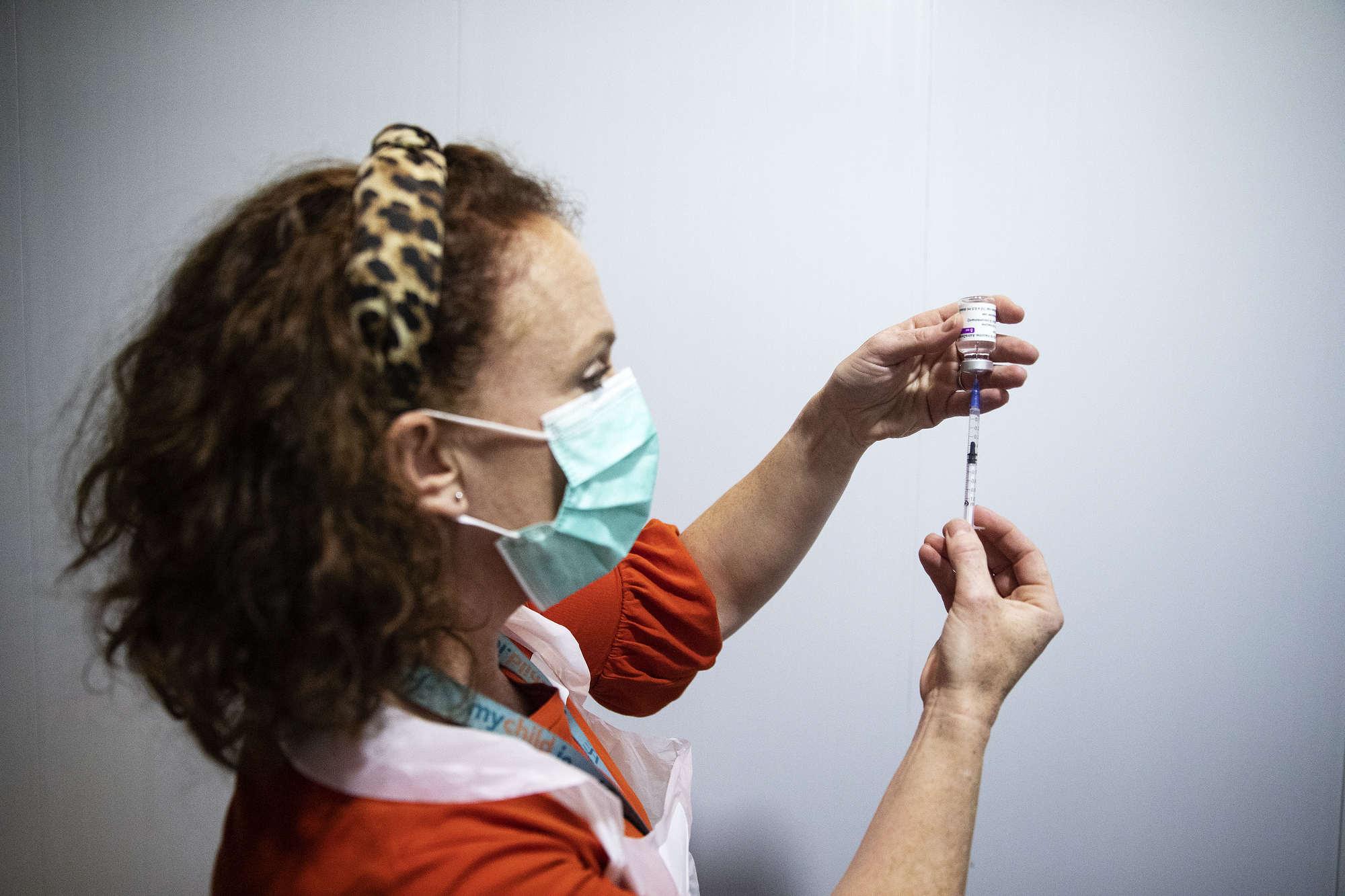
Public Health Nurse Deirdre Murphy with a vial of the AstraZeneca Covid-19 vaccination at the mass vaccination centre in the Helix, DCU, Dublin. Picture: PA

Public Health Nurse Deirdre Murphy with a vial of the AstraZeneca Covid-19 vaccination at the mass vaccination centre in the Helix, DCU, Dublin. Picture: PA

New evidence proving the benefits of mixing two Covid vaccines could impact the Irish rollout from next month, a leading virologist has said.

The National Immunisation Advisory Committee (NIAC) is reviewing the option of mixing vaccines and is also looking at the 12-week gap between AstraZeneca doses.

Dr Anne Moore, a vaccine expert at University College Cork, said new studies from Spain and the UK show mixing vaccine types is safe.

Dr Moore said both the AstraZeneca and Pfizer vaccines boost antibody responses and using an mRNA vaccine as the second shot, following AstraZeneca, is now being studied. 

“In June and over the summer, we will have more decisions and more information,” said Dr Moore. 

“I can imagine NIAC will make updated guidelines again, depending on the trials. 

And we could see giving a different vaccine in the boost (second jab).

Dr Marco Cavaleri, European Medicines Agency (EMA) head of biological health threats and vaccines strategy, said the agency is also examining these new studies and that mixing appears to deliver “a robust immune response”.

However, Dr Moore said that NIAC is unlikely to reduce the gap between AstraZeneca doses to four weeks from 12 weeks.

“We know that if you give adenovirus vaccines too early, you don’t see any boost at all,” she said.

Dr Anne Moore.
Dr Anne Moore.

“We know at least eight weeks is needed to give you a good level of efficacy.”

This is based on years of research on this type of vaccine, she said.

In England, the gap is now eight weeks in some cases, and the North’s department of health said GPs are delivering “an interval of approximately 10 weeks”.

About 150,000 healthcare workers as well as thousands of vulnerable people aged 16-64 at “very high risk” from Covid-19 in group 4 on the vaccine list have received one shot of the AstraZeneca vaccine.

“I think people should seek answers for any concerns they have, and to understand what is happening, but to also understand the risk of adverse events is extremely low,” said Dr Moore. Risk analysis, she said, is done for the public by organisations including NIAC.

Dr Moore will get vaccinated next week. “I will take any vaccine that is offered to me,” she said.

She also said she is “absolutely worried” about the prevalence of the Indian variant in the UK.

“The Indian variant is much more transmissible. We have got to try and keep variants out, is the first thing. 

However, this is here and we have got to trace it and stamp it out.

For this reason, she is not in favour of foreign travel for non-essential reasons yet.

“We have to try and make sure we don’t make that fatal error of saying some of us are vaccinated now so off we go. We are nearly there, we just have to hold tight.”

Meanwhile, the EMA yesterday approved the use of the Pfizer vaccine for children aged 12 to 15 years.

Fergus Sweeney, the Irishman who is head of the EMA Clinical Studies and Manufacturing Taskforce, said this does not mean every child must receive the vaccine; it is just “an option” and each country should assess its local situation.

More in this section

Lunchtime News

Newsletter

Get a lunch briefing straight to your inbox at noon daily. Also be the first to know with our occasional Breaking News emails.

Cookie Policy Privacy Policy Brand Safety FAQ Help Contact Us Terms and Conditions

© Examiner Echo Group Limited