Kevin Barry's last cigarette, Terrence MacSwiney's prison pillowcase and IRA weaponry displayed together in online first
Kevin Barry's last cigarette, Terrence MacSwiney's prison pillowcase and IRA weaponry displayed together in online first

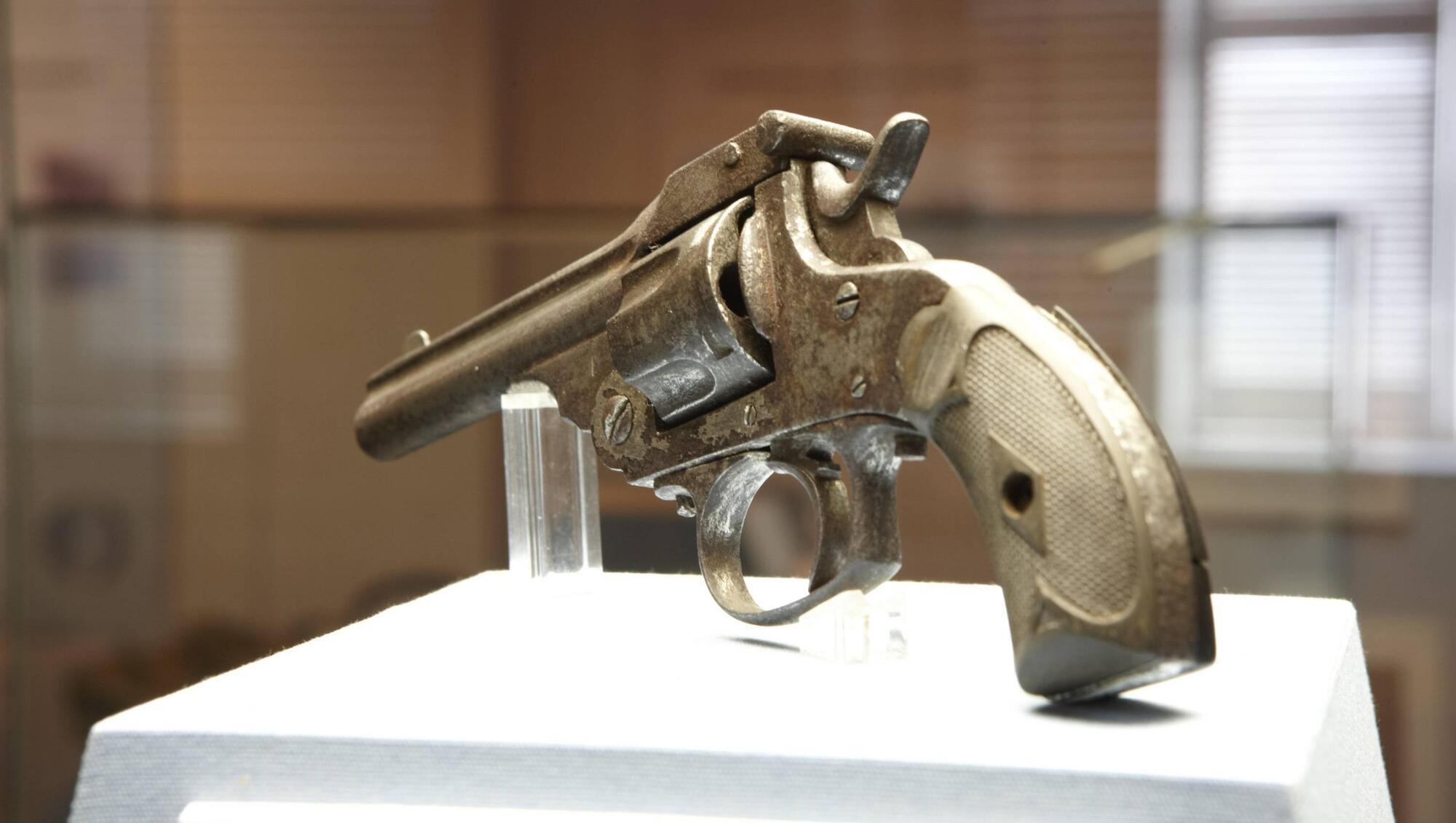
This revolver is reputed to have been used in an incident during the Civil War, at Ballymacool House, Letterkenny, Co Donegal. In early June 1922, Ballymacool and Rockhill Houses in Letterkenny were taken over by Anti-Treaty forces.  The revolver was donated to the museum by Barney Sweeney, Letterkenny. It is on display in the museum but it is also available to view online as part of Donegal County Museum’s Sketchfab 3D collection. Picture: Donegal County Museum

Michael Hogan’s GAA jersey, Kevin Barry's last cigarette, Terrence MacSwiney's prison pillowcase, and IRA weaponry are all set to go online in a brand new exhibition for the Decade of Centenaries. 

Never displayed together before now, the stand-out exhibits highlight some of the incredible stories of Ireland's struggle for independence and the bitter acrimony of the Civil War. 

Members of the Local Authorities Museums Network (LAMN) organised the unique snapshot of Ireland's history and the morbid but powerful collection of items will go on display next week at icomireland.com.

This jersey was allegedly owned by Tipperary Gaelic footballer Michael Hogan, who was killed on 21 November, 1920 by British forces while playing against Dublin in the GAA Great Challenge Match (football) in Croke Park, Dublin. He is remembered in The Hogan Stand at Croke Park, which was opened on June 7, 1959. Unlike the traditional blue and gold of the Tipperary jersey today, the Hogan Jersey is white with a green stripe. Picture: Tipperary Museum of Hidden History

Short videos by museum professionals from all over the country will accompany the online exhibition, organised to mark International Museum Day 2021. 

The coronavirus pandemic has impacted cultural centres hard, with galleries, libraries and museums only opening their doors to the public on Monday after five months of lockdown restrictions.  

This latest online exhibition is one of many ways museums have adapted to closures as a result of Covid-19, according to Liam Bradley, LAMN chair and Monaghan County Museum curator. 

Mr Bradley hopes the collection will remind the public about the fascinating exhibitions available all over the country in local museums. 

“The impact of Covid 19 has been felt throughout society and museums have had to adapt to continue to serve their communities while they were closed to the public. 

"This has seen museums come up with innovative, educational and fun ways to ensure that the stories of their collections could still be explored and enjoyed by everyone,” he said. 

“We hope that this virtual exhibition will serve to remind the public of the incredible collections on display at local museums throughout the country, and, now we are beginning to re-open, that museums can provide a safe space for our imaginations to roam and our minds to meet,” he added. 

Terence MacSwiney's hunger strike and later death brought worldwide attention to the cause of Irish independence and contributed to the negative international perspective of British policy in Ireland. Picture: Cork Public Museum. 

International Museum Day was first organised in 1977 by the International Council of Museums (ICOM) to "raise awareness that 'museums are an important means of cultural exchange, enrichment of cultures and development of mutual understanding, cooperation and peace among peoples’ and it continues to be a success year after year,” according to Margarita Cappock, chair of ICOM Ireland.

One of the iconic names that resonates with generations of Irish people from the Irish War of Independence is Kevin Barry. While a young medical student in Dublin, on September 20, 1920, he took part in a raid on the British army in Dublin. Barry was arrested, tried and sentenced to death in Mountjoy Gaol. Among his possessions returned to his family from Mountjoy Gaol was the remains of the last cigarette he smoked, moments before his execution. Picture: Carlow County Museum

This year's theme 'The Future of Museums: Recover and Reimagine' invites museums, their professionals, and communities to create and share new practices for exhibitions and new business models for cultural institutions. 

The LAMN represents 12 local authority museums across the country who all play a vital role in the social, cultural and economic life of  a region's local heritage. 

Altogether, local authority museums serve 1.8m people and attract more than 500,000 direct visitors each year. 

x

More in this section

Lunchtime News

Newsletter

Keep up with stories of the day with our lunchtime news wrap and important breaking news alerts.

Cookie Policy Privacy Policy Brand Safety FAQ Help Contact Us Terms and Conditions

© Examiner Echo Group Limited