Increase in Covid-19 among children linked to playdates — Nphet
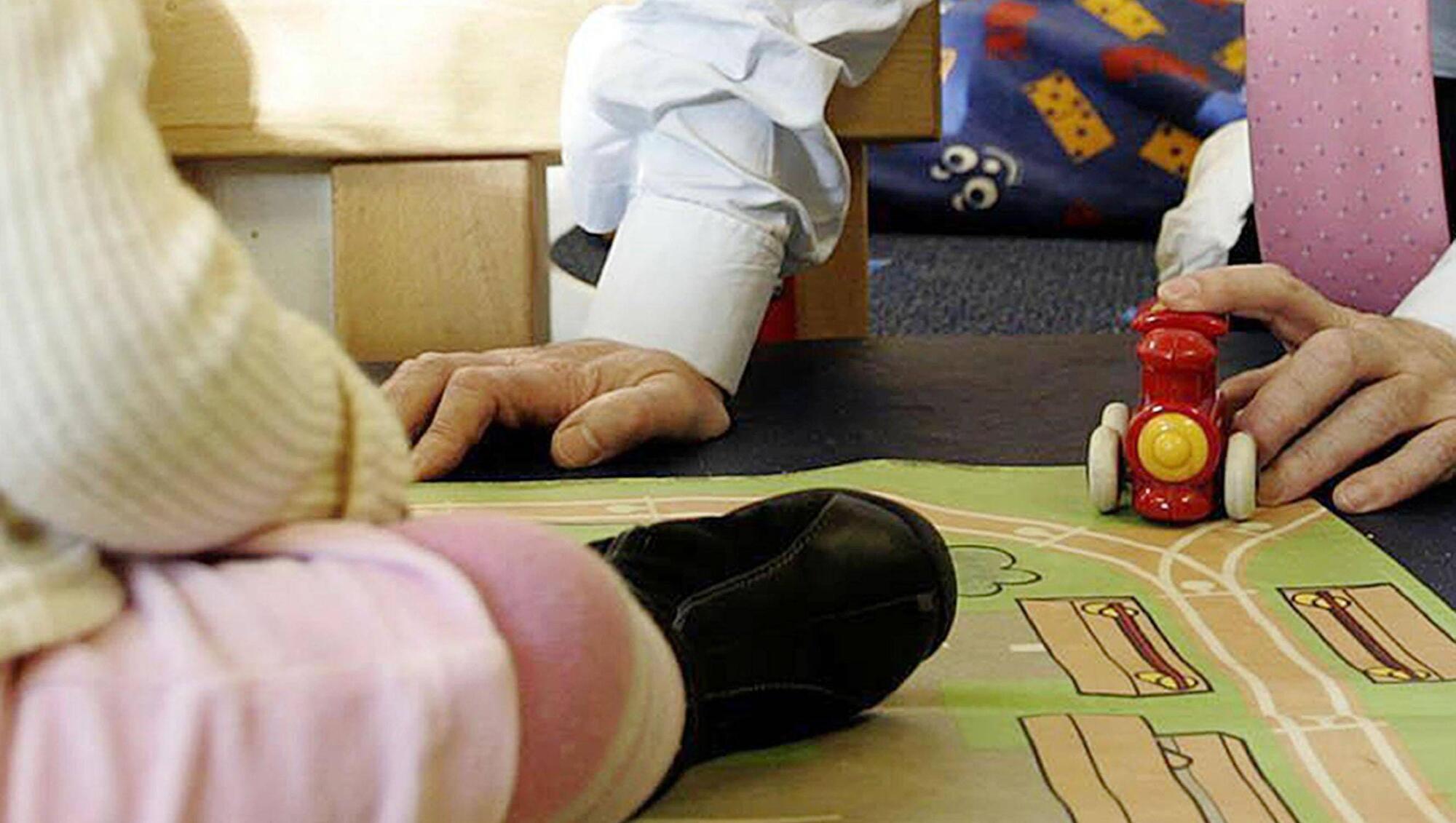
Experts are saying that the source of Covid-19 outbreaks is being investigated very carefully and that the incidence among young children more likely to be fuelled by family gatherings and playdates than by school activities. File picture
A slight increase in Covid-19 cases among schoolchildren is being monitored by Nphet, which is calling on parents to avoid playdates and other unsupervised interactions.
Prof Philip Nolan said the source of the outbreaks is being investigated very carefully.
Prof Nolan, who chairs the Epidemiological Modelling Group, said: “Right now there continue to be very few cases associated with outbreaks in schools.”
This is “almost undetectably low” in comparison to cases where children caught the virus at home, he said.
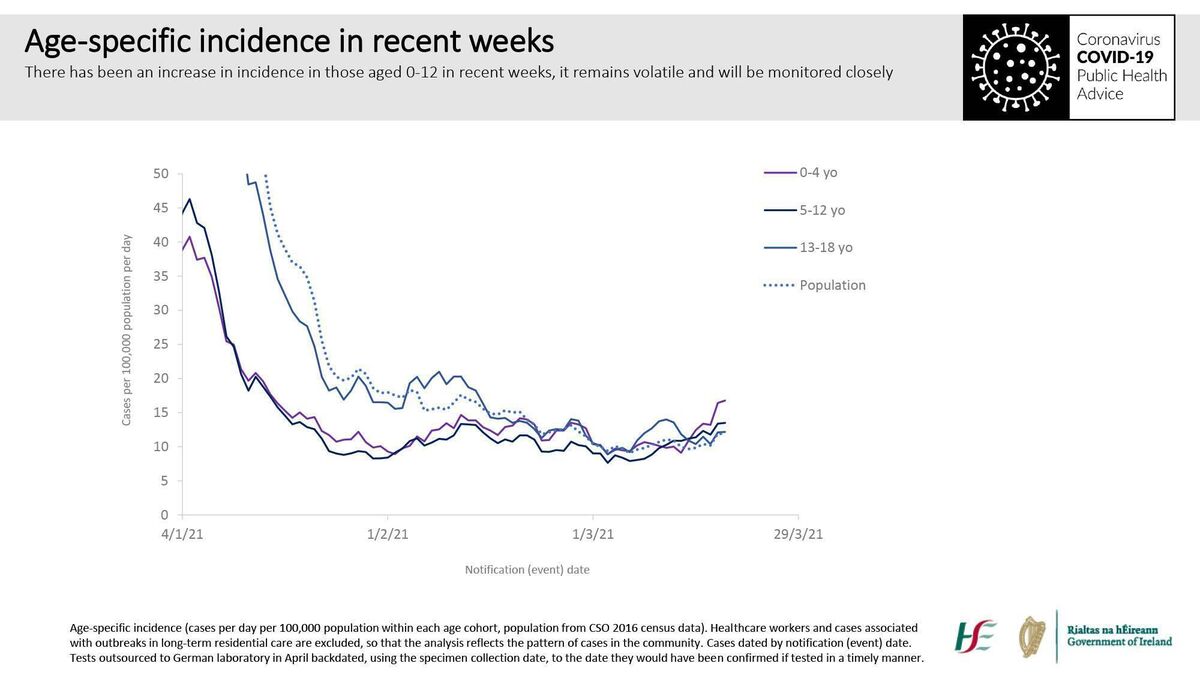
A graph, available on the Department of Health website, shows fewer than 100 cases in the 0-12 year age group, and fewer than 50 in the 13-18 year age group. The number of cases in these groups traced to a school outbreak is in single digits.
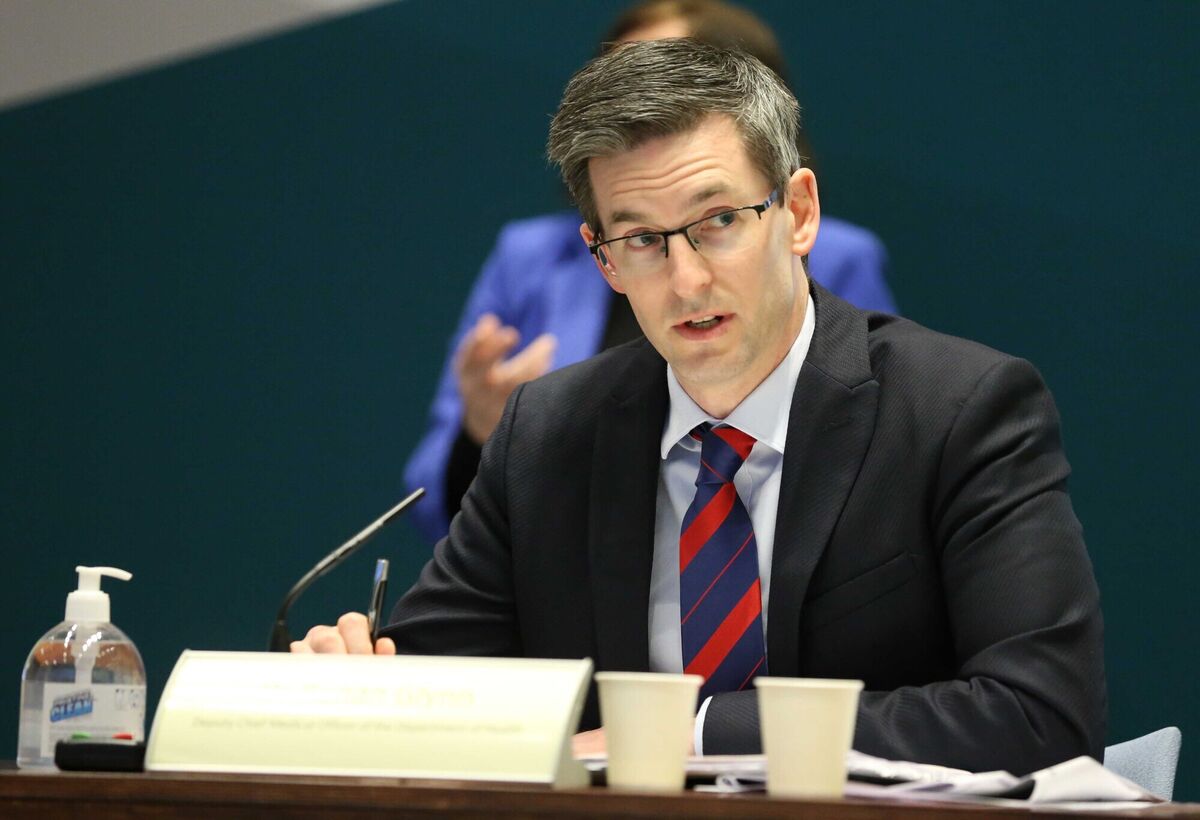
Deputy chief medical officer Dr Ronan Glynn said public health department information indicates transmission comes more from activities outside of school.
He said: “We are getting reports from colleagues that some of the issues are to do with activities outside of schools. Playdates are being organised, multiple households are meeting up in social settings.”
He acknowledged that this is difficult for people who follow the guidance to hear, but stressed that it is happening in a limited number of settings.
Dr Glynn said people might have “gotten away” with not transmitting the disease last year when interacting in this way, but the increased transmissibility of the B.117 variant makes this impossible.
He advised people again to avoid mixing in households, and wear masks when social distancing is not possible and to check it is covering the full face.
The B.117 variant identified in the UK continues to be responsible for over 90% of the cases in Ireland, said Dr Cillian de Gascun, director of the National Virus Reference Laboratory.
Of the two other variants of concern, he said the B.1351 identified in South African is now found in 26 cases, up from 24 last week and The P1 Brazilian variant is at nine cases, up from seven.
The NVRL is also monitoring variants of lesser concern: the B.1525 identified in Nigeria and the UK is up to 14 from 11. The B.1526 New York variant is at five, and the P2, also of Brazilian origin, in 13 cases.
He said: “I think because we are so concerned about the new variants, we have kind of forgotten about the significance of B.117 and the challenge that brings. We were hit here in early with B.117.
“It is important to highlight European countries are now hitting the thresholds we hit over a month ago.
A review carried out by the Health Information & Quality Authority for Nphet found out of 18 countries Israel is the only one not operating at the strictest level of restrictions.
Dr Máirín Ryan, HIQA’s Deputy CEO and Director of Health Technology Assessment said: “Comparing Ireland to other countries in the review, hospitalisations per million population were lower only in Denmark and the Netherlands.
“Similarly, the numbers in ICU per million population were lower only in Denmark and the UK. Our strategy has been successful to date in limiting the spread of COVID-19 in Ireland.”
This evening, the Department of Health confirmed 520 new cases of Covid-19, and one death. There were 359 people in hospital with Covid-19, including 81 in ICU.

CONNECT WITH US TODAY



Be the first to know the latest news and updates