Cautious welcome for new eating disorder hubs as Covid-19 exacerbates patients' suffering
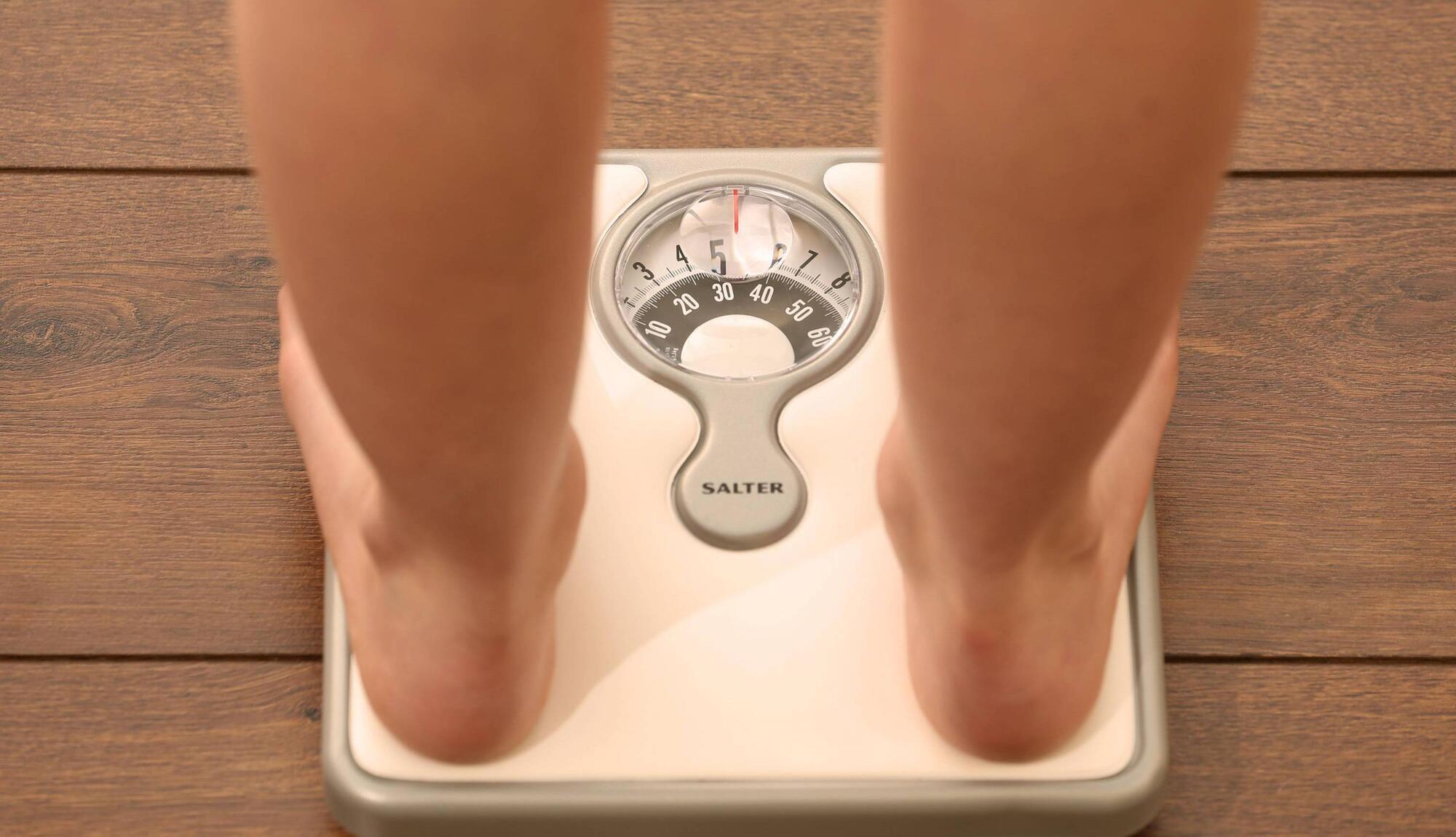
generic stock news weight weighing scales health fitness overweight Picture: PA
The Government is to set up three new specialist eating disorder hubs in Ireland this year, after repeatedly diverting funding from its eating disorder plan.
Minister of State for Mental Health Mary Butler announced today that €3.94m will be used this year to establish two specialist treatment hubs for adults and one hub for children and adolescents this year.

The hub for children and adolescents will be set up in the HSE's CHO 2, which covers Galway, Mayo and Roscommon. One adult hub will be set up in CHO 4 which covers Cork and Kerry, while the remaining hub will cover CHO 8 and 9, covering north Dublin, Laois, Offaly, Longford, Westmeath, Louth, and Meath.
The National Clinical Programme for Eating Disorders published by the HSE in 2018 committed to putting in place 16 specialist hubs nationwide over five years offering specialist multidisciplinary teams of clinicians.
To date, there are just three specialist hubs in the country, two in Dublin and one in Cork. None of the hubs is fully staffed.
Since 2016, €5.7m has been made available for eating disorder posts through programme for government funding. Of that, just €1.77m has been invested to date in eating disorder specialist posts.
The minister of state said she is “fully committed” to ensuring the remaining €3.94m available to the eating disorder model of care is spent “in full” in 2021.
Ms Butler said the money will be used to ensure the three existing teams are fully staffed and to establish the three new hubs. In total, 47 staff will be recruited.
CARED Ireland (a voluntary group of parents and carers of people with eating disorders) welcomed the news today, but said they were "reticent to get too enthused just yet given the broken promises on treatment services for eating disorders to date."
In addition, the group highlighted the need to ensure staff recruited for these new and existing services are "fully equipped and trained with the skills to deal with this very complex condition, which requires multidisciplinary teams."
A survey carried out by the group in advance of Eating Disorder Awareness Week this week found that 69% of its members are not satisfied with the overall service provided for eating disorder patients through the public health system, with 82% saying public healthcare clinicians lack the appropriate training and knowledge to treat eating disorders.
“Research shows that most people can and do recover from eating disorders if they get effective, evidence-based treatment from ED-trained staff,” Susan Brennan of CARED Ireland said.
“Yet those suffering continue to be met with a lack of specialist clinicians equipped to understand and deal with eating disorders.”
In addition, she said, waiting lists are growing and the incidence of relapse “worsens every week".
"The longer a sufferer is left without specialist help the more entrenched the eating disorder can become.
"Too many sufferers express feeling misunderstood, abandoned and lost while begging to be heard and taken seriously so that they can recover and live normal lives.”
The survey also revealed some 42% of those caring for people with eating disorders are paying for treatment at their own expense.
Of the 100 people surveyed, 40% have handed over €10,000 and upwards from personal funds, alongside 13% who have paid between €20,000 and €50,000 for treatment.
Some 4% of carers surveyed have spent over €50,000.
The main cost incurred was for counselling and psychotherapy, with 85% saying they paid from their own resources, followed by a dietician/nutritionist (63%), psychologist (38%), psychiatrist (29%) and family therapy (25%).
A total of 41% used private health insurance to pay for some treatment but most plans provide a maximum of 100 days of in-patient cover, often discharging patients too early to ensure proper recovery and putting them at risk of a relapse, Ms Brennan said.
“Three months sounds like a reasonable period of time, but when you’re trying to deal with an eating disorder, it’s a long, slow process.”
“Three months is nothing.”
The Department of Health estimates up to 200,000 people in Ireland are affected by eating disorders including bulimia nervosa, binge eating and anorexia nervosa.
Nicola Spendlove: A battle with herself

Nicola Spendlove is well known in Waterford's theatre scene, and in her professional life as an occupational therapist. But her secret battle with her body has taken up more of her life than anyone could have guessed.
When Nicola was at her thinnest — numbers she won't give, because she knows the effect those details had on her — she wore it as a badge of honour.
“I will cringingly admit that when someone talks about an eating disorder, I automatically want to know how small they are — and if they don’t look like a prisoner at a concentration camp I reason that they can’t have been 'that sick'.”
Nicola was naturally thin as a child, to the point that her classmates called her anorexic, without knowing what the word actually meant. The first sign of a problem for her was that, instead of balking at the term, she actually loved it.
"Even if you’re trying to compliment someone, the body is an ever-changing entity that it is dangerous to tie to your worth or identity.”
As her body grew, Nicola lost the gaunt look but remained slim.
Despite the apparent enviable metabolism, Nicola’s disordered eating habits started around this time, and she began forcing herself to get sick.
"It wasn’t the only form of self-harm I engaged in at the time — I still struggle to understand my mindset, but it was as if when puberty kicked in there was a self-destruct button that suddenly seemed irresistible."
Nicola panicked when she began to gain weight in college.
“I saw photos of my stomach from nights out, still wearing the crop tops that I used to don so effortlessly, and noticed a new softness,” she said.
Nicola saw flaws in herself that nobody else saw and in her late 20s, and began trying to lose weight again, joining diet clubs and online fitness communities.
“The skinny jeans I bought in secondary school suddenly fit like a glove again,” she said.
"The strangest part was that I couldn’t see any difference in the mirror. I uploaded half-naked before and after photos of myself on to fitness forums, but no matter how many compliments I got from strangers on the internet I couldn’t bring myself to believe they were doing anything but secretly laughing at me. "
In her own words, Nicola became an “absolute drag” to be around. But once again, her friends would call her “too thin”.
“And there it was,” she said. “There was my drug.”
Nicola has a “very fractured relationship” with her body, and her food habits, but says she is learning to cope with it since lockdown. She tries to curate her social media to show bodies of all different types.
“You may find this hard to believe, but I genuinely think bigger women look brilliant,” she said.
“I love following accounts that teach me about concepts like health at every size (HAES), and I celebrate the beautiful women who have thrown up two fingers to beauty standards and look incredible. I don’t know why I can’t extend the same attitude to myself."