Coco's Law 'will save other people', says heartbroken mum
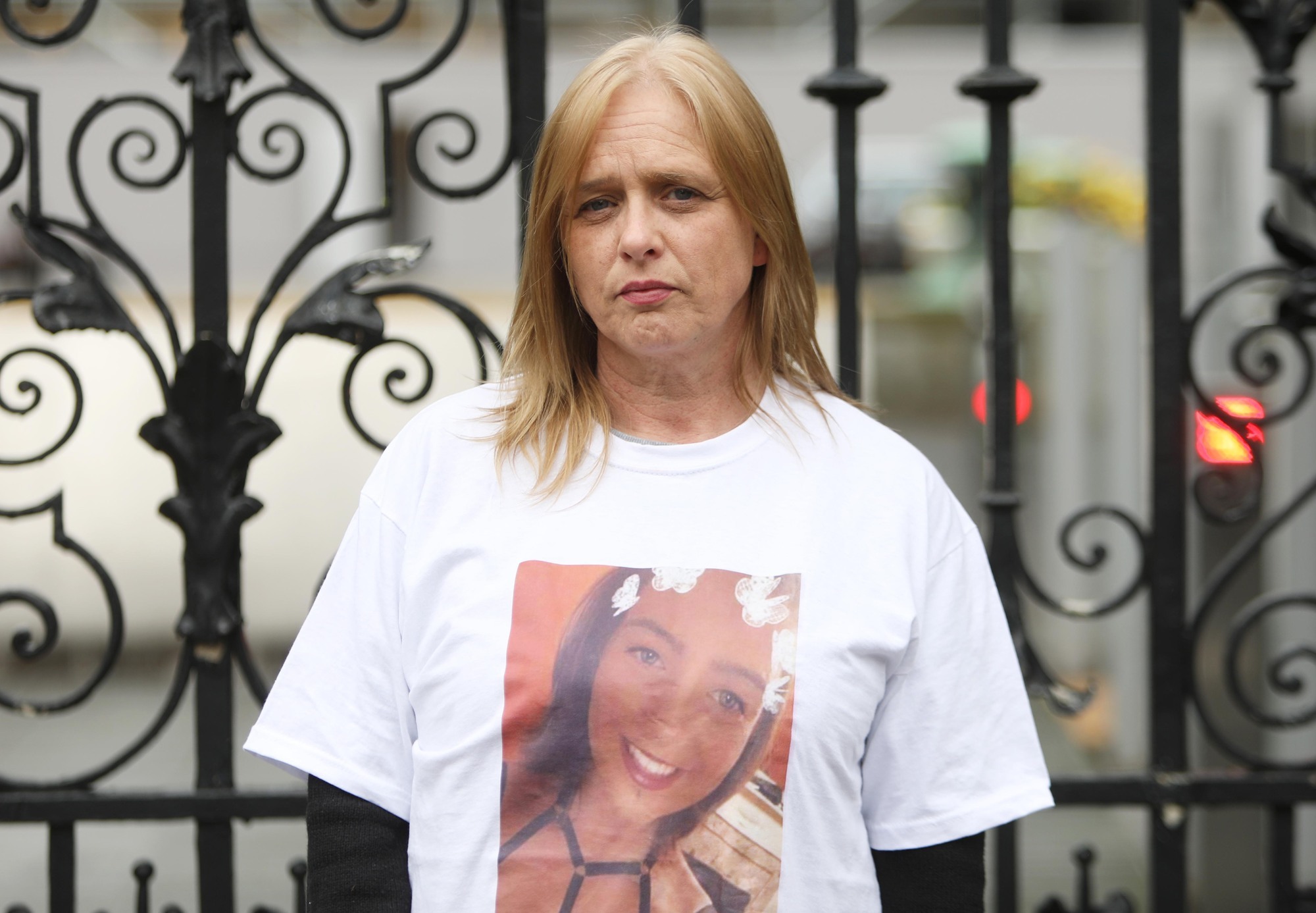
Jackie Fox Fenlon, who campaigned to change the laws around online harm. Picture: Leah Farrell/RollingNews.ie
An education programme for young people needs to follow the long-awaited enactment of laws to protect people from online abuse, the Labour Party has said.
Marking Safer Internet Day today, Justice Minister Helen McEntee commenced Coco’s Law — the Harassment, Harmful Communications and Related Offences Act.
The legislation is named after Nicole ‘Coco’ Fox, who took her life after suffering bullying, and a campaign driven by her mother, Jackie, to change the laws around online harms.
The law creates two new offences criminalising the non-consensual distribution of intimate images.
Ms McEntee also announced a new Research Observatory on Cyberbullying, which will conduct studies on cyberbullying, cyberhate, and online harassment, and the implementation of Coco’s Law.
It is being set up by the Department of Justice, the National Anti-Bullying Research and Resource Centre at DCU, and the Department of Education.
“Image-based abuse is absolutely disgusting and can ruin lives," said Ms McEntee. "There can be no tolerance for online abuse.
“Coco's Law represents a big step forward in tackling harassment and harmful communications.”
She paid tribute to Nicole and the “selfless efforts” of her mother Jackie, who had “tirelessly campaigned” to raise awareness.
Jackie said that the achievement was bittersweet.
“Nicole’s name is on the statute books," said Jackie. "A memorandum telling her story is attached to the legislation. It will be there long after we’re gone.
“I am proud of that but it will never bring Nicole back.
“I will never hear her laugh again, I will never see her smile again.”
The Labour Party’s Brendan Howlin, who introduced a private member’s bill three years ago seeking reform on the area, welcomed the bill and also praised the work of Ms Fox.
“Obviously, putting in the legal framework is an important step but a cultural change so that people respect one another online is a much more difficult challenge for us," said Mr Howlin.
“That’s why there is a requirement now for an educational programme, particularly among young people, to understand that what happens online often stays there forever, and that people need to have the same respect and regard for others online as they would in direct contact with one another.”
Ms McEntee said the two new offences are: Distribution or publication of intimate images without consent and with intent to cause harm — punishable by up to an unlimited fine and/or seven years’ imprisonment; and taking, distribution, or publication of intimate images without consent even if there is no specific intent to cause harm — punishable by up to a €5,000 fine and/or 12 months’ imprisonment.
- webwise.ie; ispcc.ie/childline; hotline.ie

CONNECT WITH US TODAY



Be the first to know the latest news and updates