Inadequate ventilation played key role in meat plant Covid-19 outbreak
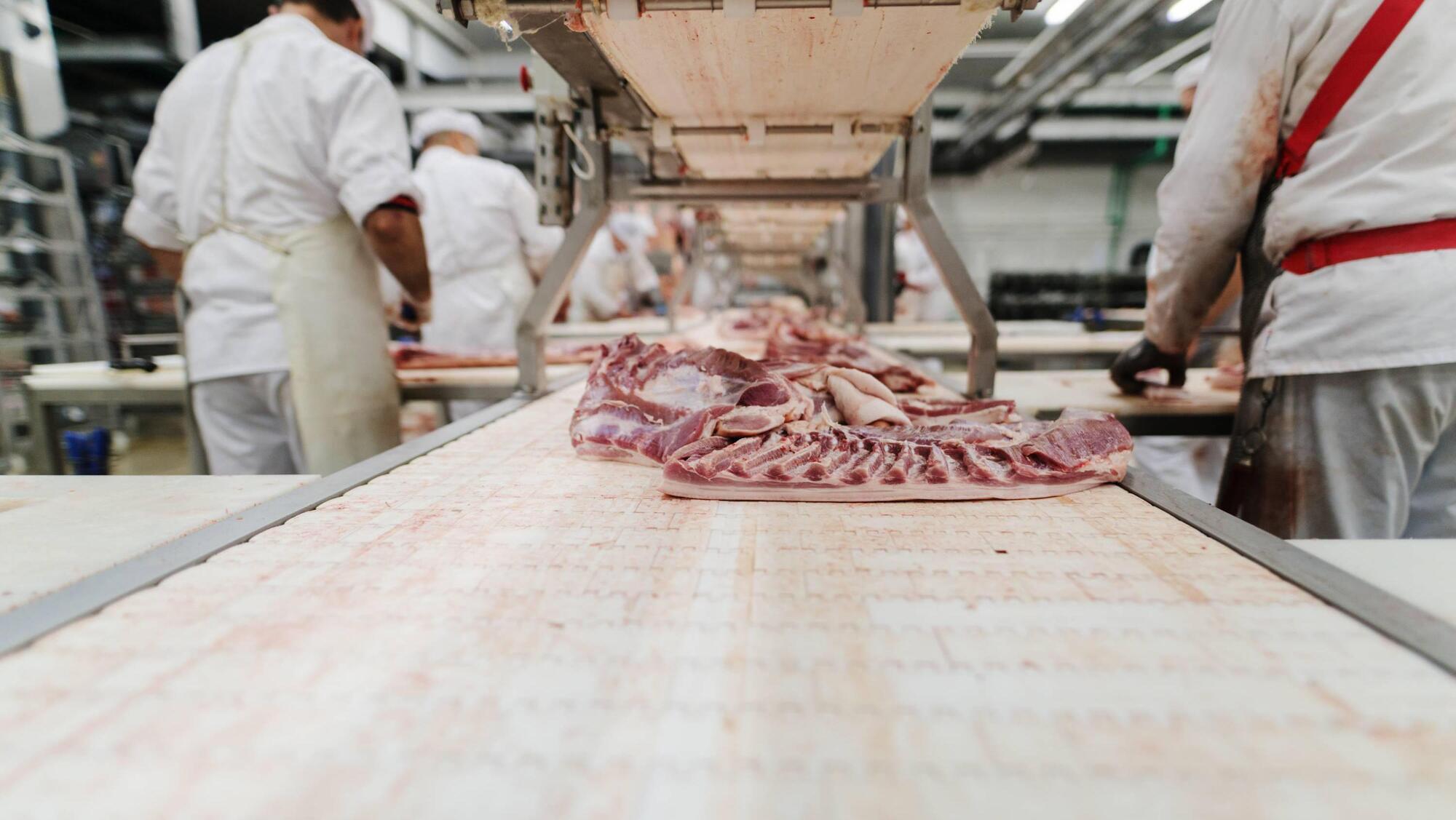
The report found factory management had been rigorous in introducing infection controls, many of them before the outbreak occurred.
A pilot study on the spread of Covid-19 in the meat processing industry found “inadequate ventilation” played a key role and that rapid testing of workers as they arrive at work should be considered.
It said one plant – which has been at the centre of an outbreak of Covid-19 among workers – had a particular risk from the “re-circulation of chilled air” in areas where meat was being cut and packaged.
The report also said rapid on-site testing should be looked at as a tool to stop infected workers before they make it onto the factory floor.
The study was carried out in an unnamed plant by a team of Government officials, academic researchers and technical managers.
According to a report – a redacted copy of which has been released under FOI by the Health and Safety Authority – three separate teams of investigators looked at different areas of the factory.
The first team put together documents on the layout and operation of the plant, the sequence of events that led to its Covid-19 outbreak, and how the disease had spread among workers.
A second group was tasked with interviewing plant managers to see how infection risks were managed on a day-to-day basis.
The third team spent several days taking measurements, mainly of “aerosols” [or airborne droplets] in the boning hall and the “dressing line” where carcasses are prepared.
The report found factory management had been rigorous in introducing infection controls, many of them before the outbreak occurred.
It also said they had taken steps to prevent workers getting infected in the community, to stop infected workers entering the plant, and to stop transmission on the factory floor.
However, their efforts did not avoid an outbreak and the study found a “gradual but steady increase in the concentration of CO2 [indicating inadequate ventilation]” as well as droplets in the air.
The report concluded: “[The study highlights] a particular risk in meat processing plants relating to the re-circulation of chilled air in those working areas where meat is cut and packaged.”
It also suggested rapid on-site testing might “keep virus-infected persons from entering meat plants and to validate alternative options for air handling in meat cutting areas”.
Separately, a series of inspection reports from meat processing plants reveal continuing issues in the industry.
One plant was reported to have temperature screeners at its entrance. However, the temperature limit was incorrectly set at 38C instead of the HSE guideline of 37.5C.
At a number of meat processors, staff were found to be wearing less-effective visors instead of face masks.
At one plant, face masks worn incorrectly was a “common occurrence” and the plant was told to follow HSE guidelines on wearing of masks.

CONNECT WITH US TODAY



Be the first to know the latest news and updates