'Urgent intervention': Six-week lockdown to start in Northern Ireland from St Stephen's Day
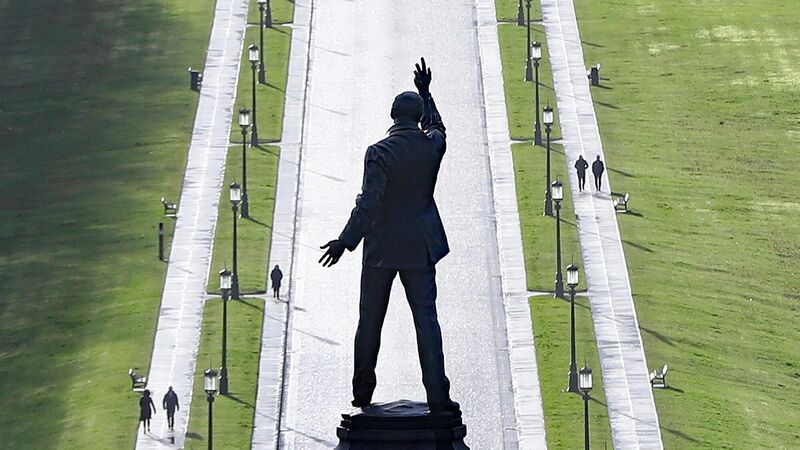
On Thursday, Northern Ireland's Department of Health’s dashboard revealed a further 12 people with Covid-19 had died in Northern Ireland, bringing the region’s toll to 1,154. Picture: PA
A six-week lockdown starting on St Stephen's Day has been agreed by the Northern Ireland Executive, it is understood.
Ministers met for several hours on Thursday into the evening as the region struggles to suppress the virus.

Deputy First Minister Michelle O’Neill described the situation as “quite dire”.
“It’s very clear from the positive cases we’re seeing every day that an urgent intervention was required,” she said.
“The Executive had detailed discussion about what that needed to be: around the duration of that and the specifics.
“What has been decided today is that there’s going to be a six-week lockdown that begins on December 26. That will stay in place for a period of six weeks.” But she added that it would be reviewed after four weeks.
The Sinn Féin leader said hospitality will be closed in its entirety, except for takeaway.
All non-essential retail will be closed.
Off-licences will be forced to shut their doors at 8pm.
But hotels will be opened until December 28 to accommodate Christmas bookings.
Dog grooming will also be open, but car washes will be closed.
“There will also be financial supports put in place, so the current measures which we have had over previous restrictions will be rolled over to support businesses through this very challenging time,” the Deputy First Minister said.
For those who had chosen to form a family bubble over the Christmas period, Ms O’Neill said they would be allowed to go ahead.
Deputy First Minister Michelle O’Neill said Northern Ireland is in a “worse position” that it has been throughout the pandemic.
“I think the health service would be completely crushed in January if we didn’t intervene now.
“Whilst this is draconian in many ways, it’s necessary, and this is about saving lives, this is about saving the health service and this is about taking some pressure off the health care staff,” she told reporters at Stormont.
“We’ve never been in such a bad position as we are now and will be in January if this didn’t happen now.” She described what ministers have agreed as a “longer and deeper intervention”.
“That’s been a collective position from the Executive that has been arrived at this evening,” she said.
Speaking at Stormont, Ms O’Neill said: “This will be disappointing to many.
“I think a lot of people also would have expected it. It’s very clear we needed an urgent intervention.
“I think this is the right decision by the Executive, albeit I accept that it will be challenging for many, many people.
“We tried to get a balance in all of these things but it’s clear that we needed a longer and deeper intervention and I believe that’s what’s been arrived at this evening.”
Minister did not decide to close schools, Ms O’Neill added.
“Schools were discussed and what was agreed is that schools would remain for now, but that health and education (departments) continue that conversation around things, for example, like blended learning and other things,” she said.
“That conversation continues and I expect that both health and education will be able to say more about that over the course of the days ahead.”