Coveney: Ireland's economy to face 'significant disruption' from January
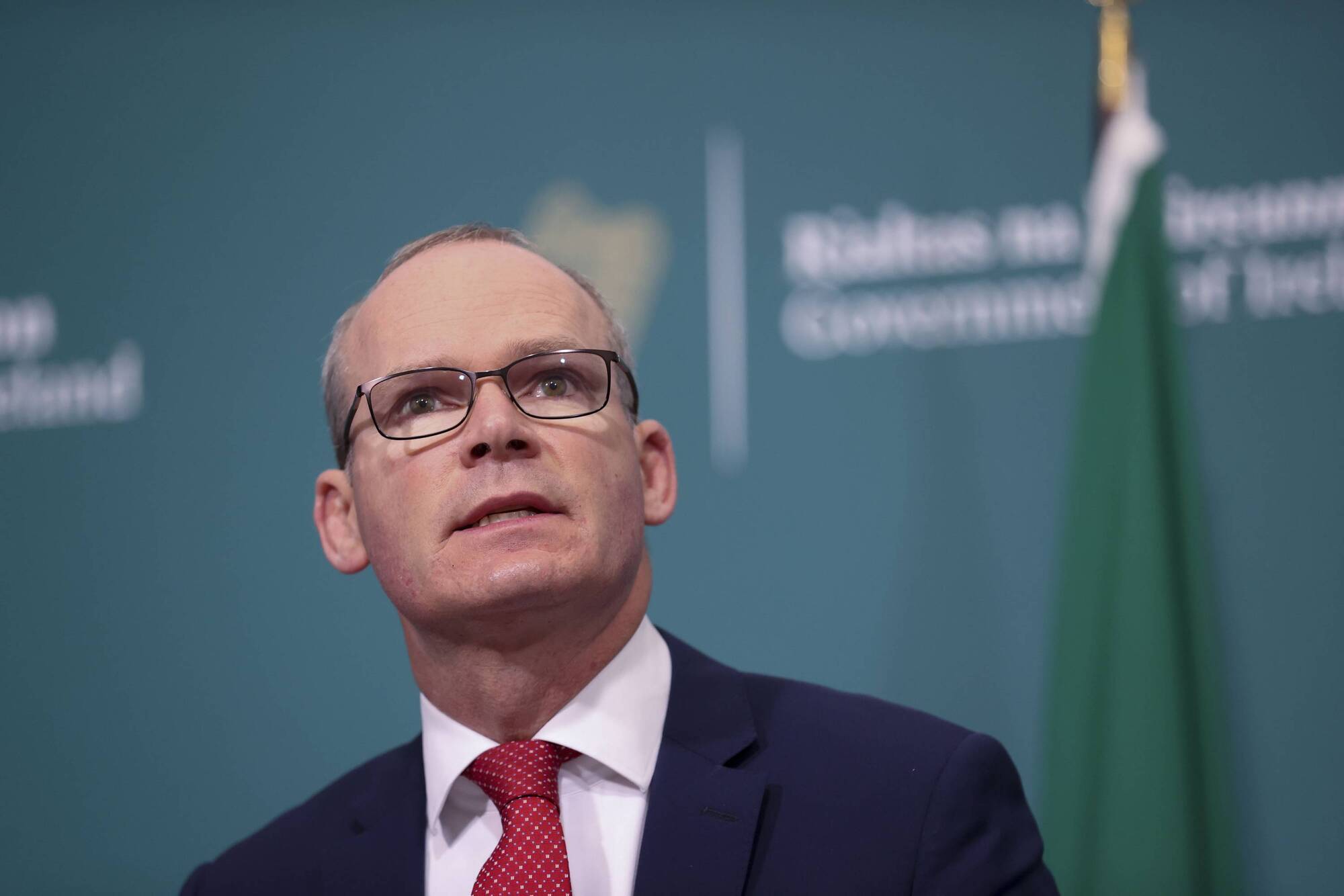
Minister for Foreign Affairs Simon Coveney has said people need to be ready as "there will be no further extensions, there's going to be no extra time". Picture: Julien Behal
Ireland's relationship with the UK will be "difficult" and will involve "disruption" from January regardless of whether a Brexit deal is hammered out or not, the Foreign Affairs Minister has warned.
Simon Coveney has said the Brexit date has "crept up on people" as the focus for much of the year has been on the pandemic.
But he said people need to be ready as "there will be no further extensions, there's going to be no extra time".
"This is legally a requirement now, on the first of January, the trading relationship will fundamentally change, the UK will be out of the EU single market and customs union and that has significant consequences. In the absence of a trade deal on top of that many sectors in the Irish economy will face very significant disruption and costs on top of all the disruption that Covid has caused," Mr Coveney said.
As tense negotiations between UK and EU negotiators continued late into the night last night, Mr Coveney said two significant issues - fisheries and a governance model to deal with disputes around fair competition - remain as stumbling blocks.
He said the final stage of talks were never going to be easy and he expected tension and standoffs between both sides.
Mr Coveney, who is travelling to Paris today to meet fellow European ministers, warned that regardless of whether Britain leaves the EU with a deal or a crash out, there will be more checks at ports and airports and the basis for trade is going to change.
"We are in the space of days not weeks, " he said of the chance of getting a deal, adding: "We are running out of time".
Mr Coveney said: "There is a process of ratification that takes a number of weeks. I think we all owe it to so many businesses, households and stakeholders that have a huge amount of planning to do with very little time left to do it in the context of the kind of Brexit that they have to prepare for on the first of January."
He said it is a "very dangerous assumption" to think that a deal could still be agreed at some stage next year after Britain leaves.
"From an Irish perspective, we get caught in the crossfires there, and there is no guarantee that in the absence of a future relationship agreement now, and the political tension that will follow, that we will be able to get a future relationship agreement in place at some point in the first half of next year," he told

CONNECT WITH US TODAY



Be the first to know the latest news and updates