Selfie-hunters at Saltee Islands caused breeding to plummet
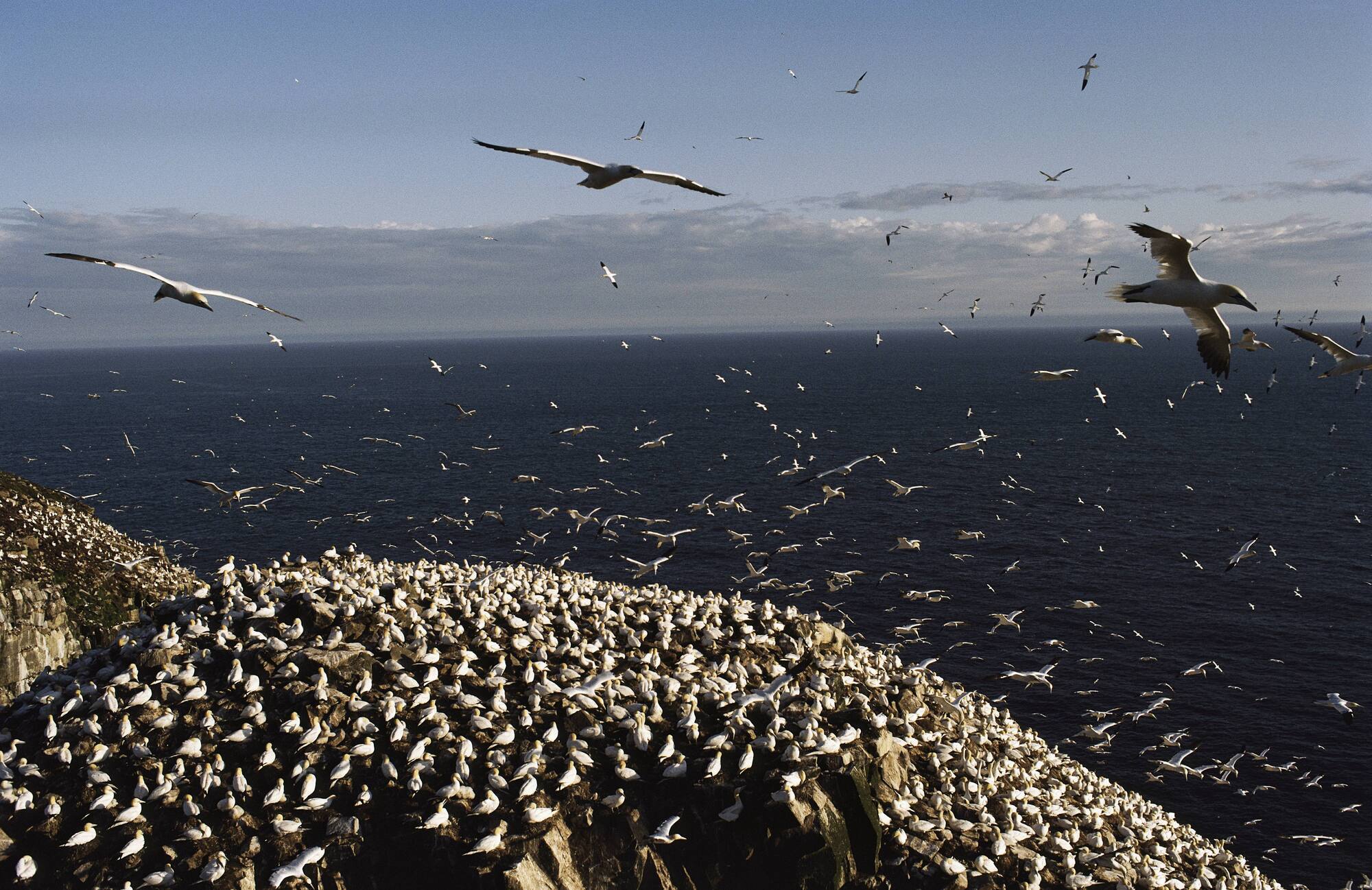
Tourists interfering with habitats often lead to Great Northern Gannets such as these leaving their nests temporarily opening the way for predators to steal the gannets’ one and only egg. Picture: Medford Taylor/National Geographic/Getty Images
Reproduction rates among northern gannets were hit by 60% at one of the country's beauty spots because of people taking selfies.
Research by a student of the Environmental Research Institute at University College Cork looked at the disturbance to birds at Great Saltee Island in Co Wexford, which is one of the most important seabird colonies in Ireland.
One bird that can be spotted there is the largest seabird in Europe, the northern gannet, but since the Great Saltee does not have a warden, tourists can interfere with habitats, leading to parents leaving their nests temporarily and exposing them to predators who steal the gannets’ one and only egg.
The research by Debs Allbrook, a MSc student at UCC, looked at the level of disturbance caused by tourists in the summer of 2017. It showed that many tourists, especially those looking for that perfect photograph of birds on their nests, got too close to the gannets, often to within less than one metre.
This led to a 60% reduction in breeding success compared with birds at undisturbed parts of the colony.
As part of the research Ms Allbrook then placed a sign at the area which read: “These birds are breeding. Under the Wildlife Act (1976) it is illegal to disturb nesting birds. Please do not approach the colony as doing so may result in the abandonment of eggs or the death of chicks. Thank you for your consideration.”
As a result, more people stood back from the area and breeding rates recovered.
“This showed that it was largely lack of knowledge that led to the disturbance in the first place. People did not understand the harm they were causing," Ms Allbrook said.
"When approaching a bird on a nest like that, because they seem fairly unfazed, people believe they are fine to go right up to them. We showed that in fact, these 'harmless' encounters could have much more serious effects than we thought.
"The disturbance often caused confusion in the colony and it only took a second for a gull to zip in and steal an egg."
Prof John Quinn of the ERI said: “On one occasion we saw nine disturbance events over a two-hour period. This directly led to eggs from nine gannet nests being stolen by herring gulls, who seem to have learned to watch the interactions between tourists and people. One photographer ran right through the colony trying to retrieve his camera lens rolling downhill, leading to disturbance of about 30 nests.”
The Covid-19 pandemic has stopped visitors and there are indications of a rebounding in breeding among gannets.