Government to discuss tighter travel restrictions with Belfast counterparts
The Government is to discuss with Belfast about plans to tighten travel restrictions onto the Island of Ireland.
Following the Keelings controversy last week, whereby a plane full of eastern European workers were flown in to pick fruit, the matter was discussed at a meeting of the Cabinet sub-committee on Covid-19.
“The sub-committee discussed options to tighten travel restrictions at ports and airports," a government statement said.
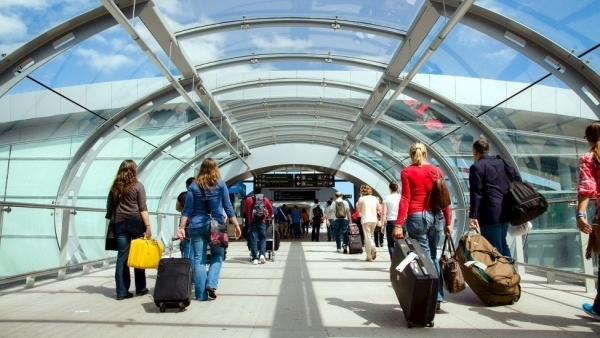
"Ireland needs to find a balance which allows the airports and ports to stay open, in order to allow the movement of supplies, essential workers, and for Irish citizens to be able to return home, but which also minimises the risk of transmission of the virus, including the requirement for people arriving into Ireland to self-restrict their movements for 14 days.”
“The sub-committee discussed a range of options to see whether there is a better way of achieving those objectives on travel. These will now be discussed further with Cabinet, and with the administration in Northern Ireland, before a final decision is made,” the statement added.
Earlier, Mr Varadkar said he and the government "never envisaged" that scenario when introducing the lockdown restrictions.
"Agricultural workers are deemed essential workers because we do have to bring in the harvest, in order to ensure that we have enough food to eat. So I think we will understand why they are essential workers,” he said.
Although I have to say when we deemed agriculture workers to be essential workers, I hadn't envisaged hundreds of casual workers coming in from outside of the country.
"So I think what we're going to try and do now is to work with the sector to see if we can find an adequate number of Irish people or people residents,” he added.
“At the very least, who will take up those positions. And if not, then we have to make a decision to get out of the crop to fail, which isn't a good thing.
"Or do we allow workers to continue to come in from other parts of the European Union, but with very defined a monitored quarantine arrangements to make sure that they don't create a new cluster of the virus," he said.
The Cabinet sub-committee on Covid-19 met today to discuss long-term care facilities, testing and overseas travel.
“We need to keep our airports, we need to keep our ports open we need supplies to come in and out. We need essential workers to be able to come in and out we also need Irish citizens able to return home,” he said.
“We also need to make sure that it's done in a way that minimises the risk of the transmission of the virus.
"And that means asking people to self-isolation to self restrict their movements or 14 days that has been done since the very start this outbreak. What we're looking at now is are there better ways that we can monitor the people are actually doing,” he added.