The Frontline Worker: Covid calls just part of the job for firefighters
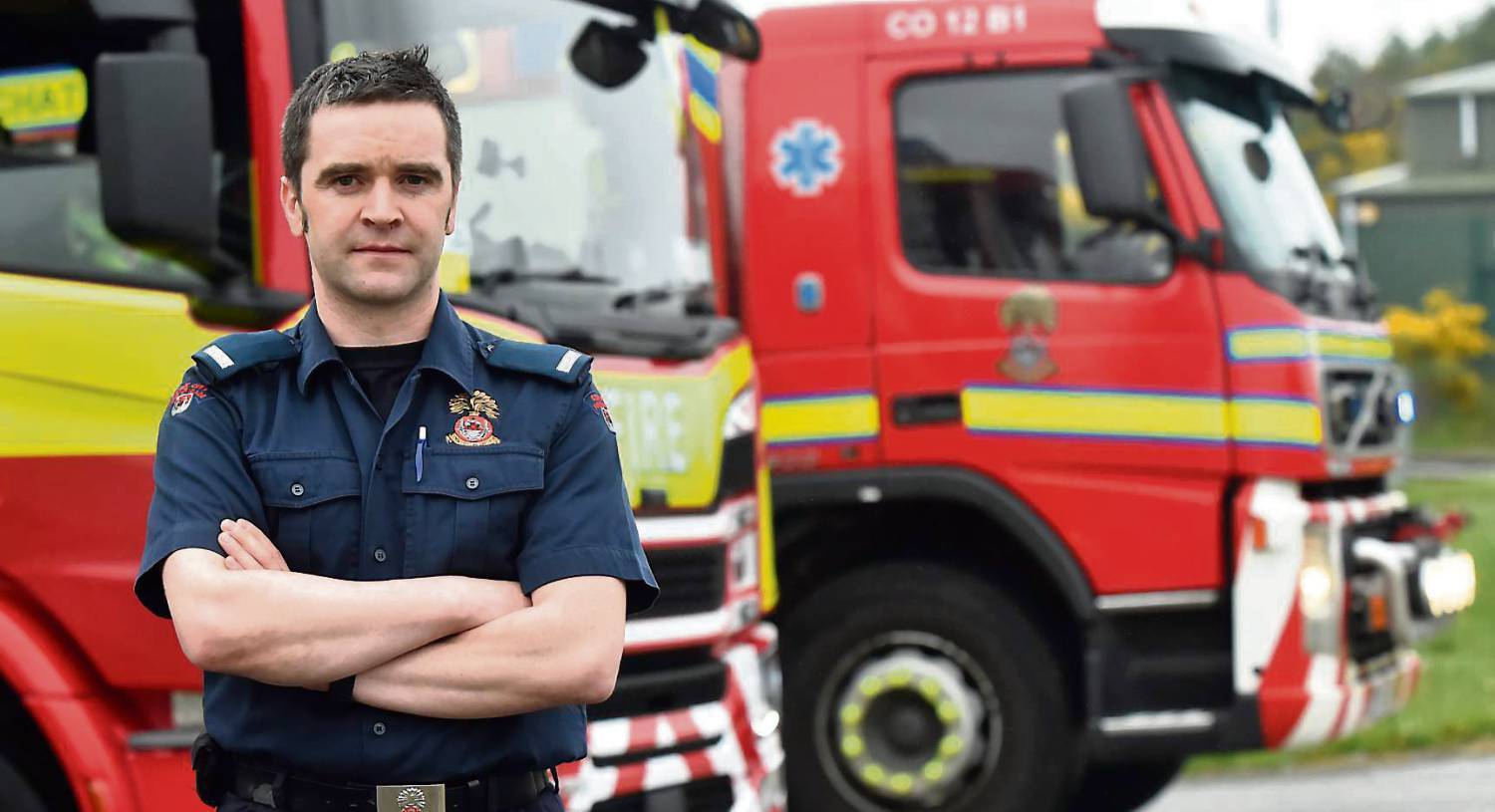

Cork City Fire Brigade has stepped up to help overstretched paramedics throughout the Covid-19 pandemic, facing risks of infection themselves as they respond to medical emergencies.
“We’re getting more medical call-outs,” said Kevin Higgins, a fifth-generation firefighter.
“The ambulance is stretched with Covid patients. After each suspected case, the ambulance has to be thoroughly cleaned, with all the doors and windows left open to get rid of any aerosols.
“That can’t be rushed, so it’s great for the public that there’s another service there that can respond to emergency calls.”
And Cork City Fire Brigade is already geared up for these calls.
For the last seven years, both the Fire and Ambulance services have responded together to approximately 200 cardiac arrests in the city each year — an unusual if not unique arrangement in Ireland.
Pooling these critical resources means that when just seconds can make the difference between life and death, someone can be there quickly.
“We have one minute to respond to a call,” said Mr Higgins, a junior officer with Cork City Fire Brigade. “There are about 30 firefighters available 24/7 in Cork City.
“We have Emergency First Responder training, we have a defibrillator, can deliver oxygen and provide advanced airways and CPR. So whoever gets there first stabilises the patient.
“There’s great teamwork. The Ambulance and the Fire Service really work together.”
And like the Ambulance Service, the Fire Service now needs to change its protocols and practices to cope with the coronavirus.
“In the current climate, the biggest risk is Covid,” said Mr Higgins. “You don’t know until you get there whether it’s a Covid patient or not.
“You have to assume every patient is Covid-
positive and put on full PPE — suits, masks, goggles, gloves — before going in to treat someone.”
Dealing with fires accounts for just 60% of the Fire Service’s work, while 40% of their callouts are in response to road traffic collisions, river rescues, ambulance assistance, or dealing with hazardous material spills.
Since the pandemic, Cork City Fire Brigade has had at least two river rescues, one woman was rescued clinging to a bank of the River Lee after she fell in while out walking on Friday. Mr Higgins advised people to be careful if walking by waterways, areas which may see increased footfall during the pandemic.
The number of kitchen fires has increased in recent weeks as more people now cook at home. There have also been gorse fires, which are, Mr Higgins said, expected over the warmer months.
But some positives have also come from the crisis —— there has been a decrease in road traffic collisions and malicious fires.
“We’re still getting our routine calls with an increase in Covid-related calls and the extra processes that go with that,” he said.
“One of the biggest worries is that there could be an outbreak at the station. We’ve split the teams over four different bases so if there was an outbreak, we would hope that it could be contained to one station.”
Stations have been closed to all non-essential visitors, and administrative staff are now working from home.
But firefighters are still working full time, completing three hours of practical training every day and one hour of lectures — cutting scrapped cars open; practising a river rescue with a firefighter in the water in a dry suit; using the hose, ladders, and pumps; practising for dealing with hazardous material; and updating their medical knowledge.
“It’s very varied. We’re constantly trying to keep up to date with new technologies and new knowledge,” Mr Higgins said.
Training is vital because in an emergency “that training kicks in”.
“You’re completely focused on doing CPR or cutting someone out of a car or getting them out of the river,” he said.
“But afterwards you do think about that person.
“Things do sometimes get on top of you and situations can be difficult to deal with emotionally. But when we get back to the station, we usually have a cup of tea and talk about what happened together and that can be the best counselling.
“We have a good bond and we have great craic together. The Fire Service tends to draw people who want to make a difference. No one ever wants to need the Fire Brigade at their door, but we’re geared up to get there, help people, and hopefully leave the scene better than we found it.”
CONNECT WITH US TODAY



Be the first to know the latest news and updates