‘Irish funeral has been turned completely on its head’, says funeral director
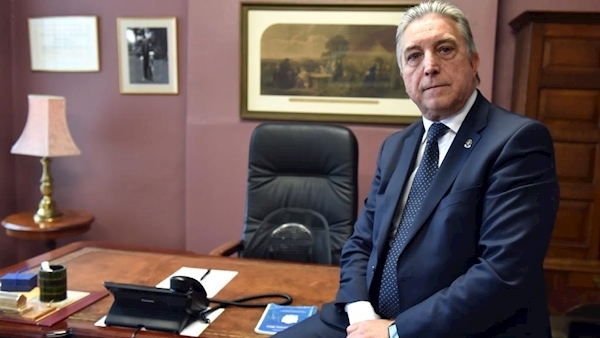
Finbarr O’Connor, of O’Connor Bros funeral home, North Gate Bridge, Cork.
“The Irish funeral has been turned completely on its head in the last three weeks,” admits funeral director Finbarr O’Connor.
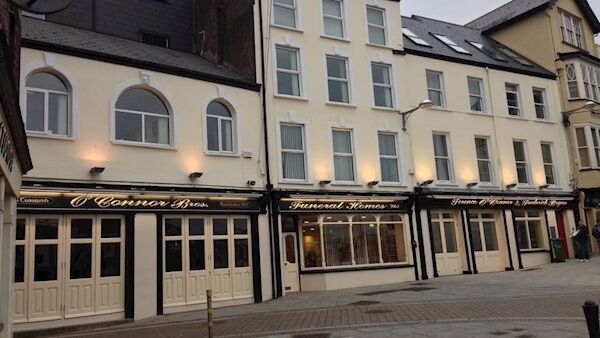
Mr O’Connor, who runs O’Connor Bros Funeral Home on Cork’s North Gate Bridge, has dealt with about seven Covid-19-related deaths since the outbreak began.
These deaths, he said, can be “particularly hard” on families.
New Government guidelines to prevent transmission of the virus prohibit kissing or washing of the body, embalming, and the use of open caskets.
Physical interactions, including shaking hands and hugging, are avoided, and funeral arrangements should not be publicised, as a maximum of 10 people can attend.
“With a Covid death, there’s no embalming; the coffin is closed,” said Mr O’Connor.
“Close contacts - generally the immediate family - are not permitted into funeral services.
“For Covid deaths we recommend a graveside service, with a memorial Mass or service held at a later date.
"And we recommend that people record a Facebook Live video from the graveside so that people who can’t travel to be there can still be part of it.”
The pandemic has changed the ceremony of death in Ireland.
Family members now work with the funeral director only on the phone and online if their loved one has died after contracting the virus, managing everything remotely, from choosing the coffin to giving the death notice.
The Island Crematorium in Ringaskiddy no longer holds services for Covid-19-related deaths, in a bid to contain the virus.
“Some deceased have been transferred straight from the hospital to the crematorium with no service,” said Mr O’Connor.
“Once the ashes have been returned from the crematorium a family could have a memorial Mass with the ashes present,” he said.
These are very difficult times for the families. All we can do is give them the best advice we can.
One positive thing Mr O’Connor has noticed throughout the pandemic is that Ireland has not yet had the terrifying number of virus-related deaths that was originally feared.
“Cork has not had the glut of Covid deaths that were expected,” he said. “I think that social distancing and the lockdown allowed Ireland to get a handle on it.
“The death rate hasn’t fluctuated. It may do in weeks to come.
“We have not seen a marked increase [in deaths], our numbers are still roughly the same as usual.”
But for deaths, whether Covid-19-related or not, similar funeral restrictions apply.
Non-essential travel is banned; there are no removals; no more than 10 people can attend the church; and post-service gatherings are banned.
In churches, two people are permitted to sit at opposite ends of a pew, with every second pew taped off to enforce social distancing.
“It’s not a normal funeral,” Mr O’Connor said.
“Funerals that would have had hundreds now have 10 people.
“Most people understand; they know it has to be done, but they’re not very happy about it.
People can feel hard done by that they didn’t get to say goodbye the way they wanted.
"And people can’t express condolences properly online, people are much better at expressing sympathy face-to-face and families miss that.
“A normal death in normal times is hard on families. But an abnormal death in abnormal times is even harder. And we’re definitely in abnormal times.”
The times are so abnormal that the Government announced yesterday that nurses and paramedics will now be legally allowed to pronounce someone’s death - usually the preserve of doctors - to relieve pressure on their colleagues during the pandemic.
All Covid-related deaths must now be reported to the coroner, although an autopsy will not normally be required.
In cases where it is unclear whether Covid-19 was the cause of death, a test may be required.
In all confirmed or suspected cases of Covid-19, the body may be placed in a body bag before it is put in a coffin, in a bid to contain the virus.
Mr O’Connor, whose family has been in the profession since 1887 and whose father was the first person to bring embalming technology to Ireland from America in 1967, said that these times are unprecedented.
“When I talk to families now, a question I have to ask is ‘did your loved one have Covid-19?’ Families can be reluctant to tell you,” he said.
“I think that some people feel that there’s a stigma attached to testing positive.
“We have to protect ourselves too, because if one of us caught it, we’d have to close down the business while everyone went into isolation for two weeks.
"And there are not very many funeral directors out there so it would put pressure on the system.
“We’re the fourth emergency service - Gardaí, ambulance, fire brigade, and us — when a family is in need we’re always contactable,” he added.
CONNECT WITH US TODAY



Be the first to know the latest news and updates