Govt to bring in laws restricting microbeads after EU approval
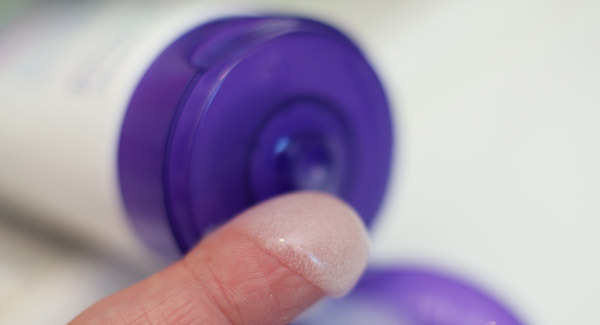
The EU has permitted the Irish government to introduce legislation restricting use of plastic microbeads to protect marine wildlife and the environment.

Govt to bring in laws restricting microbeads after EU approval

The EU has permitted the Irish government to introduce legislation restricting use of plastic microbeads to protect marine wildlife and the environment.

Minister for Housing, Planning and Local Government Eoghan Murphy confirmed the European Commission’s clearance last night (wed), and said he hoped the new legislation would be in place as soon as possible.


“While several states legislated to prohibit personal care products containing plastic microbeads Ireland will be the first EU member state to extend such prohibition to detergents, abrasive scouring agents and other cleaning products,"he said.

Mr Murphy also announced initiation of an expert group to advise on expanding Ireland’s marine protected areas (MPAs).

He was speaking at An Taisce’s annual Clean Coasts “Love Your Coast” photography awards in The Morrison Hotel, Dublin.

Mr Murphy acknowledged that plastic microbeads “represent only one element of the microplastics in our oceans”.

He said:

“However, it is estimated that many billions are being washed down the drain and into the world’s rivers, lakes and seas each year. Once in our rivers and seas, they can last for centuries without breaking down. Aquatic animals may ingest them and they cannot be removed once they are in the marine environment.”

The Microbeads (Prohibition) Bill 2019 , which is at committee stage in the DĂĄil, required EU approval, due to its proposed restriction on free movement of goods in the European single market.

The legislation will provide for a prohibition of the “manufacture, import, export or sale of products containing intentionally added plastic microbeads, to include “rinse-off” personal care products, detergents, and domestic and industrial abrasive cleaning products and scouring agents”.

Mr Murphy submitted a derogation notification for the Bill to the European Commission on 19th July 2019, along with detailed technical documentation supporting the justification for the restriction on environment grounds.

The notification carried with it a three month standstill period during which time the legislation could not be enacted in compliance with EU legislation, and that standstill period concluded on October 21st.

The Environmental Protection Agency will be responsible for implementing new legislation, Mr Murphy said.

The legislation proposes that a person convicted would receive a Class A fine and/or a prison sentence of up to six months on summary conviction, or a fine of up to €3,000,000 and or a prison sentence of up to five years on indictment.

In addition to introducing national legislation, the Government has been “actively supporting the development of measures at EU-level to tackle plastic waste including through the European Strategy for Plastics in a Circular Economy adopted in January 2018”, Mr Murphy said.

Mr Murphy also said he intended to bring forward primary legislation to designate marine protected areas (MPAs) next year, and plans to “significantly expand” Ireland’s network of such protected zones to meet current internationally agreed target of ten per cent.

He said it was central to Ireland’s implementation of the EU Marine Strategy Framework Directive, the OSPAR Convention, and commitments under the UN Sustainable Development Goals and the UN Convention on Biological Diversity”.

He said that he had invited Professor Tasman Crowe, director of the Earth Institute and associated dean of science at University College, Dublin to chair an expert advisory group.

“The other members of the advisory group will be selected from across a range of sectors and will consist of members with appropriate national and international expertise,”Mr Murphy said, and its composition would be “announced shortly”.

“Their work will include reviewing existing protection measures and advising me on the processes required for the creation of MPAs,”Mr Murphy said.

The group “will also consider the gaps in existing legislation to underpin such a network” he said, and he expected the work would take place over a period of six months. The report with recommendations would “feed into the development of this important new legislation”, he said.

More in this section

Lunchtime News

Newsletter

Keep up with stories of the day with our lunchtime news wrap and important breaking news alerts.

Cookie Policy Privacy Policy Brand Safety FAQ Help Contact Us Terms and Conditions

© Examiner Echo Group Limited