Former Lord Mayor: Govt must clarify proposals for directly-elected mayors
The Government must urgently clarify its proposals for directly-elected mayors in Cork, Limerick and Waterford before people are asked to vote on this issue in May.
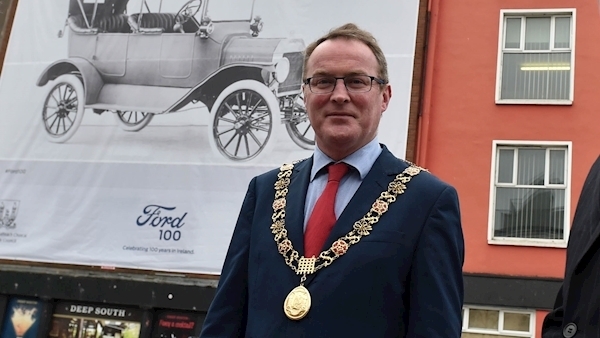
Former Lord Mayor of Cork, Fine Gael Cllr Des Cahill, said with less than 80 days until plebiscites in these areas determine if people want a directly-elected mayor, voters still don’t know what kind of powers the new role will have.
“We need clarity on the powers and duties of a directly-elected mayor, especially in relation to the role in Cork, where there is a very special affinity with the office of Lord Mayor,” he said.
“I fear if they (the Government) don’t explain this proposal properly, people will think they will be voting in favour of a directly-elected Lord Mayor.
The Government needs to clarify that the position is more like a directly-elected council chief executive. But with less than 12 weeks to go before the vote, no-one knows exactly what they will be voting for. This needs to be resolved soon.
His call came last night as the Cork Mayor Campaign, a cross-party movement campaigning for a directly-elected mayor in Cork, hosted a public workshop on the issue. It was facilitated by Dr Aodh Quinlivan, a lecturer in UCC's Department of Government and Politics and the director of the Centre for Local and Regional Governance at UCC.
Dr Quinlivan said the idea of a directly-elected mayor is a “sound concept” but with less than 12 weeks to the plebiscites, people still have no firm idea what they may be voting for, other than the basic question in favour or against the concept: “There is a real danger that these plebiscites could be held in a vacuum. We need details and we need them now."
“We have been at this for 20 years, since the Local Government Act 2001, and yet, just a few months before a plebiscite, they appear to be still working out the details. We’ve seen what happens in Brexit when you’re asked to vote on something and then work it out afterwards.”
But he emphasised that introducing directly-elected mayors is not a panacea: “There are a lot of flaws in our local government system and it’s important that a directly elected mayor, whatever the powers, is placed on top of those. The role should be part of a wider set of reforms."
Green Party candidate, Oliver Moran, who helped organise the workshops, said the issues raised at last night's workshop will be fed back to the minister for local government and electoral reform, John Paul Phelan.
“We need to ensure that people are absolutely sure about what they are voting on. We really want this nailed down otherwise you end up with something like Brexit," he said.
And there is a real danger of the idea being voted down because people still don’t know what’s planned. It’s like ‘on the back of a fag box’ approach.
Mr Phelan has outlined two options for reformed mayoralties.
One is to establish a directly-elected mayor with no extra powers, based on the current position of council mayors, who chair council meetings, while the other is for executive mayors who would take on some of the functions of a council chief executive.
Reports last month suggested the directly-elected mayor’s salary scale could be as high as €130,000 - but no decision has yet been made.
CONNECT WITH US TODAY



Be the first to know the latest news and updates