Paid recharging eyed for electric vehicles to replace 'unsustainable' system
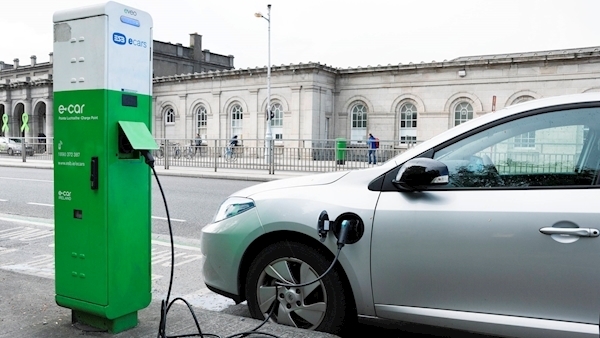
Electric car owners could be asked to pay to charge up their vehicles in public places under plans being considered by the Government.
Documents seen by the Irish Examiner reveal the Department of Environment and ministers believe the “current system of unlimited free public recharging is not considered sustainable”.
Drivers having to pay, along with owners of car parks, fuel stations, and shopping centre footing bills could help fund the network for electric vehicles, internal emails suggest.
The previous environment minister, Denis Naughten, was told by department officials it “will be necessary to introduce fees in the future”.
A briefing note prepared for a meeting between Mr Naughten and Transport Minister Shane Ross said: “This will ensure people pay a fair price for the energy used and encourage people to recharge at home where possible. It is important that the level of fees introduced for use of public rechargers does not lead to a significant disincentive effect to the purchase of new electric vehicles.”
There will only be an estimated 8,000 electric vehicles on Ireland’s roads by 2020, less than half of the Government’s repeatedly-revised target. Targets have continuously tumbled.
In 2008, the aim was electric cars would make up 10% of the car fleet, equivalent to 200,000, by 2020. In 2014, the target was reduced to 50,000 and recently fell to 20,000.
Despite grants and relief worth up to €10,000, low running costs and minimal tax, a problem for electric vehicle users is ‘range anxiety’ and fears about needing a power source.
The ESB has said limited fees will apply at some public top-up points later this year, particularly for fast-charge spots. These new hubs will give a car 100km of power in six minutes.
However, evidence that the Government and Department of Environment have considered an official system of fees could put the brakes on drivers swapping their fossil fuel-powered cars for plug-in vehicles. Ministers, including Paschal Donohoe who oversees taxation of vehicles, were also told about the disappointing take-up in electric car use.
“Despite all of the supports that are in place, considered generous by international standards, the pace of transition to EVs has been slower than expected likely due to a range of factors including limited vehicle choice, range anxiety and low consumer awareness,” one department noted.
An internal department email about electric cars also obtained under Freedom of Information, adds: “The potential introduction of payments for charging would both encourage electric vehicle owners to charge at home and raise revenue to fund the operation and maintenance of the network.”
A taskforce workshop for stakeholders in the electric car sector has also considered how users may be charged. FoI files show the Sustainable Energy Authority of Ireland (SEAI) event considered that with a system of fees for electric charging, consumer awareness on pricing was required while fees may need to reflect seasonal conditions/electricity prices.
It was also felt by firms and state agencies with an interest in electric vehicles that pricing should remain below the cost of diesel and petrol. A note on the SEAI event adds: “A phased basis for the introduction of public charging costs would be advisable.”

CONNECT WITH US TODAY



Be the first to know the latest news and updates