West Cork campaigners seek solar farm guidelines
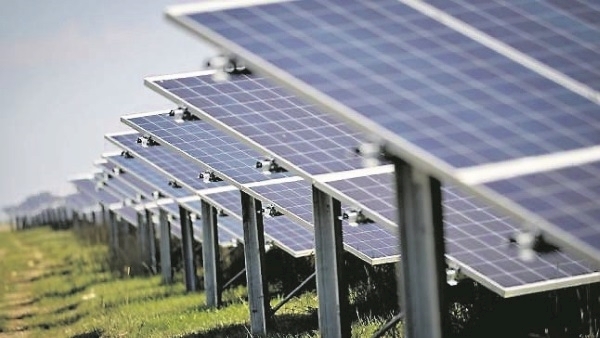
Campaigners opposing a large solar farm planned in West Cork have called on the Government and local authorities to introduce legislation and guidelines to control and regulate the development of such projects around the country.
The Finnis-Mishells Solar Free Valley Group claims the absence of national guidelines has resulted in a free-for-all rush to obtain planning permission for solar-farm developments on prime agricultural land.
“This policy vacuum creates a situation whereby opportunistic developers are taking advantage of the situation and trying to push through poorly-thought out applications without consideration for the environment or rural communities,” the group’s chairman, Mike Walsh, said.
Dozens of applications for solar farms have been lodged in the past two years with the vast majority securing planning permission, despite strong opposition in many cases from communities. The majority of projects have been located in rural areas of Munster and south Leinster.
The group has lodged an appeal with Bord Pleanála against plans for the development of a 13.1MW solar farm at a large site around 4km northwest of Bandon which was sanctioned by Cork Co Council last year.
BNRG Neoen Holdings, a Dublin-based renewable energy firm, is seeking to build a solar farm consisting of 40,000 solar panels on a 40- hectare site in the townlands of Finnis and Mishells.
The cost of the project is estimated at over €13m and it will generate energy to power the equivalent of over 1,750 homes per annum.
A ruling on the case is expected later this month.
Although the Finnis- Mishells group is not opposed to the principle of renewable energy, Mr Walsh said there was an issue at a national level about solar farms being located “in the appropriate environment with proper checks and balances.”
If they are not put in place will the people of Ireland look back and ask who and how was all of this allowed to happen to our environment,” Mr Walsh said.
He said there was still an opportunity to avoid mistakes that had “riddled the wind farm industry over the past 20 years.”
In their own case, Mr Walsh said the industrial scale of the project was not in keeping with the character of the local area or “good agricultural practice” as it would result in the loss of 40 acres of highly fertile agricultural land in the Ballymahane River valley.
“Greenfield sites are used to decrease installation costs and increase profits for the developer at the cost of the local communities, environment and the country in general,” said Mr Walsh.
In the UK, guidelines recommend solar farms should ideally be located on low-grade farmland and brownfield sites. In addition, they should avoid affecting the visual aspect of landscapes and should predominantly be on flat terrain which is well screened by hedges and trees.
Last month, the Minister for Housing, Planning and Local Government, Eoghan Murphy said in the absence of national guidelines, he was satisfied that the planning code was “sufficiently robust” to facilitate the assessment of individual planning permission applications for solar farm development.