‘Staffing meets air medical needs of patients’ says ICP President
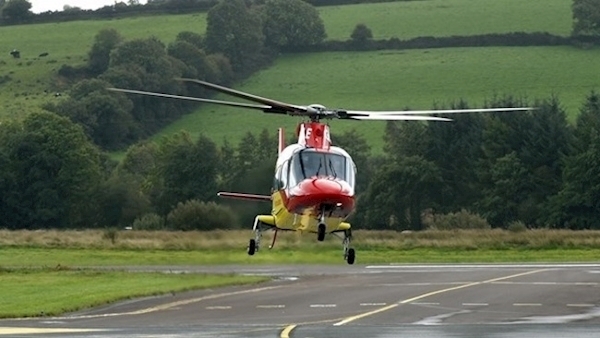
President of the Irish College of Paramedics has hit back at criticism of the medical staffing of Ireland’s new air ambulance service, insisting it “meets the requirements of patients”.

‘Staffing meets air medical needs of patients’ says ICP President

President of the Irish College of Paramedics has hit back at criticism of the medical staffing of Ireland’s new air ambulance service, insisting it “meets the requirements of patients”.

Dr Shane Knox moved to defend the advanced paramedic (AP) and emergency medical technician (EMT) model proposed for the Irish Community Rapid Response’s (ICRR) new helicopter emergency medical service (HEMS) after a wave of criticism and concern from international HEMS experts, consultants and medical bodies.

“I personally would be very content to see an experienced AP and EMT from HEMS coming towards me at a scene, as either a colleague or indeed a patient,” said Dr Knox.

“Whilst we may be considered by some as the ‘Toyota’ and not the ‘Rolls Royce’, I would like to think we are part of the Toyota family aspiring to be a Lexus, remembering too that Toyota is ‘the best-built car in the world’.”

But Dr Knox, who is also an assistant chief ambulance officer with the National Ambulance Service (NAS), said the service should be reviewed after a while to determine if a different model is required.

ICRR, founded by pre-hospital care campaigner, John Kearney, had hoped to launch a ‘doctor-led’ HEMS service.

But the Irish Examiner revealed last week that the life-saving service, which is being supported by the HSE and NAS, will not have a doctor on board. The medical crew will mirror the existing AP/EMT model on the Athlone-based Air Corps 112 HEMS service.

The revelation prompted concerns from international HEMS and pre-hospital care experts, and from the Irish Association for Emergency Medicine (IAEM).

In an open letter to the Government, more than a dozen international HEMS experts said the medical staffing model on the new service will not be up to the standard expected, and they warned that it will not be able to provide advanced pre-hospital medical and trauma care to the critically ill and injured patients it is tasked to.

One of the signatories, Assistant Professor Brian Burns, of the Greater Sydney Area HEMS in Australia, said they have concerns that the new service could be the “Toyota” of the pre-hospital trauma world, and not the Rolls Royce.

The IAEM echoed these concerns and warned that the crewing model will not have the “necessary skills or scope of practice to meet the emergency needs of the most seriously ill or severely injured”.

It said any new HEMS should meet international best practice and be staffed by a doctor/paramedic team: “This is the accepted model of HEMS staffing in the United Kingdom, mainland Europe, and Australia and is supported by a significant body of scientific evidence.”

But Dr Knox defended the staffing arrangements. He said most emergency calls in Ireland are not related to trauma.

He said the EMT/AP model has served the country well over the last six years, and there has been “no identified need” to change the model or “evidence to suggest it is not working”.

And he said people can’t compare HEMS in an Australian state with a population about 10 times the size of the Cork/Kerry region and an area about the same size as Britain.

The new HEMS is due to go live within weeks as a dedicated asset under the 999/112 emergency call system.

More in this section

Lunchtime News

Newsletter

Keep up with stories of the day with our lunchtime news wrap and important breaking news alerts.

Cookie Policy Privacy Policy Brand Safety FAQ Help Contact Us Terms and Conditions

© Examiner Echo Group Limited