Analysis: Fianna Fáil pays price for doing the right thing
Doing the right thing can sometimes be a thankless task. Fianna Fáil’s decision to prop up Fine Gael from opposition in 2016 is looking increasingly unpopular.
While Micheál Martin and his chief lieutenants have sought to claim they did so in the national interest, it is clear they are getting no thanks for it.
The pain being suffered by the party because of the confidence and supply arrangement has been well ventilated, and many within the party believe that pain must be brought to an end.
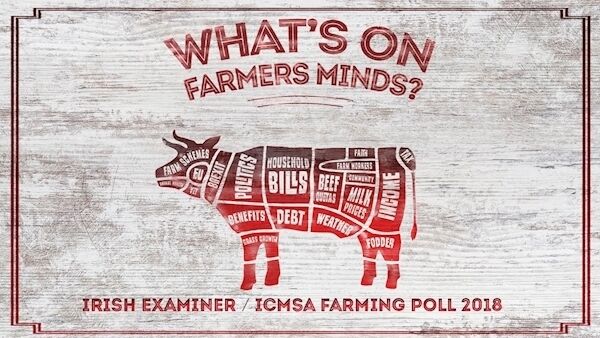
It is clear from our latest national opinion poll of farmers, carried out by Behaviour and Attitudes, that many in rural Ireland feel the same way.
This year, we asked a number of direct questions about their views about confidence and supply and the impact it has had on the once omnipresent Fianna Fáil.
The key question asked was: “Has the Confidence and Supply agreement damaged Fianna Fáil?”
Fianna Fáil TD Jim O'Callaghan says he doesn't see his party's Confidence and Supply deal with the Government being renewed without major policy changes on health and housing. pic.twitter.com/xXJo6G3jhc
— RTÉ News (@rtenews) September 18, 2018
Overall, 45% either agreed strongly or slightly that it has. When the don’t knows are removed from the equation, that figure jumps to 65%.
Just one in 10 polled said they felt that the deal had helped the party, while another 14% said they slightly disagreed with the question.
When the underlying demographic trends are examined, it would appear that a majority of identified Fianna Fáil supporters, 57%, agree that the party has been damaged by confidence and supply.
From Martin’s point of view, the difficult limitations of the deal were evident in the Dáil with his lacklustre performance at leaders’ questions on the first day back of term.
Boxed in by not being able to really tackle Fine Gael’s failure as his party helps write the budget every year, he has been forced to raise largely niche issues, like the pay inequality in voluntary hospitals.
His choice of issue led to mumblings of discontent from his already tetchy party colleagues who feel he needs to be more aggressive.
Such unhappiness among farming supporters of Fianna Fáil and within his own ranks make it uncertain whether Martin could get an extension to the deal with Fine Gael through the parliamentary party. The proposal is a two-year extension, as suggested by Taoiseach Leo Varadkar, but Martin could still face stiff opposition to a one-year deal, which people like Dara Calleary have appeared to propose.
While many of his own Dáil troops are unhappy, the farming public marginally feel the party is better under Martin with 45% agreeing with the proposal when put to them by pollsters.
However, almost one in three — 30% — either strongly or slightly felt the party was worse off under Martin’s leadership.
In terms of identified Fianna Fáil voters, three out of five voters agree with the proposition that the party is better off under Martin’s leadership.
When looking at the age profile of voting intentions and sentiment, those over 65 are most inclined to say that Martin has been a good leader but that the deal with Fine Gael has damaged the party, our poll shows.
The mixed signals contained in the figures are also reflective, perhaps, that there is not an obvious successor to his crown and most people feel that as of now, no one within the current ranks could do better.
It was also interesting to see in the poll that two out of five farmers polled felt the party had been damaged by the decision of the party leadership to back the proposal to liberalise the country’s abortion laws.
The poll also shows that a grand coalition between Fine Gael and Fianna Fáil is the overwhelming top choice for the next government among farming voters. Since the last comparable poll last year, the support for such a union has risen from 35% to 39%.
A long way behind, the next favoured option is a coalition between Fianna Fáil and Independents. Support for this has dropped from 16% to 13%,
which is one point ahead of a union between Fine Gael and Independents, which fell from 16% to 12%.
There were increases in support for both a coalition between Fine Gael and Sinn Féin, from 4% to 8%, and between Fianna Fáil and Sinn Féin, from 5% to 8%, but both from very low bases.
Among farmers, Sinn Féin — despite the change of leader — remain an unpalatable option.
Asked did the change of leadership from Gerry Adams to Mary Lou McDonald make them more attractive, just 21% of respondents said it did. In total, 62% or almost two thirds of those polled, disagreed.
Almost half of those polled, 48%, strongly disagreed with the proposition that they would be more likely to vote for Sinn Féin now than when Mr Adams was in charge.
Looking at age profiles, the poll shows that some younger farmers (under 35s) are marginally more open to Sinn Féin than before but older farmers are clearly not willing to consider the party for high office just yet.
CONNECT WITH US TODAY



Be the first to know the latest news and updates