Honohan claims he mentioned a bailout on RTE to calm 'alarm', not to undermine Government

Fiachra Ó Cionnaith, Political Reporter
TWITTER HANDLE: @ocionnaith
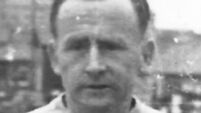
Central Bank governor Patrick Honohan made his infamous call to RTE revealing Ireland was entering a bailout to calm "alarm" and help the country - despite claims he did so to "undermine" the Government's position and help a de facto ECB "financial coup d-etat".
The senior financial figure made the claims during his third meeting with the Oireachtas banking inquiry yesterday, in which he outlined the growing pressure from "Europe's Lehman Brothers" to enter a bailout in the seven months before the November 18, 2010, radio interview.
Speaking in one of his last high-profile public events before retiring as governor later this year, Prof Honohan said the historic phone call to Morning Ireland was done with Ireland's best interest in mind.
He said on the day before the phone call he was increasingly concerned after learning €900m in deposits had left Irish banks in a single 24 hour period, and that there may be a run on the institutions.
During an ECB governing council meeting in Frankfurt, Germany, Prof Honohan became aware of growing ECB pressure for then finance minister Brian Lenihan to announce Ireland was entering a bailout programme.
However, Mr Lenihan was insistent it was too early to confirm such a move as preliminary discussions were only just underway, and told Prof Honohan this in a phone call at "9pm or 10pm" on November 17, 2010.
After meeting unnamed "relevant senior people" in a corridor, Prof Honohan asked "will you contradict me if I say 'don't worry, the ECB will give unlimited money", an issue they confirmed.
While he said his subsequent decision to phone into Morning Ireland and reveal the bailout plan was not the result of a directive from the ECB, the Central Bank governor - in effect the ECB's official in Ireland - said he subsequently made the call the next morning.
"They couldn't understand [the delay]. I don't think it was the ECB versus Ireland, it was the ECB saying 'come on Ireland, come on, you know you have to do this'," Prof Honohan told Fine Gael senator Michael D'Arcy.
"There was a sense of excitement and concern, alarm I would say, in Frankfurt with the people I talked to informally on the Wednesday night.
"I told him [Lenihan] 'look, they want you to announce a programme, you know I think you should'. And he said, 'I can't do that'. He was very cross, there was no talking to him.
"So I went back into the meeting with my tail between my legs and I wondered what was going to happen next. I started to worry that I wasn't doing enough.
"There was a sense of panic, both in official circles and the market. So I thought maybe I could say on the radio 'look, we have loads of money in the Central Bank. We can provide money to these banks. Your money is perfectly safe," he said.
Prof Honohan said Mr Lenihan was "not happy" to hear him on the radio the next morning, but insisted he did not "undermine" government or Mr D'Arcy's claim he took part in a "financial coup d'etat".
He told Labour senator Susan O Keeffe ministers still made the call, and could have contradicted him if needed.
The outgoing Central Bank governor also told the inquiry that in the months before the infamous interview, which came on the same day as official bailout negotiations in Dublin began, the IMF and ECB were growing fearful of Ireland's situation - partially due to the scale of NAMA loans.
He said Ireland was initially seen as being "ahead of the curve" due to the blanket guarantee, but as the two year protection began to run out views hardened.
On April 10, 2010, Prof Honohan and Mr Lenihan were discussing the plight of Greece, which at the time was preparing to enter a bailout.
Mr Lenihan said he felt Ireland should support the move as "we might make money" on it. However, Prof Honohan said we should back it as "we might be next".
When Mr Lenihan queried the view, Prof Honohan said he had been told while Greece is "Europe's Bear Stearns, Ireland could be Europe's Lehman Brothers" as it was potentially in an even more dangerous situation.
In May, Prof Honohan said he received a call "out of the blue" from IMF official Askoka Mody who suggested Ireland may be interested in a "precautionary line of credit", an issue he said should be tried but which Mr Lenihan rejected.
Over the following summer, Prof Honohan said IMF and ECB officials began to grow concerned over the debt Ireland held, with "one person saying why did you buy all those NAMA loans", and openly questioning the impact it could have on Europe.
The situation, he said, led to "pressure" to enter a bailout from September 2010 onwards and Jean Claude Trichet's controversial "advice" letter explaining the risk of funds drying up if a bailout did not take place.
Prof Honohan said he advised Mr Trichet not to send the letter as it would sound like a "threat", but believes the official is "a friend to Ireland".
Meanwhile, Prof Honohan also said the terms of the bailout were "unsatisfactory" because of the high interest rate and lack of protection from "tail risks" involved, but that the alternative would have caused more damage.
He said the deal ultimately did Ireland a "favour" as otherwise the country would have been hit with higher taxes and deeper cuts today.
While he said Anglo Irish and Irish Nationwide should not have been included in the September 2008 guarantee, this decision only cost Ireland "€2-10bn" and is not as significant as people believe.
He said he felt senior bondholders should have been burned, but confirmed the Troika would not have allowed a bailout if this happened.
CONNECT WITH US TODAY



Be the first to know the latest news and updates