Noonan claims Budget 2014 'could have been tougher'
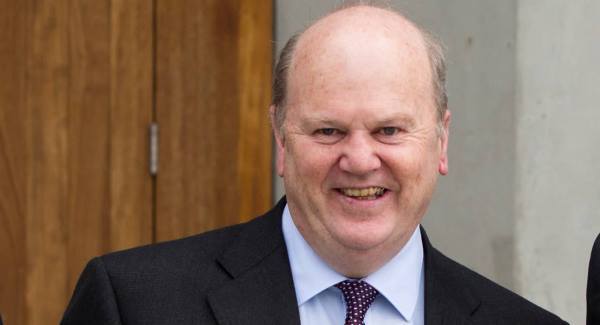
Austerity measures in Budget 2014 could have been worse, Finance Minister Michael Noonan has said .
He claimed the Government took a decision to ease up on hard-hitting spending cuts and tax hikes in a €2.5bn package because the Irish people have already suffered.
“As WB Yeats said in Easter 1916 , ’too long a sacrifice can make a stone of the heart’,” he said.
“I know that there is a view that the consolidation should go further, but people have already made many sacrifices.”
The latest in a long line of austerity budgets to hit Ireland over the last five years means nearly €30bn has been sucked from the economy.
Spending initiatives and tax hikes being announced include:
* An 8% rise from 33% to 41% in Dirt tax – the tax paid on interest earned in bank accounts;
* Free GP care to all under-fives;
* The cost of a pack of 20 cigarettes is to increase by 10 cents;
* The excise duty on a pint of beer or cider, and a standard measure of spirits, is to go up by 10 cents;
* The duty on a bottle of wine is to increase by 50 cents;
* The air travel tax will end on April 1 next year;
* The 0.6% stamp duty levy on pension fund assets is to increase to 0.75% for next year. It will fall to 0.15% for 2015;
* The special 9% VAT rate for tourism-related services is to be retained.
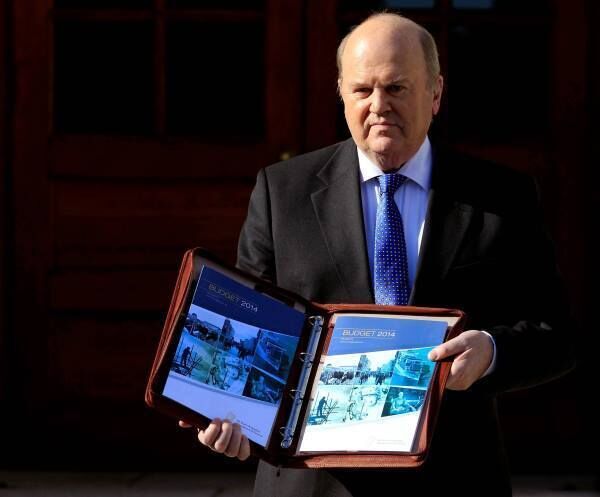
Despite international pressure, Mr Noonan insisted there will be no change in Ireland's 12.5% corporation tax rate.
But against the backdrop of global debate on tax avoidance, he said laws will be tightened to copper-fasten Ireland’s reputation for foreign investors.
“Let me be crystal clear,” he said.
“Ireland wants to be part of the solution to this global tax challenge, not part of the problem.”
Mr Noonan announced a new international tax strategy statement while legislation will be tweaked to prevent Irish registered companies claiming they are “stateless” in terms of their place of tax residency.
“Countries are increasingly competing more and more aggressively for mobile foreign direct investment,” said Mr Noonan.
“I want Ireland to play fair – as we have always done – and I want Ireland to play to win. That is why I will continue to examine ways in which Ireland can ensure that our corporate tax regime remains competitive.”
Irish banks will be hit with an annual €150m levy from next year until 2016.
Mr Noonan said the levy, similar to those in other European countries, reflects the significant role played by the banking sector in the economic crisis.
The finance minister said by the time the Budget measures are passed into law on January 1, Ireland should have left the bailout programme.
“We will have closed this chapter of Ireland’s history that began for most of us with the Governor of the Central Bank announcing to the Irish public that the country would be forced to turn to the lenders of last resort,” he said.
“There will be no promissory notes, there will be no Anglo Irish Bank and there will be no bank guarantee. We will have exited the programme and Ireland will have been handed back her purse.”
But he warned many difficult choices will have to be made in the years ahead.
“We are well along the recovery path and it is time now, as a nation, to begin to look forward,” he said.
Under spending cuts, it was announced that:
*Dole payments to jobseekers aged 22 to 24 are to be cut from €144 to €100 per week
* Jobseekers aged 25 will see personal rate reduced from €188 to €144 per week
* Telephone allowance for pensioners is to be scrapped
* Maternity benefit is to be standardised to €230 per week for new claimants
* Number of waiting days for illness benefit will increase from three days to six days
There will be no reduction in basic social welfare rates for people of working age and pensioners and there will be no changes to child benefit or the weekly fuel allowance.
Elsewhere, maternity rates are being standardised. Rather than having varying levels based on contributions a mother has made, a single benefit of €230 a week will be introduced from January saving €30m a year.
A new illness benefit arrangement is being put in place increasing the number of waiting days from three days to six days.
Child benefit rates are being maintained at €130 a month.


CONNECT WITH US TODAY



Be the first to know the latest news and updates