Kenny and Gilmore claim country 'heading in the right direction'
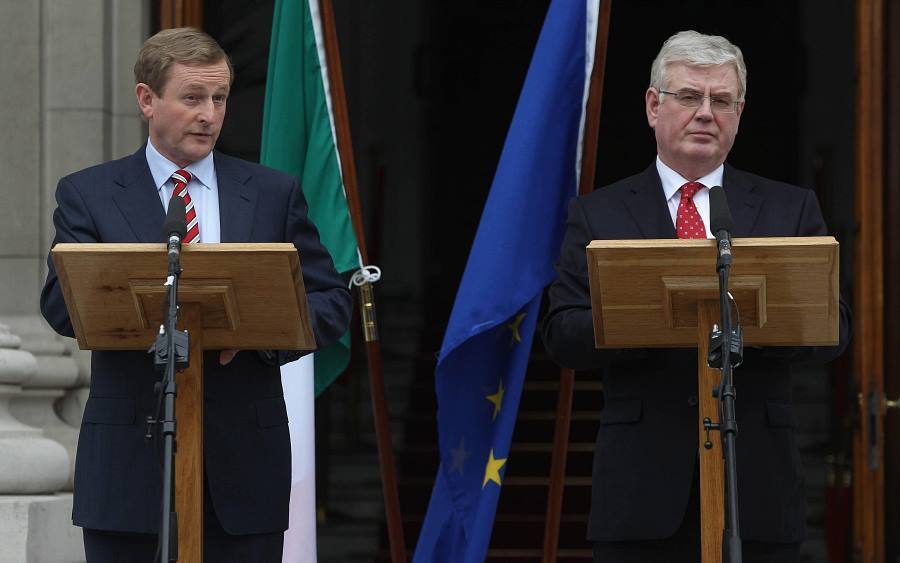
The Taoiseach Enda Kenny and Tánaiste Eamon Gilmore have said they want "most families" in mortgage arrears offered a sustainable solution by next year.
Growing the economy to create jobs and exiting the IMF-European bailout programme are also set out as priorities.
Mr Kenny and Mr Gilmore have launched the two-year review of the Programme for Government, saying two thirds of the commitments have been progressed.
They said they inherited a country in deep crisis two years ago and have worked with the Irish people since then and are now "heading in the right direction".
The Taoiseach also insisted public sector workers will be able to plan ahead knowing they face no further cuts following the new pay deal.
As unions debate whether to accept proposals under the extension of the Croke Park agreement to shave €1bn from the State’s pay bill, he urged workers to accept its terms.
“Until the end of the Programme for Government, the Government will not be making any further cutbacks,” Mr Kenny said.
“I think that’s a good thing that everyone will be able to plan their lives in respect to that from here on out.”
The Taoiseach insisted the Coalition will make no further cuts to public servants’ wages.
He repeated claims that the new proposals, outlined by the Labour Relations Commission last week, was fair across the board and demand that those who earn the most will pay the most.
“A decision has to be made by the unions,” Mr Kenny added.
“Some of them are saying this is a good thing, but some of them are not happy about it.
“They have to make up their minds and I hope they will accept it.”
Speaking in Irish – to mark La Na Gaeilge, or Irish Language Day – Mr Kenny said Opposition TDs criticising the new deal needed to see “the bigger picture”.
He pointed out that gardaí and nurses, whose representatives walked out of crunch negotiations at the eleventh hour last week – are not the only workers affected by the new agreement.
He said teachers, local council workers and other staff will be forced to shoulder the burden.
The Taoiseach thanked the unions that remained in the talks and insisted their contribution impacted some of the finer details of the deal.
This follows Mr Kenny’s rejection of accusations yesterday that the Government had attempted to divide and conquer trade unions over the new public sector pay deal.
The State’s public sector pay bill accounts for 35% of total public spending.
The Unite trade union became the latest to recommend its members vote against the deal, claiming it will inflict more misery on the 6,500 workers it represents.
The trade union executive of Siptu is also considering the proposals.
A string of unions and associations have already refused support for the deal, which will see cuts to salaries of more than €65,000, frozen increments and longer working hours with no extra pay.
The Civil and Public Service Union (CPSU), the largest union in the government sector, the Teachers’ Union of Ireland and the Irish Federation of University Teachers became the latest to voice opposition to the agreement late last week.
Workers are expected to vote on whether to accept the proposals within the next month.