Rabbitte boosts bailout rate hopes
A Government minister has said he is hopeful cheaper interest rates for the state’s €85bn bailout will be agreed within 10 days.
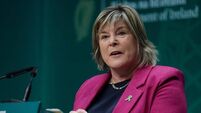
Communications Minister Pat Rabbitte reiterated warnings that Ireland was being charged too much to save banks, repay their debts and avoid national bankruptcy.
He made the claims as Irish Central Bank governor Patrick Honohan faced down accusations from one of the country’s most respected economists that he got his sums wrong on the cost of rescuing the banks.
Mr Rabbitte said a cheaper loan deal may be agreed by May 16-17 when European Union finance ministers meet again.
“The Government is absolutely satisfied that the existing rates are punitive and must be reduced,” the minister said.
“The whole point of this kind of agreement is so the country affected can get access to the normal debt markets again within the timeframe prescribed.
“Quite frankly the rate on Ireland must be reduced and in my own view the debt must be rescheduled.”
The minister also disputed the damning assessment of the debt crisis by University College Dublin economist Morgan Kelly – the first expert to predict Ireland’s economic crash – who has slated Mr Honohan’s calculations of bank losses.
The final bill, announced just over a month ago, is €70bn.
Mr Honohan said the deal struck with the International Monetary Fund and European authorities last November was agreed in a hurry and designed to be altered.
“It was not a final solution,” he said.
“I would regard it as a holding operation, something to offer a window of time in which to get what could be sorted out within our own competence in Ireland sorted out.
“It’s not the end of the story. Negotiations, discussions will continue with Europe for a long time to come as we know there are already discussions about the interest rate and so forth.”
Mr Kelly argued in The Irish Times that Ireland is heading for bankruptcy unless it pulls out of the IMF-EU deal.
Mr Rabbitte went on to describe Mr Kelly’s forecast of national bankruptcy under the weight of IMF-EU bailout loans as a “powerful horror polemic” which failed to give a viable solution to the debt crisis.
Mr Honohan also hit out and, while he claimed a lot of Mr Kelly’s analysis was “spot on”, he also accused the respected economist of using “somewhat hyperbolic language”.
The Governor said: “It’s very important to listen to people who are swimming against the tide.”
But he then claimed there were serious errors in Mr Kelly’s analysis.
“The story he spins is somewhat incomplete – maybe what I would like to start with is what is the most startling assertion that I, and he put it down to me rather than any institution, made a catastrophic error (on bank losses),” the governor said.
“The answer is no.”
Mr Honohan said opting to bin the 2008 bank guarantee – which ensured big European lenders would be repaid regardless of Irish banking losses – would create disorderly bankruptcy.
Mr Honohan said he had taken a lot of legal advice on whether the guarantee could be reversed.
“There was no way of walking. There was no way of getting the Government to walk away from that very formal guarantee,” he said.
Mr Honohan said he wanted to nail the idea that there is a conflict of interest between heading the Irish Central Bank and having a role on the governing council of the European Central Bank.
“Everything that was done here by me and by colleagues on behalf of Ireland - I was playing for Ireland,” he said.
Mr Honohan also addressed his breaking rank last November in an early morning phonecall to RTE Radio from a meeting of European bank chiefs to reveal that Ireland was on course for a bailout running to tens of billions.
“The facts of the matter are pretty clear, because the negotiators for the lenders were in Dublin with snow on their boots. They had been invited by the Minister for Finance,” he said.
“What my purpose there was, and I said it at the time, was to provide reassurance and fact, what is going on.
“There was growing concern and even alarm both at home and abroad – it did not in any way affect the government’s negotiating position.”
CONNECT WITH US TODAY



Be the first to know the latest news and updates