Cancer deaths will take years to fall: Health chief
Cancer deaths will not come down for several years despite a major overhaul of services, the Republic’s new cancer chief warned today.
Professor Tom Keane, unveiled as the Interim National Cancer Control Director, has been drafted in to drive a huge transformation in oncology provision.
Existing facilities at several hospitals across the state are to be shut down to make way for eight Specialist Cancer Centres over the next two years.
“The challenge is considerable but there is nothing that is going to be done here that has not been learned in other jurisdictions,” insisted Prof Keane.
The new centres – two for each Health Service Executive (HSE) region – will be at:
:: Dublin North East – Beaumont Hospital, Mater Misericordiae Hospital.
:: Dublin Mid Leinster – St James Hospital, St Vincent’s University Hospital.
:: HSE South – Cork University Hospital, Waterford Regional Hospital.
:: HSE West – University College Hospital Cork, Galway, Limerick Regional Hospital.
The Galway centre will have an outreach facility at Letterkenny because of Donegal’s unique geographical difficulties in relation to the rest of the Republic.
The HSE said it will further explore more cross-border co-operation in the north-west allowing for Donegal patients to be treated in the North.
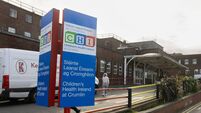
Some 13 hospitals stop breast cancer services from today as treatment is centralised to all of the eight Specialist Cancer Centres.
They are: Naas General Hospital, Tullamore General Hospital, St Columcille’s Hospital at Loughlinstown, Mallow General Hospital, Louth County Hospital, Cavan General Hospital, Our Lady’s Hospital in Navan.
Also included are: Mid Western Regional Hospital in Nenagh, Ennis General Hospital, St Michael’s in Dun Laoghaire, Roscommon County Hospital, Portiuncula Hospital and Mercy University Hospital in Cork.
The HSE said all these hospitals were treating less than 20 cases of breast cancer a year while most of them have already ceased services.
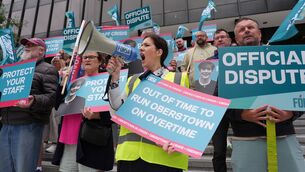
Controversy and public debate can be expected over the coming months and years as medical professionals are re-deployed and local services moved to new centres.
But Prof Keane, who has been key to a similar cancer services transformation in Canada’s British Columbia, said the changes are necessary to bring down cancer deaths.
“The issue of how to get good cancer outcomes is fully understood, the lessons have been learned and applied in many jurisdictions around the world, including at the cancer agency in British Columbia,” he said.
“So it’s not an issue that we are going down a road that no-one’s been down before. This is about doing what we know will work in the Irish environment.”
He added: “Cancer mortality will not change for quite a number of years after this programme is initiated. It takes several year before one sees cancer mortality beginning to drop.
“But certainly within three to five years we should be able to see some of the surrogate improvements that would identify the changes happening and that cancer outcomes in Ireland are getting better.”
Each of the new cancer centres will cater for populations of at least 500,000 people while each of the four HSE regions should be capable of treating most common forms of the disease.
Treatment of rare and complex cancers will be at one of eight specialist centres to be decided by the incidence of the cancers and skills available in particular areas.
Prof Keane will take control of all HSE funding and resources for oncology services when he begins work in November.
The Dublin-born medic is on secondment for two years from the British Columbia Cancer Agency where he worked on the successful overhaul of oncology services for four million people.
Minister for Health Mary Harney said the planned transformation would be seen in future as a pivotal point in the history of cancer treatment.
“I believe it to be the case that this day will be seen as a real watershed as far as cancer services are concerned in Ireland,” she said.
The Irish Cancer Society (ICS) said international evidence showed a central approach to cancer treatment can improve outcomes by as much as 20%.
John McCormack, ICS chief executive, called on everybody involved with cancer care across the state to back the overhaul.
“The public should not see the reforms as downgrading of services at local level but rather the introduction of best practice and more specialisation which will improve patient care and survival rates for this disease that is an epidemic,” he said.