Health service not providing value for money
The health service, which makes up 5% of the national workforce, must deliver better value for money, it was claimed today.
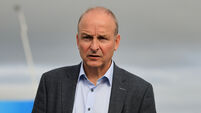
Public Accounts Committee chairman Michael Noonan said the 100,000 staff must provide a more satisfactory service for every euro of public money.
The Dáil’s spending watchdog today continued its probe of the faulty P-pars payroll system, suspended since the Health Service Executive ordered its review in October.
Fine Gael claimed that over 160 million euro was spent on the project, half of which went to outside consultants like Deloitte & Touche.
Mr Noonan pointed out today that one in 20 of the state’s 2 million-strong labour market was employed in the health services.
He added: “The Irish taxpayer doesn’t feel he or she is getting value for money, that the service that is being delivered is satisfactory.”
Mr Noonan joked that in the future he could visualise a ’Tomb of the Unknown Taxpayer’ with an eternal flame for long-suffering citizens.
“How can this huge human resource be manage to deliver better value for money?” he asked.
The PAC today discussed P-pars with HSE executives, as well as officials from the Health and Finance departments.
Government TD John Dennehy regretted that the Committee had still failed to find who was to blame for the multi-million euro spend on P-pars.
“We have still failed to establish who is ultimately responsible for the mismanagement of the project and I don’t think we have established how any team of consultants could write up their own terms of reference to maximise their benefits. That has to be teased out and dealt with.”
The HSE representatives confirmed to the Cork South Central TD that no external consultants were hired for the HSE review.
Labour TD Joan Burton said rigorous accountability procedures must vet every project.
“High levels of public accountability, although I know it can be uncomfortable for people at times, they do actually assist the process.”
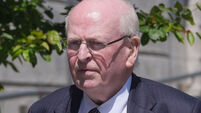
Former secretary general in the Health Department, Michael Kelly, said he was always scrupulous in managing public funds.
“Anybody who has ever worked with me, I don’t think they would argue the fact that I took great care when the commitment of public funds was concerned.”
He added: “There was a concern in 2004 at the rate at which the budget was being burned up, at the level of consultancy engagement at that stage, and it was pursued.”
Summing up his Value for Money report on the issue, Comptroller & Auditor General John Purcell criticised the level of governance and use of consultants on the P-pars project.
“What you can’t really have is any system at any cost,” he said.
He noted that early cost estimates proved to be hugely wide of the mark.
Referring to the governance structure, he commented: “Maybe there were too many committees and maybe we need to put some supremo in place.”
He said it was bad management practice to set a contract price and then operate on a time-and-materials basis.
“It seems to me that there is something inherently wrong from a management point of view to accept that kind of approach,” he explained.
He also criticised the Health Department for not forcing external consultants to share more of the risk in relation to the project.
“There’s a lot of talk of consultants including Deloitte. You could look at the business of whether they were an advisor or a partner as an exercise in semantics.
“I don’t think it’s just semantics.
“If you’re talking about being a strategic implementation partner, it does imply a sharing of the risk and sharing of the concerns, and that should be built into such an arrangement where somebody is a partner.”