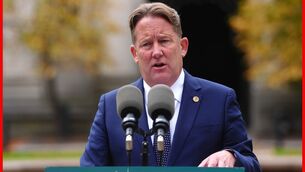
McDowell vows to close prisons as officers reject pay deal
Justice Minister Michael McDowell said today he would close two open prisons and privatise prisoner escorts, following the rejection of a pay deal by prison officers.
The temporary closure of the Curragh prison in Kildare and Spike Island prison in Cork will be made permanent.
Mr McDowell said he heard the rejection of the prison overtime deal by the Prison Officers Association (POA) ’loud and clear’.
“The members of the POA were told in no uncertain terms by me what the consequences of rejection would be.”
He added: “Since we cannot secure bilateral agreement to ending the scourge of overtime which reached €60m in 2003, I will now deal with the matter exactly as I indicated to the POA that I would.”
The cut in overtime payments was expected to save €30m and to dramatically reduce the incomes of prison officers, 17 of whom earned over €50,000 each in overtime last year.
The deal on offer was negotiated between the Irish Prison Service and the POA following lengthy negotiations involving both the Labour Relations Commission and independent arbitrators.
Instead of long overtime hours, the state’s 3,000 prison officers would work an extra 340 hours on duty each year. In return, they would receive a payment of 1.8 times the hourly wage for additional hours, an average lump sum of €13,750, and an 8% increase in operational allowances.
The POA, which had recommended the new deal to its members, carried out a nationwide ballot.
Mr McDowell said the rejection of the deal left him with no choice.
“I am calling in the Director General of the Prison Service and the prison governors in the coming days to inform them that from May 2, spending in each prison will be managed on a strict cash basis with monthly limits and that staffing levels will have to conform to those limits.”
Mr McDowell, who closed the Shanganagh Castle open prison in Dublin in 2002, said he would now close the remaining two – Loughan House in County Cavan and Shelton Abbey in County Wicklow.
The prisons did not have high walls or secure gates and were used to house low risk prisoners who would not abscond.
Mr McDowell said the two prisons would be converted into post-release centres run by an independent agency.
He added that new technology such as CCTV, automated gates and video links would also be rolled out.

CONNECT WITH US TODAY



Be the first to know the latest news and updates