Lone judge to decide fate of Colombia three
A lone judge will tomorrow decide the fate of two suspected IRA members and a veteran of the terror group who have been waiting for more than a year to find out whether they will become free men – or spend up to 20 years in a Colombian prison.
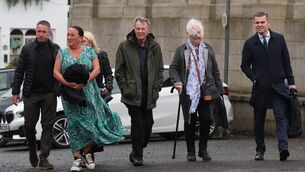
Niall Connolly, James Monaghan and Martin McCauley were arrested in August 2001 after visiting a rebel stronghold in southern Colombia. Prosecutors have accused them of training the rebels in terrorist tactics and explosives.
In the capital Bogota tomorrow, the judge in the case is expected to rule on evidence and set the date for the public hearing, in which lawyers will present their arguments and evidence, similar to a British or American trial.
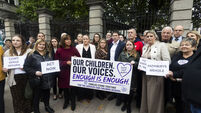
In Colombia there are no juries and that worries Bring Them Home, the Ireland-based activist organisation working for the release of the three men.
Members of the campaign say political and media interference – as well as built-in biases in a country torn by a 38-year civil war that pits left-wing rebels against the government and illegal paramilitary forces – ensure that the men won’t get a fair trial.
“We feel that the men shouldn’t have gone to trial at all, given the lack of hard evidence,” said Caitriona Ruane, spokeswoman for the campaign. “The evidence is very flimsy.”
Yet prosecutors say the men are clearly linked to the IRA, and that their only reason for coming to Colombia was to help the rebels here.
Sinn Fein, the IRA-linked political party, initially denied any knowledge of the activities of the three men. Party leader Gerry Adams later acknowledged Connolly, the only one who speaks fluent Spanish, was the Latin American representative for the party.
Monaghan, the IRA veteran, was convicted in 1971 of possessing explosives and conspiring to cause explosions. He has also been publicly associated with Sinn Fein.
McCauley was wounded during a police ambush at an IRA arms dump in 1982 and was later convicted of weapons possession.
Ruane said the men came to Colombia last year to study the peace process launched by then-President Andres Pastrana, who gave the rebels a safe haven the size of Switzerland during three years of peace talks.
The Irish men went deep into the southern Colombian jungle to visit the demilitarised zone. Prosecutors claim that is where they spent several weeks training the rebels to build explosives. If convicted, the men face a minimum of 15 years in prison.
A US congressional report released in April said up to 15 IRA members have visited the zone since 1998. It said the Farc was increasingly using IRA-style technology, citing truck-mounted mortars, home-made weapons systems pioneered by the IRA in the 1980s and sophisticated car bombs.
After decades of mainly rural warfare, the Farc shocked many when it launched a mortar attack on the state capital August 7 during the inauguration of hard-line President Alvaro Uribe. Twenty-one people were killed.
“It wasn’t known that this type of attack was within the capabilities of the terrorists,” said General Hector Dario Castro, Bogota’s chief of police at the time.
The fact that the Irish men, known now in Europe as the Colombian Three were travelling with false passports has also raised suspicions. Yet Ruane said it is natural for residents of Ireland to have double identities for protection against violence between Catholics and Protestants in their homeland.
The Colombian arrests heightened Protestant suspicions that the IRA remains willing to resume its bombing and shooting in Northern Ireland, a campaign halted in 1997 so that Sinn Fein could gain entry into wider peace talks.