BNFL dismiss terror claims about nuclear cargo
The energy company responsible for transporting two nuclear shipments to Britain from Japan today hit back at claims that the cargo was a target for terrorists.
British Nuclear Fuels Ltd (BNFL) has received a storm of criticism over the transportation of radioactive plutonium from Takahama for recycling at its nuclear power plant in Sellafield, Cumbria.
Environmental campaigners Greenpeace claim the ships' five-tonne cargo contains enough plutonium to make 50 nuclear weapons should it fall into terrorist hands.
A BNFL spokesman said Greenpeace was entitled to protest but insist a terrorist attack on the nuclear shipments or a radiation threat to other countries during transportation was "far beyond the bounds of reality".
Greenpeace however claims the radioactive cargo has also endangered the environment as the ships sailed across the globe en route to a port at Barrow-in-Furness, Cumbria, where they are expected to dock tomorrow or Tuesday morning.
"There is plutonium within this fuel and that is why we are taking the security measures that we are taking, but I think it is misleading that Greenpeace say it could be used to make nuclear weapons," a BNFL spokesman said.
"It’s really whether or not you believe that somebody who wanted to get their hands on the plutonium could do so, is credible or not, and I would say that it’s not credible.
"Security assessments have concluded that there is no credible threat to these shipments as we have multiple and many layers of defence which would actually impede an attempt at removal of the cargo.
"And even a terrorist would need something akin to a very large assembly facility such as the one at Sellafield to then go on and remove the plutonium, so saying that the plutonium is ’weapons usable’ is several stages from reality."
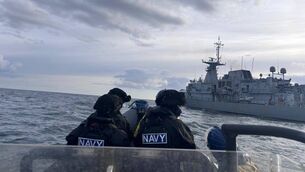
Safety measures include the fuel on board the ships being stored inside 100-tonne armoured casks, which are bolted down, and the ships themselves being armed and escorted by armed police.
Fuel on board has not been used in a reactor which means its levels of radiation are “very low”, BNFL said.
The ships are also specially designed to withstand a collision and remain buoyant while specific routes and sailing times are kept secret to help protect from terrorist interception or posing any radiation risk to the environment, BNFL said.
A spokesman added: "Even if the MOX fuel itself was exposed to the environment, then that would result in a radiation dose no greater than one millionth of what people would receive from normal background radiation."
About 20 boats full of protesters, which make up the Nuclear Free Irish Sea Flotilla, were led by Greenpeace flagship the Rainbow Warrior at midnight ready to ambush the Pacific Pintail and Pacific Teal when they enter the Irish Sea.
A BNFL spokesman added: "We have no problem with peaceful protest as long as Greenpeace and other members of the flotilla do not impede the safe passage of the ships.
"The safety of life at sea is paramount and we would hope that Greenpeace would respect it."
Plutonium mixed oxide fuel (MOX) and uranium on board the BNFL ships was originally shipped out to Japan in 1999 for Tokyo Electric which wanted to load it into a nuclear reactor to generate electricity.
But the shipments are now having to be returned after BNFL admitted five staff at the old Sellafield testing facility falsified quality checks on the consignment.
This meant the Japanese company could not be sure the nuclear pellets they were sent from BNFL were the correct width and using them may have caused a nuclear meltdown.
Greenpeace says its protest has global backing and claims 80 governments have condemned the BNFL convoy since it set sail from Japan, denying the ships access to waters around their countries.
The countries are entitled to their opinion although much of it stems from a misunderstanding over how dangerous the nuclear shipments are, a BNFL spokesman added.