Break-in sparks fears among informants
The theft of top secret documents from Special Branch is a huge setback in the fight against paramilitary organisations in Northern Ireland, a former MI5 agent claimed tonight.
Former soldier turned spy Willie Carlin, who infiltrated republicans in Derry in 1974 and reported on their political activities for 11 years, said informers currently monitoring loyalist and republican terror groups would not be reassured by Ronnie Flanagan’s claim that the documents did not contain their names.
Mr Carlin, a former Queen’s Royal Irish Hussars soldier who was recruited in 1974 to spy on leading Sinn Féin figures, said: ‘‘You have to realise that it’s not what Sir Ronnie is saying that concerns people, it is what he is not saying.
‘‘There will have been information in that centre, information which could reveal the location and activities of informers which could lead to their exposure if it falls into the wrong hands.
‘‘I have been talking to a number of people, informers who are concerned about that and what I am saying to them is this: until such time as we get to the bottom of what exactly happened in Castlereagh, then think very clearly about how you deal with your handlers.
‘‘By all means, remain in telephone contact but remember while your handler may try to assure you, it has been proven the place where your information is passed on and stored is not secure.
‘‘You have to be very careful. It is one thing being able to trust your handler but it is another thing not being able to trust his boss or his boss’s boss.’’
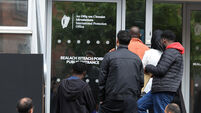
Mr Carlin said it ‘‘beggared belief’’ that a number of people could breach security in Castlereagh - arguably the most security-conscious police station in western Europe.
He believed there had to be ‘‘inside’’ involvement in the break-in but accepted there were good reasons for British Army intelligence operatives to have carried it out.
With Special Branch and the Forces Research Unit at the centre of allegations of collusion with loyalist paramilitaries, Mr Carlin was of the view both had a reason to see sensitive documents disappear.
‘‘We don’t know the nature of these documents yet, so all kind of motives can be ascribed,’’ he said.
‘‘I mean Kevin Fulton (the agent at the centre of the Omagh bomb investigation) has told me the centre was where a number of the transcripts relating to his conversations with handlers were stored.
‘‘It is possible they were after information relating to politicians - specifically Sinn Féin leaders as Special Branch has a remit to spy on republicans.
‘‘So while an informant would not be looking at someone like David Trimble, there could be information about leading Sinn Fein figures - stuff like where they’ve been, who they’ve met, where they drink, where they fish, their hobbies and habits, their sexual preferences.
‘‘But whatever the reason, there is no doubt this is going to impact on the morale of people currently operating as agents and informers within the paramilitaries.’’
As someone who was forced to flee Derry when his cover was blown by a rogue MI5 agent who passed on information to the IRA while in jail, Mr Carlin said he understood the concern of informers.
‘‘Now we have ceasefires, there are probably not as many informers and agents as there once were in Northern Ireland but those that are there are more vital now than ever before,’’ he said.
‘‘In the 1970s, 80s and 90s, there were hundreds and hundreds of informers and agents all feeding information back which, in theory, was being pieced together like a jigsaw.
‘‘The current crop of informers were not recruited in the same way. There was not the same scattergun selection.
‘‘They have been specially chosen across all paramilitary groups to keep people up to speed on current thinking within paramilitary groups on ceasefire and those who have set their stall out against the peace process.
‘‘That is why this is such a huge setback. This break-in puts their lives at risk.’’