'Unacceptable delays' in examination of digital devices in child abuse investigations despite calls for 'urgent review'
The inspectorate found that 274 (25%) of child protection cases are awaiting examination, including 95 from 2011-2013.
In a major 256-page report, the inspectorate also said:
- Gardaí could use technology — and has FBI-trained staff — which would allow it to track computers in real time accessing child abuse material but has “made a decision not to use them” — in part because it does not have the capacity to respond to such intelligence;
- They were “very concerned” about 105 cases where they believe investigations “weren’t dealt with appropriately” and urged an immediate review of them;
- Inexperienced gardaí — some “just out of Templemore” — continue to be involved in investigating child rape cases, a practice they described as “unacceptable” and one that poses a “significant organisational risk”;
- The stopping of joint interviews of child victims by specialist gardaí and social workers was “unacceptable” — with just 16 social workers trained and available, with just six or seven training places in the next 12 months;
- That 22% of child sex abuse incidents were only created on the Garda Pulse system more than a month after a complaint — and that there was often a failure to record a suspect
- That gardaí need to go on the “front foot” against online groomers, particularly those who have access to children, and utilise technology currently available to it

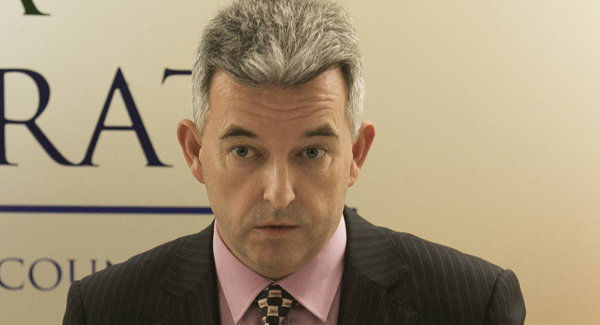
Launching the report, Chief Inspector Mark Toland praised the establishment of four divisional Protective Service Bureau Units and plans for four more this year — but said he wanted Garda bosses to have them in all 28 divisions by close of 2018.
The Responding to Child Sexual Abuse report, a detailed review of a similar study the inspectorate conducted in 2012, found that the Garda Cyber Crime Bureau (GCCB), which is responsible for forensically examining digital devices, received 1,083 child protection cases between 2010 and 2015. Of these 274 remained outstanding, including 60 from 2013, 31 from 2012 and four from 2011.
It said the “risk to a child” caused by the delay in forensically examining a device was clear in a case from 2011 caught in the backlog.
“When the forensic examination was eventually conducted three years later, an image was found showing an indecent assault on a child,” it said. “The delay in the examination prevented the earlier identification and rescuing of that child.”

It said when it visited the GCCB in 2016 it was prioritising cases from 2011 but said “staff reported that they had insufficient resources to clear the backlog”. It said it called for an “urgent review” of the backlog in its Crime Investigation report in 2014.
The review detailed the impact on three court cases.
In addition to boosting staff at the bureau, it said measures taken by other police forces include local units, triaging using technology (which gardaí have), and forensic examiners attending searches.
The review also examined 540 child abuse cases that had been sent out to divisions to investigate between 2014 and 2015.
While it got information about 435 of those, 12 divisions failed to reply in relation to 105 (19%) of cases, including 60 cases in Dublin North, 15 cases in Cork City, and eight in Cork North.
Mr Toland said this failure to respond suggested “those cases were not dealt with appropriately” and urgently needed to be reviewed.
The report also examined 272 investigations into child sexual abuse in 2014, and found half were carried out by frontline gardaí.
Supervisors told the inspectorate that the quality of investigations conducted by dedicated child protection units or the detective unit was “much higher” and had a greater chance of delivering charges.
Only half of report’s findings enacted
Less than half of the recommendations made in 2012 by the Garda Inspectorate on child sexual abuse have been implemented by gardaí.
In a mammoth 256-page report, the inspectorate conducted a forensic examination to determine how many of its 29 recommendations were implemented by An Garda Síochána.
Chief Inspector Mark Toland said key findings of the review were:
- Five years on, only 45% of the recommendations from the 2012 report can be considered implemented;
- Processes in place between An Garda Síochána and Tusla for managing child protection cases are inefficient;
- No specialist child centres are in place for child victims of sexual abuse;
- Inexperienced gardaí are still investigating child sexual abuse;
- Insufficient online Garda presence.

Mr Toland, a former British police chief and commissioner in Gsoc, said the risk to children had grown “significantly” since 2012 due to the internet.
He said the report, entitled Responding to Child Sexual Abuse, was the first time the inspectorate had gone back and examined in depth what had been done.
He said 13 of the 29 recommendations had been implemented and six had not been implemented. Six had been partially implemented and four others had not been satisfactorily addressed.
Mr Toland said one of the most disappointing findings was the failure of gardaí and Tusla to set up specialist child centres, which would provide medical examination, victim interviewing and therapeutic services.
He said the decision to set up divisional Protective Services Units did reflect a “major shift” in Garda policy to professionalise investigations. Four are currently in place and gardaí plan four more by year’s end — but he said they wanted them in all 28 divisions by the close of 2018.
He said that despite some progress in joint agency working between Tusla and gardaí, barriers remain, including governance problems, information sharing logjams and inefficient working relationships at local levels.
“Those two agencies need to share information for the best interests of the child and not to be afraid to share it because they fear the other agency is going to pass it on to a third party,” he said.
He said while there has been a significant increase in child protection notices sent by Gardaí to Tusla, the process remained paper based and inefficient.
Mr Toland said meetings to discuss serious cases do not always take place and decisions are often made separately by the two agencies — unlike other countries examined.
He said not all convicted sex offenders who should be monitored by the multi-agency SORAM process were subject to those arrangements.
The inspectorate called for government departments and agencies to develop a national strategy on child sexual abuse, exploitation and online safety.
He said there was an increase in recorded sexual offences since 2012 and that 66% of those involved a child victim, many of whom don’t see themselves as a victim.