TCD badger discovery may help stop TB spread in cattle
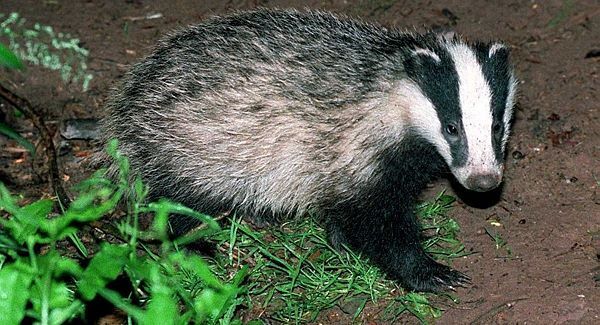
Researchers working on a project with the Department of Agriculture and the National Parks and Wildlife Service (NPWS) tagged badgers and then discovered that some male badgers, typically younger males, did not adhere to the previously understood territories occupied by groups of badgers.
Instead, these ‘super rangers’ travelled far beyond the marked out territories that other badgers in the group can occupy and seldom stray from for years, making them more likely to end up with other badgers cetes (group of badgers) and increase the risk of spreading TB.
‘Super ranging’ is a newly discovered behavioural phenomenon and the research has just been published in international journal ‘Plosone.
Aoibheann Gaughran, PhD researcher in Trinity’s School of Natural Sciences and lead author on the paper, said the researchers used GPS satellite trackers to follow where 50 badgers went over a period of time.
The research project had started because the department and the NPWS were concerned as to whether construction of a new roadway in Co Wicklow would disturb existing badger populations and thereby increase the risk of spreading TB to cattle.
Ms Gaughran said: “We do know that badgers are involved [in the spreading of TB] but the issue is we can’t say to what extent they are responsible. Our research shows that badgers actively avoid cattle and farmyards. The way the disease is transmitted is probably environmental.”
Badgers are protected species and any culls of the badger population must be done according to strict criteria and only after derogation to do so is provided by the NPWS.
However, a vaccination programme has also been underway, luring badgers into stopped restraints or cages with peanuts, and Ms Gaughran said the new research on super ranging could mean younger adult males could be specifically targeted for vaccination, which in turn might limit the likelihood of TB being spread over wider areas.
“Farmers now are really welcoming the idea of vaccination. Nationally the problem of TB in badgers has declined over the years which is probably in line with culling,” she said
However, she said badgers can be the victims of unregulated and illegal activity.
“There is a culture in this country of badger baiting and badger digging and that tends to be for ‘sport’, pitting them against dogs. That happens more often than you would think,” she said.
Professor of Zoology at Trinity, Nicola Marples, said: “This research on badger movement should help to maximise the efficiency and effectiveness of the impending badger vaccination programme, which is great news.”