Dolled up: Hospital gives toys makeover
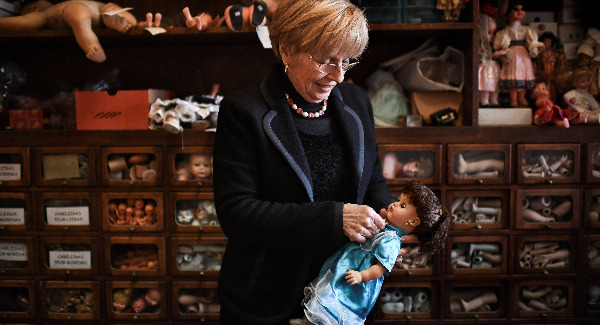
This is no ghoulish catacomb or Frankenstein-style body-part laboratory. Far from the stuff of nightmares, it is where people come to rekindle their warmest memories and breathe new life into their most cherished of creature comforts.
Nestled into a centuries-old cobblestone square in Lisbon is no ordinary hospital. The Hospital de Bonecas â or Doll Hospital â has been repairing the most-beloved toys of children, young and old, for nearly 200 years. Founded in 1830, when the owner used to sit at the entrance of a herb shop making cloth dolls, and showing passing children how to repair their own, it is claimed to be the oldest business of its kind in the world.

Scores of porcelain heirlooms with painted lips and rouged cheeks, thread-bare teddies and battered Barbies pass through its intriguing labyrinth of rooms every week. Some are missing eyes, others have fractured arms, while many are suffering the tell-tale signs of age.

Sofia Silva, daughter of the owner Manuela Cutileira, tells the Irish Examiner: âWe treat our dolls like patients. We look at them, let you know the exact diagnosis and what can we do about it. If it is just loose limbs, like the legs, we have supplies so we can reattach them to the body. But if it something more serious, like with the older porcelain dolls, we might have to take the patient in for a full body restoration.â
White-coated doll âsurgeonsâ assign the toys with a âbed numberâ and they are taken off to the first floor of the former schoolhouse where they are designated to one of a number of specialist treatment units: âWe have a room for repairing eyes, one for detailed work on porcelain dolls, one for stuffed animals and we have a room for washing the dolls.â

There is another room for clothes repairs. Often replica costumes will have to be tailored to replicate a badly-deteriorated outfit. Dainty lace bonnets or crocheted gowns. âSometimes people bring in a piece of their wedding dress, or something like that,â says Ms Silva, the third generation of her family to work at the shop.
And just like ordinary hospitals, there are waiting times and fees. Basic repairs on the spot come as cheap as âŹ10. The restoration of a rare antique German-made doll can run into hundreds of euro. Ms Silva says: âFixing the body, face and eyes, and also if a dress needs to be replaced using expensive fabric, it can be expensive. There are other issues, like if you want real hair or artificial.â More intricate repairs can take months.
Christmas time is, unsurprisingly, busier than usual with people wanting to get a tattered and time-worn childhood doll restored for a loved one as a surprise.

Silva says average customers are aged in their 50s, men and women, usually looking to have dolls from their childhood returned to their prime. Millennials are also coming in with stuffed animals they have had for a long time and which still bring them comfort.
âSome actually still sleep with their stuffed animals, even though they are adults. We have had more than one case of 30-somethings contacting us when their stuffed animal or dolls become so fragile they need to be restored,â she says.
Children turn up as well with their parents for emergency repairs on their cuddly companion.
Business is mainly Portuguese. High unemployment rates and austerity measures during the recent economic crisis did the hospital little harm amid a trend towards repair and recycling. It is also seeing an increasing number of customers from around the world âincluding Ireland, the UK, Australia to China, the US and South America â all overâ. Silva believes this is partly down to a decreasing number of specialist repair businesses in a modern throwaway culture.

Just over two years ago the decades-old Doll and Teddy Bear Hospital operating in Dublin, firstly on South Great Georges Street and latterly in the Powerscourt centre, shut its doors for the last time.
However, despite these casualties, the Hospital de Bonecas survives.
Silva attributes its success chiefly to nostalgia.