95 victims of human trafficking detected here during 2016
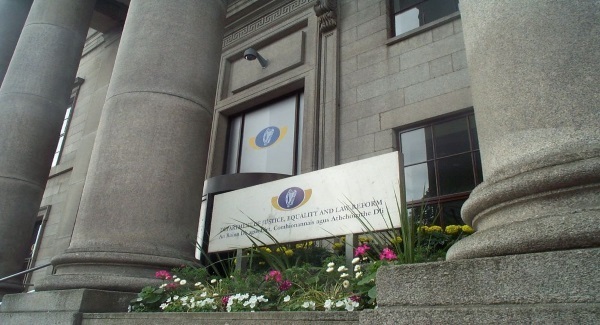
The Department of Justice and Equality’s Trafficking in Human Beings in Ireland report has revealed 95 victims of human trafficking were detected in Ireland in 2016, of which 21 were minors.
The figure was up 22% on the 78 victims reported in 2015. The report cautions against citing the rise as evidence of an “increasing phenomenon” given the relatively low numbers involved.

It notes, for example, that the largest single case of potential human trafficking in Ireland was detected in 2016, when 23 Romanian male victims of labour exploitation were found at a waste recycling facility in Meath.
Such an outlier, states the report, had “significant influence on the data in 2016”.
Of the 95 total cases detected, 50 were female and 45 were male, and 21 of the 95 were children.
The department said the majority of the cases involving children “would fall outside the classic definitions of human trafficking”.
Girls accounted for 24% of the female cases while boys made up 20% of male cases. Nine in 10 minor victims were Irish, though the report explains that offences relating to child sexual exploitation and pornography may result in charges under human trafficking laws.
“As such, our statistics include Irish victims of crimes committed under that section of the act, though in general, these are not victims of what might be considered ‘commercial sexual exploitation’ such as exploitation through prostitution,” states the report.
More than half (48) of the victims came from the European Economic Area, 19 were from Ireland, 17 were from Africa, six victims were Asian, four came from South America, and one case involved a European from outside the EEA.
Of the exploitation suffered by the victims, sexual exploitation remains the largest category (55%), followed closely by labour exploitation (40%).
Four of the cases were categorised as forced criminality, which the report states occurs “when a victim is coerced into a range of criminal activities including ATM theft, pickpocketing, bag-snatching, drug production or cultivation, and benefit fraud”.
It says 2016 marks “the second consecutive year in which there has been a noticeable increase in the proportion of identified victims of labour exploitation, up from 15% in 2014 and 29% in 2015”.
This trend, notes the report, is observable across the EU and in line with Europol’s increasing investigations into human trafficking for the purpose of labour exploitation.
Launching the document, the eighth such annual report produced by the Anti-Human Trafficking Unit, the department said victims as defined by offences against children under section 3 of the Child Trafficking and Pornography Act 1998, as amended by the Criminal Law (Human Trafficking) Act 2008, “are generally Irish children who have been sexually exploited in Ireland, often by someone known to them”.
Justice Minister Charlie Flanagan noted that in 2016, the State, for the first time, initiated prosecutions under human trafficking legislation for the sexual exploitation of an adult and for the labour exploitation of adults.