How Damian Wallace set the stage for the revival of Cork Opera House
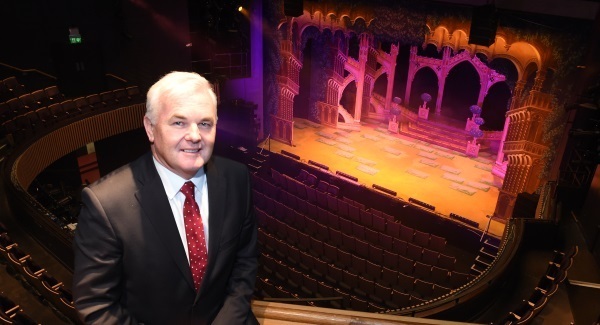
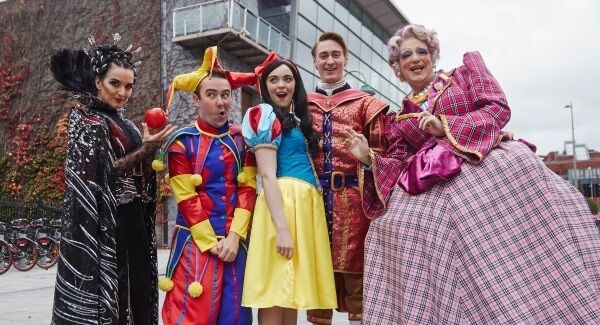
A record 60,000 people will attend 65 performances of Cork Opera House’s Christmas pantomime this festive season — its biggest and longest running panto season in decades.
As audiences troop through the lobby contributing to another box-office smash-hit panto season, it’s hard to believe that just a few years ago, the venue was on the brink of financial collapse, forcing staff cuts, pay cuts, and temporary closure.
The sheer success of the rejuvenated panto, combined with a summer show, have both played a key role in the theatre’s remarkable turnaround, with profits posted for each of the last five years.
The transformation required a complete corporate overhaul, some very tough decisions, and a dose of luck to ensure the historic theatre emerged from the financial abyss to celebrate its 160th anniversary this year with an air of confidence about the future.
Damian Wallace, who oversaw the overhaul, said it’s been a long, and at times, difficult journey, but as he steps down after 13 years on the board, nine as chairman, he hands over a venue that is, for the first time, paying its own way.
“What pleases me most now is that everywhere I go, everyone says the Opera House is flying — and the reason for that is because of the staff,” he says.
“We have experienced people who’ve been here for 20 or 30 years who are really committed to the place. They place a value on what the Opera House does for the region.”
The Opera House always needed loans and grants to survive. The biggest loans came from Cork City Council, and most were, invariably, converted to grants as the venue simply couldn’t meet the repayments.
Mr Wallace, a former Fianna Fáil city councillor and lord mayor, was among the councillors who, in the early 2000s, began to question why the city continuously handed over money in the absence of a commitment to repay it.
His questioning led to his appointment to the board of Cork Opera House in 2004, chaired at the time by the late Charlie Hennessy.
Mr Wallace described the venue’s financial situation then as “very challenging”.
“It was month-to-month. We never knew where we were going to end up at the end of the year,” he says.
“To be fair to the people who were involved at that time, people like Jim Corr, Pat Fenton, Mairin Quill, they had done a great job keeping it going. But it was a different environment.
“They all worked very hard, at great personal cost to themselves, to keep the venue afloat. And they always managed to keep the doors open. But my view was that there had to be a different way to do this. The model had to change.
“What should be the premier entertainment venue in the region couldn’t plan forward more than a month or two because we didn’t have the money.”
When Mr Hennessy died in 2008, Mr Wallace was appointed board chairman and set in train a mammoth restructuring process.
A skills deficit at board level was identified and a decision was taken to appoint more professional arts practitioners to the board, and to rotate board members every three years.
It meant the end of tenure for several people who had given a lifetime’s service to the theatre, but Mr Wallace says they knew there was no other option.
The board also set about addressing the complex corporate and legal structure, including the Opera House Trust, established after the devastating 1955 fire which gutted the building.
Thousands of shares had been sold to the public to help fund the rebuilding but as long as the majority shareholding was held in trust, the company couldn’t move forward.
Mr Wallace says that around this time, the new board facilitated the transfer of the trust to the city council, which effectively gave the city ownership of what became a municipal theatre.
A number of independent shareholdings, held in some cases by people who had died, were later tidied up, making it easier for the board to either apply for, or secure, loans.
And on the artistic side, it was also accepted that the venue wasn’t delivering a programme that enough people wanted to see. “It was no longer acceptable to me and the board that you could put on a show that has potential to lose money,” he says.
And with big acts performing in Dublin, then bypassing Cork for Killarney, he set up meetings with leading promoters who were not booking the venue.
The first, with Peter Aiken of Live at the Marquee promoters Aiken, was telling. He flagged the high booking charges as a key issue — charges which the venue needed because it required the cash.
“Peter said if things changed, he’d deliver the acts,” Mr Wallace says.
But within weeks, and on the back of €300,000 in losses for the previous financial year, the theatre would hit the financial rocks. “At that time I didn’t have concerns that it was a financial basket case, but that became very evident soon afterwards when, in early 2010, in the course of conversations with our financial controllers, I was told we didn’t have the money to pay the Revenue. For any business, that’s really, really serious,” he says.
Mr Wallace, along with senior city council official Valerie O’Sullivan, who was at the time Opera House company secretary, met with their auditors and legal advisors and were told unless the venue got an injection of cash, it would have to close and the company liquidated.
“We were given days to resolve it,” he says.
“Only a handful of people were aware of the scale of the financial crisis. The venue would need just over €1m to survive.
Mr Wallace contacted former city manager Joe Gavin, who, while recognising the value of the Opera House to Cork, said the city just couldn’t keep bailing it out unless things changed, and changed radically.
Within days, the theatre’s CEO Gerry Barnes would announce his retirement and Mr Wallace began working on a credible proposal he believed could secure emergency city council funding and save the theatre.
With the prospect of funding on the horizon, the auditors gave the board breathing space to devise the survival plan, but warned that pulling the plug may have to be considered if the money ran out in the meantime.
Mr Wallace then phoned retired Heineken executive and chartered accountant Padraig Liston. It was a Thursday. “I rang him and asked would he meet me, that it was about the Opera House, and he said he would. I said it has to be today, and he said OK.
“I said this is what’s needed and I think you’re the right person. He just got it. He understood the importance of this venue to the region and he wanted to help. He was great.”
Mr Liston agreed to meet the auditors and legal advisors that afternoon and over the weekend, analysing the figures to get a sense of the scale of the problem.
By the Monday, he said he was prepared to meet the city manager to discuss a survival plan. He was then appointed interim executive director and tasked with preparing and implementing that plan.
“Over the next two weeks, we prepared a business plan which we presented to the board. I then said I’m prepared to go to the city manager to seek the funding,” says Mr Wallace.
“It was quite unpalatable. It meant significant redundancies and a temporary closure at a time when we had a summer show, Sweeney Todd, in production, that had to go; we had no options.”
The venue would axe almost 20 of its core staff of 50 and closed from July 4 until September 29, 2010. “That was probably the most difficult meeting I’ve had in all the time I’ve been here. It was a complete bombshell for the staff,” says Mr Wallace. “I have huge respect for the staff. They embraced the change, they all took a cut in their wages, and just got on with it.”
These tough decisions however, laid the foundations for the long, slow road to recovery, and helped secure the lifesaving €1.25m loan from City Hall and a €250,000 grant from County Hall.
The city subsequently wrote off an €800,000 loan, converting it to grant aid, and guaranteed a €1.5m bank loan, putting it on the road to recovery.
The appointment of Mary Hickson as chief executive of the venue accelerated the recovery. “Mary came in with complete blue-sky thinking. She wasn’t afraid to take anything on. She wanted to have something for everyone,” says Mr Wallace.
“Mary was well connected artistically, and we got Aiken, MCD, and other promoters back.
“The full houses allowed us to reduce our booking fees by 30%. We are now staging shows 300 nights a year. We are pretty much at capacity.”
By the end of the 2013 financial year, the company reported a €260,000 profit — its first profit in five years and its largest in almost a decade.
Tragically, Mr Liston died that February and never got to see how his business plan had helped save the venue.
The financial recovery was consolidated the following year when the company posted a €250,000 profit.
Thanks to rigid management of finances and a renewed artistic programme, which is now being overseen by Eibhlín Gleeson, that trend has continued.
Earlier this year, the venue recorded its fifth profitable year in a row — posting a profit of just over €265,000.

Mr Wallace says the credit for the turnaround must be shared by all board members who served alongside him and by the theatre’s staff. “I was the person at the head of the board, and I benefited from their expertise,” he said.
“We managed to get people on the one hymn sheet from the outset, all with a common purpose to make the Opera House great again. Our job was to take that commitment and make the best use of it.”
The retired head of finance of Cork City Council, Tim Healy, takes over as board chairman and now faces the challenge of both maintaining and building on the progress made. Plans for an events centre in Cork will pose significant challenges.
“The events centre has the potential to be very damaging to the Opera House. 30% of our programme could immediately transfer there,” says Mr Wallace.
“But we are satisfied that the company is robust, is fit for purpose, and is managing the risk posed by that constant conflict between the artistic and commercial requirements.
“The company is striking the right balance and with the calibre of people now in place at all levels of the organisation, the future is indeed very bright for Cork Opera House.”

CONNECT WITH US TODAY



Be the first to know the latest news and updates