Legal recognition of Irish Sign Language passes
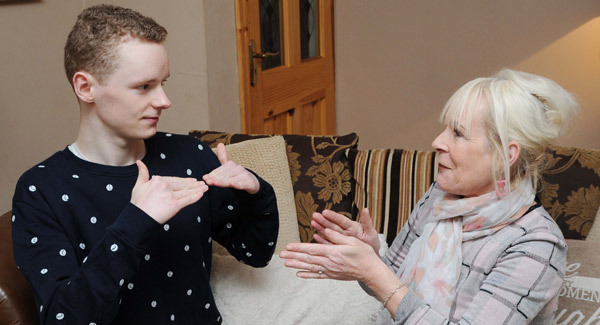
Alain Newstead has good reason to celebrate the passage of a new law to ensure access to public services through Irish Sign Language for him and more than 5,000 other deaf people.

Legal recognition of Irish Sign Language passes

The 18-year-old Leaving Certificate student has twice addressed the Seanad on matters relating to Irish Sign Language (ISL), including last year’s debate on the bill expected to pass final stages there this morning.

He hopes to study computer software at college and expects his profound deafness will not be a barrier after a strong role in the campaign for legal recognition of ISL.

He was in the Dáil yesterday when it passed the Recognition of Irish Sign Language for the Deaf Community Bill.

Alain is a student at Bishopstown Community School in Cork, where hearing-impaired students attend a deaf unit.

He wrote to the Seanad two years ago when he realised that ISL is not legally recognised here like it has been s in other countries since before he was born.

“ISL is my first language and the language of thousands of other deaf people, and it needs to be included like in any other country,” said Alain, who lives in Carrigaline. “I want to be the same as my fellow citizens, I want to feel included.”

He addressed the Seanad last year on the issue, and again earlier this month when senators discussed issues around the National Anthem. Alain conveyed the frustration for deaf people of not having an official signed translation of Amhrán na bhFiann.

Under the new law, public bodies will have to implement ISL action plans and make interpretation freely available to people using public services. Parents and siblings of deaf children will be given ISL classes, and sign language supports will be given at schools to children who use it as their primary language.

Its use would also be permitted in legal proceedings, but only those properly accredited to do so will be allowed interpret for courts or other public bodies.

Fianna Fáil senator Mark Daly introduced the bill last year and he is confident the law will not gather dust without being implemented.

However, following detailed discussions with ministers and officials in the departments of health, education, and justice, he expects it will be a couple of years before the full benefits are in place. The main work to be done is the establishment of an accreditation scheme that will regulate the standard of interpretative services to assist in interactions with public services.

“It will mean people in the deaf community have access to State services that they don’t currently have,” said Mr Daly.

“And it will give them a chance to reach their full potential in education and in other areas of life.”

The likely cost of services is hard to estimate, he said, as it will be a demand-led service.

However, with the availability of modern technology, it will not necessarily require ISL interpreters to be physically in public offices. Instead, many interactions can be communicated using video-calls and similar services.

In the meantime, Alain is continuing to help other young people when he teaches computer skills every week to children at his old primary school, in the deaf facility at St Columba’s National School in Douglas.

x

More in this section

Lunchtime News

Newsletter

Keep up with stories of the day with our lunchtime news wrap and important breaking news alerts.

Cookie Policy Privacy Policy Brand Safety FAQ Help Contact Us Terms and Conditions

© Examiner Echo Group Limited