Paying for water services: The referendum question
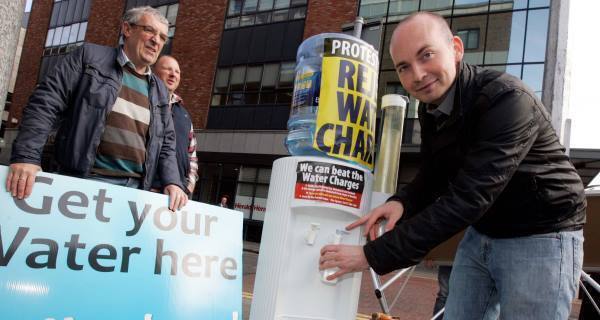
After almost a year of argument, inside the Dail and out, over the merits of a referendum on the public ownership of water, Taoiseach Leo Varadkar shut down the debate in the way only he can.

Paying for water services: The referendum question

“I would like to prioritise referendums over the next number of years that actually make a difference and might actually change something,” he said last week. So no referendum then.

To a degree, his assessment makes sense. Without revenue from domestic water charges and without the accompanying credit rating to borrow independently, Irish Water is not an attractive candidate for privatisation.

But there is already substantial private sector involvement in the public water services. Irish Water says 261 of its 2,000-plus water and wastewater sites are operated under the design build operate (DBO) model of public-private partnership (PPP). They include some of the biggest names in infrastructure around Europe and internationally, such as Veolia, which operates 25 drinking water production plants here as well as numerous wastewater treatment facilities. Others include Aecom, Celtic Anglian Water, EPS and Glan Agua, which also have multiple contracts.

Under DBOs, private firms are contracted and paid to design a facility according to specifications provided, construct it with state-provided funds, and then run it — usually for 25 years.

It is then handed over for either direct management by the state agency or for a tender to be issued seeking another operator to run it for a further period.

The idea behind the model is that you get private sector efficiency and expertise and operational certainty for a set period of time which in theory should be good for the public purse.

But any private sector contract has to have profit built into it, so that can make it a costly model, particularly if performance is not monitored and inefficiencies penalised — a lesson that has been hard learned.

Other forms of PPP, such as DBFOs, ask the private partner to carry the greater burden of risk as the private company puts up its own money for the project. But they need to be sure of a good return on their investment which can put pressure on commissioning agencies to impose or increase charges to customers — such as water charges.

With Irish Water, DBFO is an unlikely route, but those who want a referendum believe any substantial private involvement in a public utility leaves the door ajar for privatisation and they would like the safeguard of having a constitutional prohibition.

“If you look at the nature of the capital projects that have been carried out by Irish Water already, there’s a big private element,” says Solidarity TD Paul Murphy.

“It’s like they’re operating on a for-profit model within the context of a semi-state so already you have a creeping privatisation and the lines are blurred.

“I don’t think any form of wording we backed for a referendum would have changed things for existing contractual arrangements with private operators but it would have drawn a line between the kind of activity that’s happening at the moment and a more influential involvement by the private sector.”

Impact, the country’s largest public service union, has also pushed strongly for a referendum.

It argues that as Irish Water increasingly takes over from the councils which previously ran water services and whose staff still work alongside directly employed Irish Water workers but who are being whittled down through retirements, the single utility, single workforce model will lend itself increasingly to privatisation.

The Department of Public Expenditure and Reform (DPER) is due to publish a review of the value for money and effectiveness of PPPs to tie in with the national planning framework and the 10-year capital plan. A review of the existing capital plan says greater use of PPPs should be considered. It also notes that the DPER review “will provide the opportunity to assess the potential role of user charges in supporting the delivery of public capital infrastructure through PPPs”.

x

More in this section

Lunchtime News

Newsletter

Keep up with stories of the day with our lunchtime news wrap and important breaking news alerts.

Cookie Policy Privacy Policy Brand Safety FAQ Help Contact Us Terms and Conditions

© Examiner Echo Group Limited