€40k foster placement cost disparity
The commitment was given yesterday by Jim Daly, chair of the joint oireachtas committee on children and youth affairs, after hearing placements through private agencies cost the state an average of €58,000 per child per year compared to €17,900 for children fostered by carers registered with Tusla.
The committee also heard foster carers are being asked to supervise access arrangements between children in their care and birth parents because of a shortage of social workers.
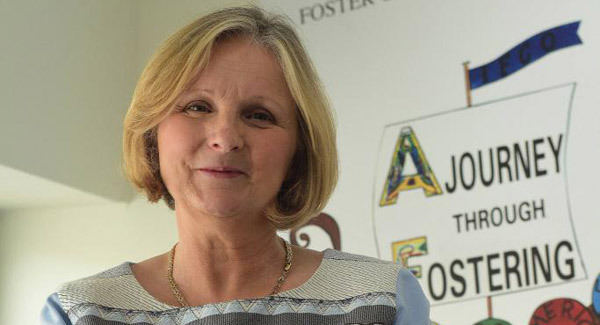
The issues were raised by EPIC, an independent organisation that advocates on behalf of children in care, and the Irish Foster Care Association (IFCA) respectively.
IFCA chief executive Catherine Bond said she had raised the “inappropriateness” of Tusla requests to foster carers to supervise access arrangements as it was “not within a foster carer’s role”.
Ms Bond also outlined how, contrary to the national standards for foster care, 6% of children in general foster care and 8% of children in relative care did not have a dedicated social worker.
At the end of 2016, 18% of general foster carers and 20% of relative foster carers did not have a link social worker.
Ms Bond said it is “critical this situation is addressed” as it is central to the safety of the child and to ensuring foster carers had a robust support infrastructure.
Asked why there was such a disparity in the cost of placements between public and private, Ms Bond and Ms Charles said analysis needed to be done. “It has definitely been noted that foster carers would prefer to be with private agencies. There is better out-of-hours support. They are getting more support from the private companies than from Tusla at the moment,” Ms Bond said.
Asked by committee members if children were “matched” with their foster families before placement, Ms Bond said it did not always happen, especially in an emergency situation.
Both Ms Bond, and Karla Charles, EPIC policy manager, spoke about the difficulties faced by young people in care, who, once they turned 18, were often left to fend for themselves.
Ms Charles said EPIC had experienced “several cases of children approaching their 18th birthday and having to abruptly leave their foster placements and move back in with their birth parents, who were previously deemed unsuitable carers”.
Ms Bond said one solution to the prevention of homelessness in this group was to offer a financial incentive to foster carers to modify or build living accommodation “where a young adult can live independently, but with the safety net of the wider foster family surrounding them”.
Ms Bond said a similar incentive was offered to childminders during the 2000s to increase childcare places.
“This is a proposal which IFCA would like to pursue with the Department of Children and Youth Affairs and the Department of the Environment,” she said.
EPIC also raised concerns about an increasing number of younger children under the age of 12 being placed in residential care.
“We are aware of 9, 10, and 11 year-olds being placed in residential care.
“There was a clear practice by Tusla not to place children under the age of 12 years in residential care because it was deemed inappropriate. If would be of great concern to EPIC if this was no longer the case,” Ms Charles said.