National Transport Authority accused of supporting privatisation of transport
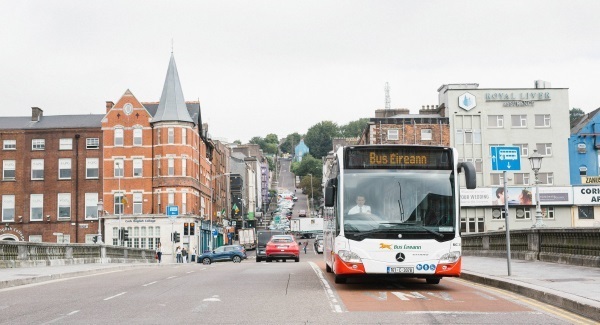
Unions made the claim after the NTA revealed how it intends to address the loss of Bus Éireann services.
The company confirmed it is to stop its Dublin-Clonmel service from March 12; Athlone-Westport from April 16; and Dublin-Derry from May 28. It is also to reduce its daily Dublin-Limerick and Dublin-Galway services from March 12.
The NTA said it has assessed the proposed changes and has determined that, overall, there are enough services to meet demand from private operators or other modes of transport.
NTA chief Anne Graham said: “The exception is the withdrawal of Route 21 from Westport to Athlone where we have determined that there is a public service obligation and where we are considering amending an existing PSO service to meet that obligation.”
NTA is actually proposing to double the number of services on the route in each direction by upping the public service obligation payments which Bus Éireann receives.
“We believe that what we are putting forward will retain connectivity and retain services along the effected corridors,” said Ms Graham.
However unions, whose members are due to strike from Monday when the Bus Éireann introduces a raft of cuts to its paybill, say they will not cooperate with the route changes.
“With this plan, which effectively assists the replacement of Bus Éireann services with others run by private, for-profit bus operators, the NTA has revealed an agenda which is clearly supportive of the privatisation of transport services,” said Siptu sector organiser Willie Noone.
“On four of the five routes on which the management of Bus Éireann has selected to cut or severely curtail services, the NTA states that it has already issued enough licences to cover their continuation by private operators. This reveals a long-term plan to undermine public services for the benefit of private operators.”
Mr Noone said the NTA, Transport Minister Shane Ross, and Fine Gael are “clearly intent on cooking up a recipe for driving down all bus workers’ pay and conditions of employment, both private and semi-state”.
“In the long run, they will leave the travelling public exposed to private sector monopolies which will force up prices over time,” said Mr Noone.
Dermot O’Leary, general secretary of the National Bus and Rail Union, said the notion that bus workers would be party to discussions that would lead to the elimination, or at best a diminution, of vital bus services into rural Ireland “clearly illustrates the disconnect between Bus Éireann management, their own staff and the communities they serve”.
“It is simply appalling that people that rely on this public service would learn of its imminent disappearance through the media.
"Those commuters, the taxpayers, are entitled to ask if their route 7, Clonmel to Dublin, route 21 Athlone to Westport and route 33 to Derry is of a lesser value than the other 21 routes that Bus Éireann operate across the country.
“It is long since passed time when those that are elected to protect vital public services should act in the interests of the communities they purport to represent and cry halt to these route closures,” he added.