Richard Bruton backs schools’ treatment of religion
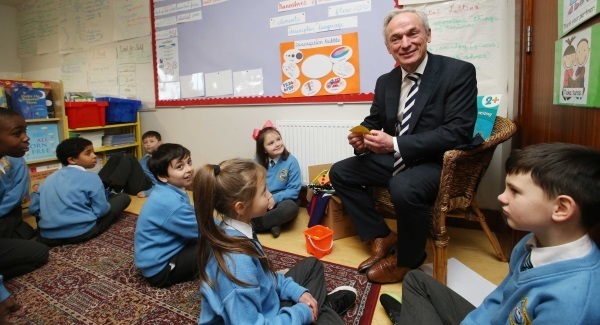
Education Minister Richard Bruton has backed how the teaching of religion is treated in state-controlled primary schools, but said some changes could help improve the inclusivity of their approach.
His personal endorsement of the community national school (CNS) system, under which 11 primary schools are currently managed by local education and training boards (ETBs), comes amid growing competition between them and Educate Together to open new schools in areas of increasing population.
While both offer multi-denominational education that does not favour pupils of one religion over another for enrolment, there have been criticisms of the CNS model over the separation of children when it comes to some aspects of religious education.
Both providers offer separate programmes teaching pupils about different belief systems and wider ethical issues. But younger pupils at some schools in the CNS sector are segregated for part of the year in connection with rites of passage in a particular religion, such as preparing Catholic pupils for first Communion.
This programme is being reviewed for the ETBs by the National Council for Curriculum and Assessment. Mr Bruton said there is particular merit in the practice at some community national schools where children of particular faiths are allowed opt out of common religion classes, but only for up to 10 hours a year for events specific to their own faith.
His comments at the annual conference of the Irish Primary Principals Network were made as his department considers applications from Educate Together, Irish-language schools patron An Foras Pátrúnachta along with local ETBs in Cork and Dublin to open four new multi-denominational primary schools later this year, and in 2018.
The level of local demand by parents for each prospective patron’s proposals will be a key part of the considerations, but the final decision on who should be patron in each case will rest with Mr Bruton.
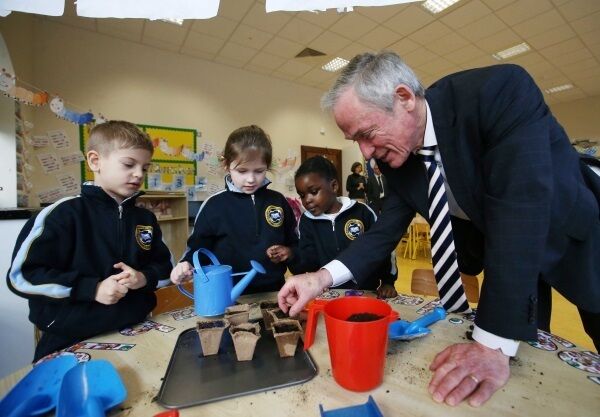
Educate Together welcomed his confirmation of Government commitment to widening school choices for parents. But, it hoped his endorsement of the CNS model does not indicate any intention to disregard the views of parents who have stated their preference for its own education model, in which faith formation does not happen during school time.
Asked about such interpretation of his comments, the minister said the CNS system is one of a number of good models that can be used to add more choice within the school system. We’ve always followed the idea that parental views are paramount but I think the community national school hasn’t been as well recognised in the system,” he said.
Mr Bruton said the merit of a CNS is that it can integrate different religious beliefs, “not putting them outside the door, but bringing them in as something to be valued and recognised, but in an inclusive setting”.
“It has the potential to allow parents who want faith instruction, whatever their faith, to have an opportunity to do that while the programme that integrates everyone runs right through the year,” he said.
CONNECT WITH US TODAY



Be the first to know the latest news and updates