Court order for GSOC to see files on Maurice McCabe
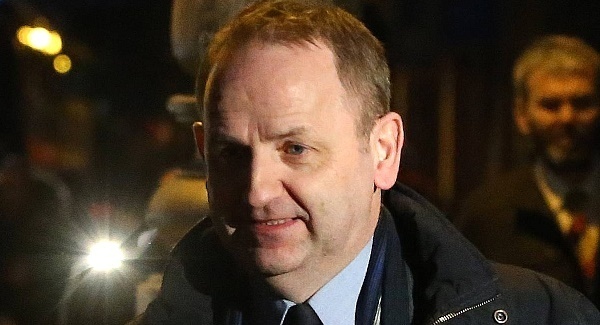
The latest blow comes after the Irish Examiner reported on Monday that the Garda Ombudsman had hit a legal barrier in initiating its public interest investigation because it could not access relevant documents.
Last June, GSOC was requested by Justice Minister Frances Fitzgerald to carry out an investigation into matters regarding Sergeant Maurice McCabe arising out of the O’Higgins Commission of Investigation.
Ms Fitzgerald’s request followed a call from the Garda Commissioner, Nóirín O’Sullivan, for a GSOC inquiry.
However, the Garda Ombudsman was denied access to documentation by the commissioner, who cited legal restrictions on disclosure under the Commission of Investigations Act 2004.
GSOC then sent a request to the Department of Justice, which houses the O’Higgins records.
That request was referred to the attorney general, whose advice was given to GSOC yesterday.
A statement from GSOC last night said: “The Department of Justice and Equality has confirmed to GSOC that, similarly to the Garda Commissioner, they are not able to release the documentation required to commence this investigation, in light of the provisions of the Commission of Investigations Act 2004.
“Therefore, a court application will be required to obtain the necessary order.
“We are getting the relevant legal advice.”
This advice will examine whether or not any provisions (including under sections 11, 18 and 19) of the act form a basis for accessing the documents, which might supercede the privacy of commissions.
University of Limerick professor of law, Shane Kilcommins, said it was “difficult to see” how it would be possible for GSOC to access the documents.
“A literal reading of section 11 (3) clearly emphasises that when evidence is given in private to a Commission of Investigation, there is a prohibition on disclosure or publication of the evidence or the contents or any documents produced by a witness giving evidence,” he said.
“Exceptions are provided for under the act, but any application will have to be construed in the light of this privacy principle.”
Prof Kilcommins cited the sole case law — a 2009 High Court ruling which refused disclosure of the MacEntee Commission report into the Dublin/Monaghan bombings, citing the privacy of such inquiries.
“The limited jurisprudence that exists indicates that the courts take this privacy principle very seriously,” he said.
Fianna Fáil’s Jim O’Callaghan published a bill on Monday to amend section 11 of the act, to allow for the disclosure of evidence and documents necessary for a GSOC investigation.
GSOC said: “Any legislative measures which would avoid further delay and expense would be welcome.”

CONNECT WITH US TODAY



Be the first to know the latest news and updates