Men four times more likely to commit suicide than women according to latest figures

Of the 487 people to die by suicide in 2013, 391 were male and 78 were female with that discrepancy in death rates reflected in subsequent provisional figures for 2014 and 2015.

The figures for 2013, the latest to be confirmed by the Central Statistics Office, show the highest suicide rates were among men aged 45-54 and the lowest rates among 15 to 24-year-olds and the over-65s.
The provisional figures for last year showed the highest rates among men aged 25 to 34 and 45 to 54.
The National Office for Suicide Prevention said the level of suicide in Ireland was relatively low compared to the rest of Europe but that there has been an increase in the rate since recession hit the country nine years ago.
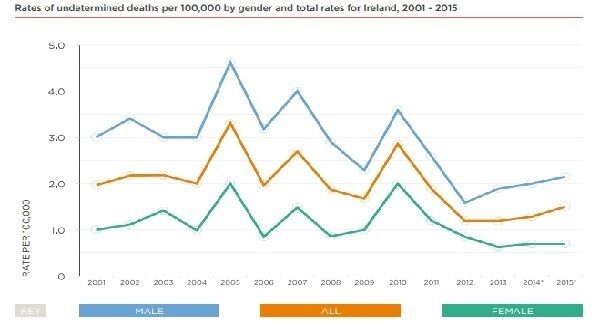
Its research also showed that provisional figures for last year showed 451 suicides, and another 68 undetermined deaths which may include some "hidden" cases of suicide.
The number of suicides peaked at more than 550 in 2009 and again in 2011.
Junior minister Helen McEntee, whose father Shane died by suicide at his Co Meath home days before Christmas 2012, said the issue of suicide prevention is everyone's concern.
"While I welcome the stabilisation of suicide and self-harm rates in 2015, every death is one too many," she said.
"I am particularly concerned about the high rates of suicide and serious self-harm incidents in young people."
Ms McEntee said the Government was committed to meeting a target for a 10% reduction in suicide by 2020.
Overall suicide affects about four or five times as many men as women.
The National Office for Suicide Prevention said suicide rates in 2013 were highest in Limerick city, Carlow, Roscommon and Tipperary North and lowest in Waterford city, and the Fingal and Dun Laoghaire regions of greater Dublin.
In a separate study, the National Self-Harm Registry said 8,791 people were recorded in hospitals seeking care after a self-harm incident.
It also said there is a continued increase in methods of self-harm with higher lethality among both men and women.
If anything is troubling you, no matter how large or small the issue, why not contact The Samaritans or call the charity's free 24 hour helpline, Tel 116 123.