ONLINE SAFETY: Women under 25 most likely to be abused
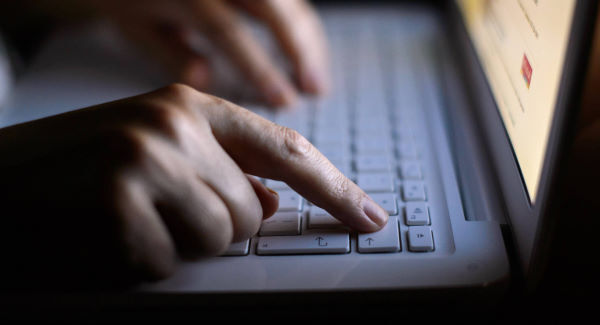
Sixty percent of women who experience “severe” domestic violence are under the age of 25. This group is most vulnerable to online abuse.
ONLINE SAFETY: Women under 25 most likely to be abused

“For those that experience severe abuse, 60% of those were under the age of 25, and we’re talking about severe abuse,” director of Women’s Aid, Margaret Martin, said yesterday.

“That younger age group is more vulnerable, in terms of digital abuse, because they’re the biggest users of digital. They’re the early adopters.

She was speaking at the launch of Facebook’s online safety guide for women, which was created in partnership with Women’s Aid, safety experts, NGOs, and the National Network to End Domestic Violence in the US (NNEDV).

Ms Martin emphasised the impact of digital abuse on a person.

“The damage that online abuse does is quite different, because it has a more permanent effect, a more public effect. It’s having a huge impact,” she said.

“In the past, if you were being stalked, somebody had to physically stalk you, give poison-pen letters, as they were called at the time. They had to drop them in your letter box or put them in the post box, so it slowed everything down and you didn’t have anything like the volume or intensity (as you have with cyber-stalking),” she added.

Ms Martin said that, according to recent data, stalkers will nowadays circle a network of people online to target their victim.

“A lot of stalkers gather information from a broad range of connections for a woman.

“There are something like 35 people that are actually contacted, in relation to stalking around a partner. So that’s friends, family, colleagues,” she stated.

To adapt to the threats that technology has presented, we need to reflect on the kind of society we wish to live in, Ms Martin said.

“We have to start to think about what’s the society, what’s the shape of the society we want to live in. What are things that need to change?

“Pauline Walley [senior counsel] once said that, to some extent, it’s a bit like, if you can imagine, when the Ford car was invented and, in the beginning, there was no legislation, there were no guidelines, there were no roads.

“You got in the car and you just drove off and then people started to have accidents and there was a whole move on what needed to happen.

“So we now have roads, we have traffic lights, we have tests, we have a plethora of things. So, in a sense, there is a parallel there,” Ms Martin said of the need for law and society to catch up with technology.

The Women’s Aid director also said that we need to move with the times, not condemn changes, and understand that online communication is how our young people interact with each other, similarly to how people use to meet on the street corner.

Julie de Bailliencourt, head of safety policy at Facebook, EMEA (Europe, Middle East and Africa) also spoke at the launch of the online guide, yesterday.

“We have a zero-tolerance policy on abusive, bullying or harassing content, as well as ‘revenge porn’ or non-consensual sharing of intimate images.

“Any piece of content on Facebook can be reported to our teams. All reports of abuse are confidential and are handled swiftly by our team of safety experts,” she said.

ANALYSIS: Online Safety: Shift the blame from the online victim

- Joyce Fegan

You got your exam results and bought a ticket to the big Junior Cert results night out. Everyone’s going.

Facebook, in partnership with Women’s Aid, has launched an online safety guide for women, which aims to educate and empower women on how to protect their privacy online and use the many online safety tools Facebook has developed. At the launch in Facebook’s headquarters in Dublin were RTÉ presenter Blathnaid Treacy; Julie de Bailliencourt, head of safety policy at Facebook, EMEA; and Margaret Martin, director of Women’s Aid. Picture: Sasko Lazarov/Photocall Ireland

You got a new dress on ASOS with your pocket money. You went to your friend’s house to get ready and you put fake tan on each other’s backs. Then you posed for duck-faced selfies à la Kylie Jenner.

You proudly post them on Facebook, shove your phone into your bag and head out to celebrate your As, Bs, Cs and Ds.

You wake up the next morning to a text from a friend. It includes a link to a website. You click through to see images of your face — the made-up one from the night before — photoshopped onto someone else’s naked body. Your name, age, school, and address are listed alongside and underneath it, are buttons asking people to “rate the slut”, to rate you.

You go to throw up from the shame of it all; you run to tell your parents, then decide not to.

The gardaí find out eventually after the school has been alerted. You weren’t the only student who had their photos harvested from their Facebook profiles.

Some teachers are kind, so too are some guards, except for one.

“Could ya not, you know, have been a bit more responsible?” he says.

“Should ya not have known better than to put up provocative images like that of yourself online?”

You stare at the ground, as his words help that initial feeling of shame to resurface.

Margaret Martin, director of Women’s Aid, calls this victim-blaming.

“One of the things we have to change in society is this victim-blaming culture that is stopping women reporting, that is minimising the damage that this is doing. We know that digital abuse happens and for younger women it happens very particularly because they’re the users of digital.

“The impact of this is way more significant than a lot of people realise, particularly people of an older generation. People sometimes say things off the cuff, ‘Oh she shouldn’t have done it, it’s your fault if you did it.’ That’s not an appropriate response,” says Ms Martin.

“We need to look at placing blame where it is appropriate and you cannot blame somebody who has done something very innocently.

“We all know for example, and our behaviour has been shifted by awareness campaigns around drink driving, around speeding, around not wearing safety belts, so society has acknowledged dangers in relation to the development of motorised transport and the danger that that can do.

“There is a parallel in terms of this. I spoke this morning about 14-17-year-olds, you are talking about people who are at a very early age and are exploring their sexuality, they’re exploring their identity and they should not have to live with the consequences of an innocent sharing of a photo for the rest of their lives,” says Ms Martin.

While everyone acknowledges the threats our online world poses and the responsible steps to take in order to cushion ourselves from them, perhaps it’s time we shifted our focus onto the perpetrator of digital crime, in order to protect the victim from the far-reaching consequences of it.

Steps you can take to keep yourself safe online

- Joyce Fegan

  • Protect your password. Select words that are not in the dictionary. These will not be guessable through password-cracking software.
  • Enable login notifications — if you do this, Facebook will send you a notification if someone tries logging into your account from a new device or browser.
  • Activate login approvals — you’ll be asked to enter a special security code each time you access Facebook from a new device or browser.
  • Set up trusted contacts — a trusted contact is a friend who can help you if you have difficulty logging into your Facebook account.
  • Do a security check-up at fb.me/securitycheckup.
  • Take control of your privacy settings by selecting your audience. You can choose who sees your posts, be they friends, selected friends, or friends of friends.
  • Choose to “review and approve” posts you are tagged in. There are two options within the timeline, and tagging settings, for reviewing content that you are tagged in. The first allows you to approve or dismiss posts that you are tagged in before they appear on your timeline.
  • You can also control search engines linking to your profile. This can be done by adjusting your privacy settings.
  • Manage your location privacy. Your location can be shared in various ways: with apps, by checking-in, via private messages, or by someone else tagging you.
  • If you want to check what your profile looks like to other people, you can do this via the “view as” feature.
  • Do a privacy check-up at fb.me/Privacy.
  • Define your trusted community by unfriending people who you don’t really know. To unfriend someone, go to that person’s profile, hover over the “friends” button at the top of their profile, and select unfriend.
  • You can also block people. This means they can no longer see anything you post on your profile.
  • If you are unsure about what can and cannot be shared on Facebook, and want to submit a request to remove a piece of content, you can take a look at their community standards.
  • You can also get help offline, if someone is abusing or harassing you.

More in this section

Lunchtime News

Newsletter

Keep up with stories of the day with our lunchtime news wrap and important breaking news alerts.

Cookie Policy Privacy Policy Brand Safety FAQ Help Contact Us Terms and Conditions

© Examiner Echo Group Limited