Calls on Minister Varadkar to raise back to school payment
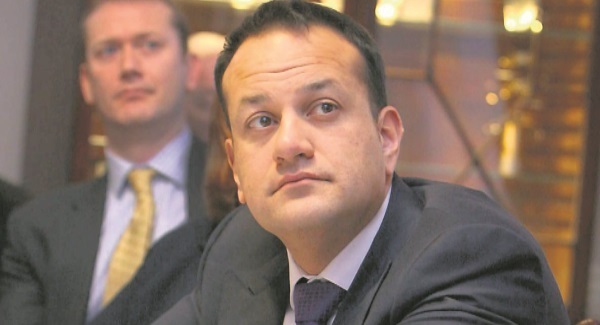
The Dáil heard that the payment is now “grossly insufficient”.
Sinn Féin’s John Brady urged Mr Varadkar to increase the allowance and said a Barnardos survey showed the cost of sending one child to primary school had risen to €390, while at second level it had risen to €785.
However, Mr Varadkar said the figure quoted by Mr Brady took into account school books costs which is not covered under the back-to-school allowance.
Under the scheme, struggling families receive €100 for eligible children aged four to 11 and €200 for children aged 12 to 22.
“Any changes to the scheme to increase the payment amounts would have to be considered in the context of the budget,” said Mr Varadkar.
“However, I cannot make any commitments on the budget now.”
He also pointed out that the back-to-school allowance in Northern Ireland, where Sinn Féin has been in government “for a long time”, is “less than half” of what it is here.
“I know the deputy does not want to hear this but the cost of living is not half what it is here. It may be lower but it is not half,” he said.
“If there is a border poll in the North, one of the strongest arguments for people to vote for Irish unity is so they can have a Fine Gael government, in which case they will do much better than they do under Sinn Féin.”

Responding to a separate question on the issue of social welfare payments, Mr Varadkar promised customers will no longer be pushed to opt for bank payments over payments though the post office system.
It came after Michael Healy-Rae said social welfare recipients had received letters asking them to give details of a bank account so they could be paid directly into the bank and not through the post office network.
Mr Varadkar said: “My department will no longer take any measures which seek to actively influence customer choice in the manner of payment away from cash payments at the post office; rather, customer choice will be facilitated.”
Mr Healy-Rae said that everything must be done to protect post offices across the country which are at risk of closure.
“I have consistently said over recent years — this is not scaremongering but a fact — that 700 post offices will close down in the next three years,” he said.

Mr Varadkar admitted that he had seen copies of correspondence with customers which, “in my view, did encourage them to move to the bank without giving them an equal option of using the post office”.
“A circular will go to staff in the next week or two advising them to make sure that, in any correspondence, they give people the option of using both the post office and a bank account,” said Mr Varadkar.