Knotweed thrives in wet south-west
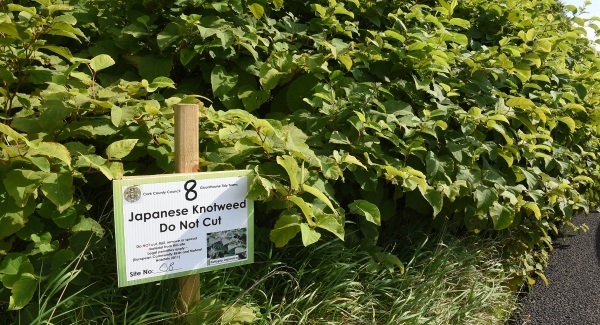
The plant is costing Kerry County Council thousands of euro each year to battle, and is being mapped by Jane Jackson as part of the Save our Laune organisation.
A map of the progress of the weed shows the Ring of Kerry completely surrounded by the attractive white flowering plant which can grow 1m in three weeks.
The coastal areas of the Dingle peninsula are also dense with the plant, which is found also in the Killarney National Park.
Ms Jackson said the reason knotweed is so prevalent in the south-west may be due to the moist climate — it does not have the same hold in the east because the drier conditions make it more difficult to regenerate quickly.
Some €100,000 has been set aside by Kerry County Council for a spraying programme in 2016.
A councillor who called for the plant to be eaten has reiterated his appeal to explore not just eliminating the plant, but using it.
Cllr John Joe Culloty (FF) stunned the council chamber on Monday by revealing the shoots of the plant could not only be eaten but made into excellent jam and was of great benefit medicinally as it is high in Vitamin C.
He is seeking a presentation to be made to council members on the knotweed’s multiple facets, including “cooking and medicinal”.
One of Ireland’s top chefs, Damien Grey, has revealed how he teams knotweed with duck and redcurrants at his Heron & Grey restaurant in Blackrock, Co Dublin.
Pan-frying for two minutes retained most flavour, “which would be good for tarts and jams”, said Mr Grey, who gets his supplies from Ballyhoura Mountain Mushrooms in north Cork.
Mark Cribben, of Ballyhoura Mountain Mushrooms, said knotweed was pickled and tinned in Asia and used as a flavouring for sweets.
Some gardening experts have advised against cutting the plant for cooking as even a tiny cutting can result in a new plant.

CONNECT WITH US TODAY



Be the first to know the latest news and updates