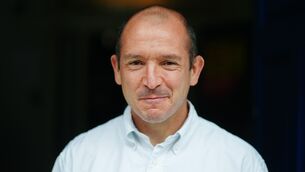
Hutch release application adjourned

Hutch, aged 33, argues he is entitled to be freed following the striking down last month by Mr Justice Michael Moriarty of section 99.9 and 99.10 of the Criminal Justice Act 2006 (as amended), which govern the powers of the courts to activate suspended sentences.
Hutch, according to court documents, has been detained in Mountjoy’s medical unit for his own protection since his father was shot dead last February.
He was jailed for eight years in 2013 arising from incidents in 2012 during which he threatened to kill three gardaí. At that time, he was serving a suspended four-year term for a 2009 robbery and assaulting a garda.
His was among six similar release applications mentioned to Mr Justice Seamus Noonan yesterday. The judge adjourned all six to await tomorrow’s judgment by Mr Justice Paul McDermott on an application by another prisoner for his release.
The judgment is expected to address a range of issues raised in many of the cases brought by about 20 prisoners seeking release on foot of the section 99 ruling.
One of the 20 cases, by prisoner Anthony Foley, was heard by Mr Justice McDermott on Wednesday and judgment was reserved.
Foley, detained in Portlaoise Prison, received an eight-year suspended sentence in October 2006, comprising seven years for theft and fraud offences and one year for offences under the Non-Fatal Offences Against the Person Act. After the DPP appealed leniency of sentence, the Court of Criminal Appeal (CCA) imposed an eight-year term in 2007, of which five years were suspended.
During the suspended period, Foley committed other theft and fraud offence and was convicted in the District Court. That lead to the CCA activating the suspension of its 2007 sentence, meaning Foley had to serve the remaining five years of the eight-year term.
The CCA also permitted him to bring an appeal on legal issues to the Supreme Court which that court ultimately dismissed.
Later, in July 2014, Foley initiated a challenge to the constitutionality of provisions of section 99 but that case had not been heard when Judge Moriarty ruled last April.
As Foley had pleaded guilty and had not appealed his original conviction which led to the suspended sentence being activated, the State maintains he cannot benefit from the section 99 ruling.
Micheál P O’Higgins, for Foley, argued — for reasons including his client had challenged the constitutionality of provisions of section 99 — Foley is entitled to benefit from those measures having been declared unconstitutional. The onus was on the State to show Foley acquiesced in his detention such as to deprive him of the finding of unconstitutionality, counsel said.
Shane Murphy, for the State, argued Foley is in lawful detention and was seeking to “piggyback” on the Moriarty decision. Foley is effectively mounting a collateral attack on a finalised criminal process which had completed in 2014, counsel said. There can be no retrospective application of a declaration of unconstitutionality and the Supreme Court had made clear the CCA had jurisdiction to activate the suspended sentence, he added.

CONNECT WITH US TODAY



Be the first to know the latest news and updates