Michael Noonan open to amending law to curtail vulture funds
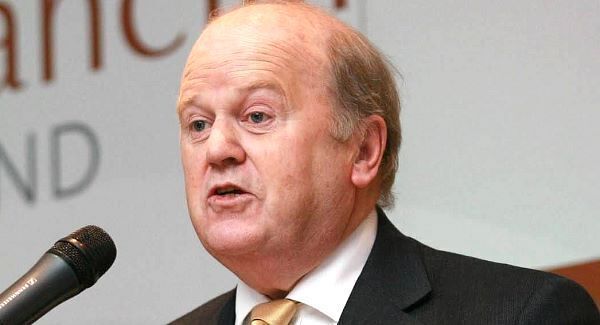
Speaking in the Dáil, he said phasing out USC will not reduce the tax take and the country can now “afford to remove” the universal charge.
The minister said: “The Government is not committing to reducing the tax take, the Government is committing to reducing tax rates.
“It’s quite affordable to remove an emergency tax; we can afford to remove a tax that was introduced at a time of great emergency and I think anyone who is doing an economic analysis will agree that personal tax rates in Ireland are too high and are having an adverse effect on economic growth.”
The statement came as the European Commission — in its first report since the formation of the new government — warned the country must broaden its tax base to reduce its vulnerability to economic shocks.
Questioning the minister, Fianna Fáil’s finance spokesman Michael McGrath yesterday claimed vulture funds are currently “outside the ambit of Central Bank regulation” which puts families at risk of homelessness.
In March, eviction notices were issued to around 60 families renting homes in Tyrellstown, Dublin, after a deal was done by a Goldman Sachs vulture fund with indebted developers.
Mr McGrath claimed the 2015 legislation “is not complete” as the owner of the loan — in some cases a vulture fund — does not require to be regulated but the credit servicing firm and the intermediary does require to be regulated.
“It is clear that potential consequences arise from the fact that the vulture fund or unregulated entity is outside the ambit of Central Bank regulation and protections and, in our view, this piece of legislation must be amended to fully take account of the issue,” he said.
Mr Noonan, however, said he would be willing to change legislation if it is needed.
“If the deputy is willing to talk to my officials, and if he can convince them it is necessary, I am willing to use an appropriate vehicle to amend the legislation along the lines he suggests,” he told the Dáil.
Taking questions on a number of finance related issues, Mr Noonan also said insurers are “bordering on ridiculous” for refusing to cover homes in flood prone areas where defences have been built.
Mr Noonan said: “In my view, the attitude of the insurance industry to the provision of insurance where demountable defences have been put in place is now bordering on the ridiculous, and it cannot be allowed to continue,” he said.
“Demountable defences are now an internationally accepted and established measure for providing flood protection.
“I think that once flood defences are put in at taxpayers’ expense and they are seen to be effective, insurance cover should follow immediately,” he said.