Sports clubs should face sanctions if players suffering concussion return to field of play
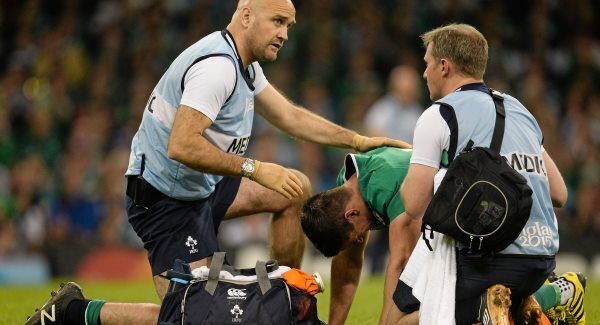
Philip O’Halloran has said that team doctors may face an “ethical challenge” when balancing the needs of the player in their care with the demands of the team.
Writing in this month’s , Mr O’Halloran says there is a greater risk of this being a problem in amateur sports, where the governing body has not provided an independent doctor to assess head injuries.
“Several challenges still remain in the amateur game. In professional rugby, an independent match day doctor assists team doctors. Amateur sport does not have this luxury. It is an ethical challenge for team doctors to objectively safeguard player welfare while preserving the players’ autonomy and desire to play for the interests of the team,” Mr O’Halloran said.
“To compound this, there appears to be a lack of understanding amongst some team doctors, in this country, regarding the guidelines for head injuries. This point was clearly highlighted in a recent Leinster schools senior cup game as well as an inter-county footballer inexplicably remaining on the pitch after suffering a significant head injury,” he said.
Mr O’Halloran said there is also a need for sports to introduce formal guidelines to ensure that team physicians in sports such as rugby and GAA are suitability qualified.
“Player welfare contracts need to be in place before a team competes in a tournament. Sanctions should be placed if the team/physician do not adhere to the strict guidelines, similar to the Terms of Participation set out by World Rugby,” he said.
“Independent specialists are also required, to externally review decisions with feedback to the individual player, their primary care physicians, and their club,” he said.
“We are seeing more young men and women coming to our clinic after reported sporting head injuries... Emotion and sensationalism need to be removed from this debate and evidence-based medicine implemented,” he said.