Call for compromise in row over family headstone
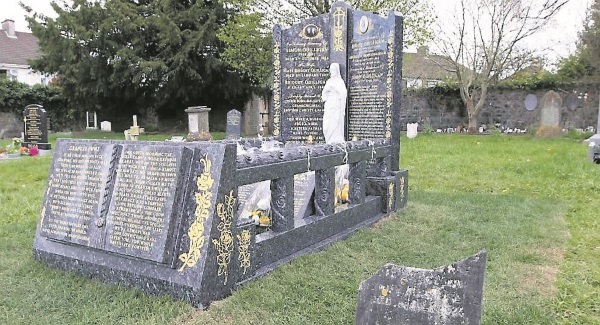
Cork City Council has asked the stonecutter who erected the monument in Glasheen’s historic St Finbarr’s Cemetery to make adjustments to ensure it complies with regulations.
Officials have suggested lowering the side railings and removing part of the structure — a marble book — from the foot of the grave.
They are still awaiting a response before considering the next move.
But a council spokesman said if a resolution can’t be found, cemetery regulations allow it to step in and either carry out the modifications or remove the structure.
The row flared following the replacement of an old headstone with a new one, which is below the permitted height, and low railings, on the grave of Jimmy Quilligan, in the southern corner of St Finbarr’s Cemetery on the city’s southside.
The monument, reported to have cost up to €14,000, was built by Edward Sheedy.
But the spokesman said no approval was sought for the structure before it was installed. It is understood the council has had at least one complaint about the structure, which prevents the erection of a headstone on an adjoining plot.
“The city council introduced regulations in relation to headstones in its cemeteries in 2007, with all stonecutters being notified that permission would be required for the erection of any headstone from then on,” the council spokesman said. “The regulations were brought in to have some degree of control in relation to height — a maximum height of 7ft — and suitability of proposed structures in relation to materials and the scale of structure, relative to other grave headstones in the cemetery. Since then, the city council has had no issue in any of the four cemeteries it manages.”
However, Mr Quilligan’s family have reacted with outrage, accusing the council of discrimination against them — a claim the council has rejected. Mr Quilligan’s son, John, said several family members who contributed to the cost of the monument, are very upset: “For 50 years, the grave was shabby and no-one was minding it, now we have it in a good condition and Cork City Council have a problem with it.”
The council’s regulations governing headstones, kerbing and monuments includes an application form which stonecutters must fill out, before they embark on work and a list of 13 guidelines which must be followed. The application form must be accompanied by a sketch of the proposed monument and details of its dimensions.
Two weeks’ notice must be given before the work starts. The guidelines include a warning any breach of conditions will result in immediate removal of the structure.
CONNECT WITH US TODAY



Be the first to know the latest news and updates