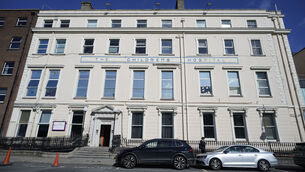
Garden dig to begin in search for babies’ remains
Detectives and members of the Garda Technical Bureau moved onto the site yesterday after a search warrant was issued the previous evening.
The move follows a year-long investigation into claims by a woman in her 50s that she was repeatedly raped as a child and gave birth to two babies two years apart in her early teens.
She told gardaí at Crumlin in the south west of Dublin city that both infants were taken from her, killed and buried in a garden where she believes they still remain.
The house at the centre of the investigation is not being identified but it is a terraced home dating to the 1940s, characteristic of many local neighbourhoods.
Excavation at the site is expected to take weeks due to the painstaking effort needed to find what could be tiny and fragile remains given the 40 years since the alleged offences took place.
A photographic survey of the site was carried out yesterday with the next step being to place the garden under tenting to provide a secure environment for forensic teams to work in and protect anything that may be turned up during digging.
Gardaí said the operation would take two to three weeks. Laboratory tests on any potential finds could take many weeks more. Gardaí said the direction of their investigation would depend on the outcome of the search.
Despite the passage of time, they are optimistic that if the babies were buried in the garden, sufficient traces of them will remain.
Forensic archaeologist Toni Maguire said infant bones did not preserve as well as adult bones, and soil type and the degree to which the bodies were covered would all have an impact on the condition of any remains.
She said there was also a possibility that the remains may have been disturbed and scattered over time. But she said the fact that the search was in a small area was helpful and she said a geophysical survey could be carried out using instruments to detect disturbed ground or buried items below the surface before any dig commenced.
“You’ve got to be very careful,” she told RTÉ Radio. “But l think if they’re there, they will find them.”
The case has similarities to the horrific case of child abuse survivor, Cynthia Owens, who was raped repeatedly in her Dalkey home and also gave birth to two babies in the 1970s.
One of her infants was stillborn and the other, whom she named Noeleen, was taken from her, killed and dumped in a lane. She later fought successfully to be legally recognised as Noeleen’s mother but failed to have a new criminal investigation opened.
CONNECT WITH US TODAY



Be the first to know the latest news and updates